The engineering cost of making Godzilla feel enormous
In the original Godzilla (1954), Haruo Nakajima had to perform inside a creature suit weighing roughly 220 pounds. Its bamboo-and-ready-mixed-concrete construction reflected a practical problem: the filmmakers needed a full-body monster costume before lightweight polyurethane foam was available. Materials that could give the suit bulk and form also made it punishing to wear.
That weight changed what the costume could do. Nakajima could not move like a human in ordinary clothes; even a simple monster’s step required him to shift a heavy load while enclosed in a heat-trapping shell. The suit’s interior could become so hot that he sometimes passed out from heat exhaustion. The sweat collecting inside was not merely discomfort—it was part of the physical toll of making the creature move on camera.
A performance built around the miniature world
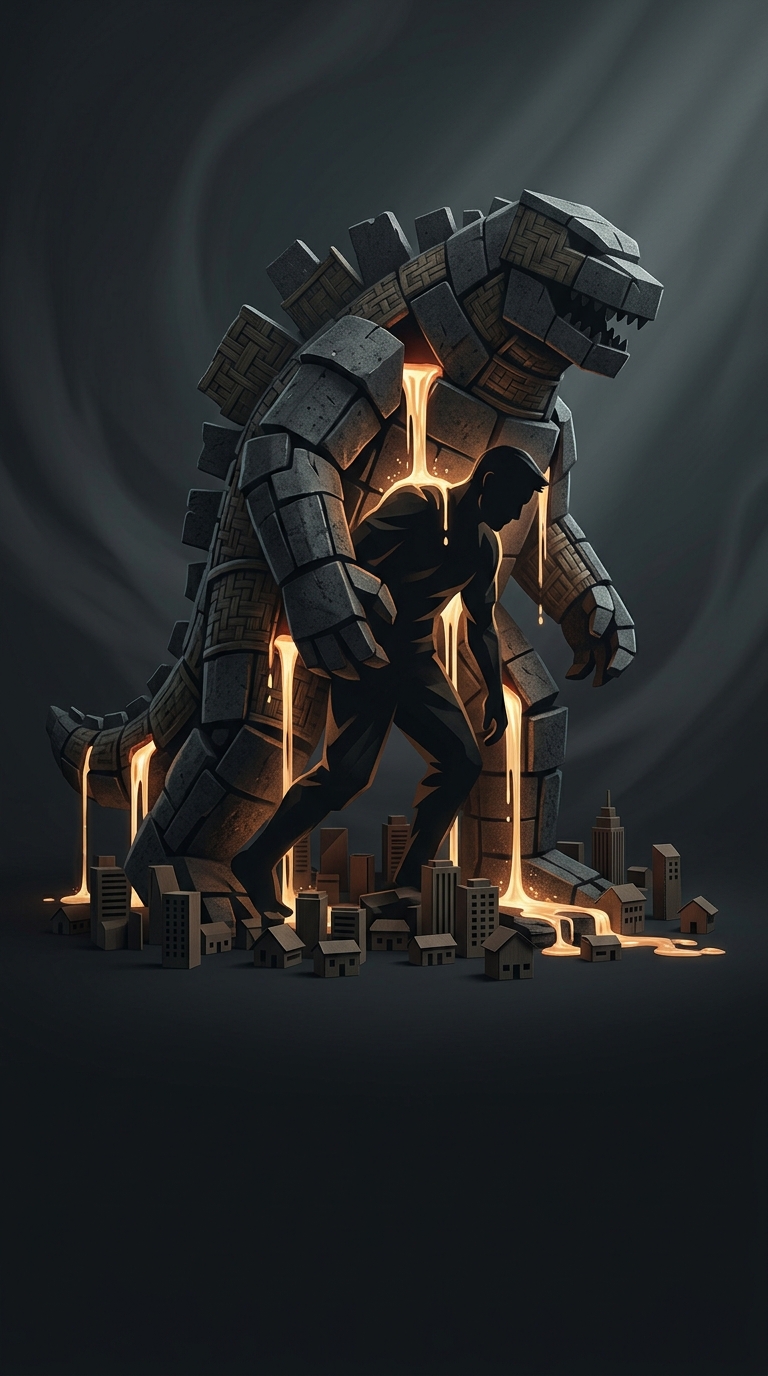
The suit served a filmmaking method often called “suitmation”: an actor in a monster costume performed among miniature sets, which were filmed to make the buildings appear life-size. Instead of drawing every movement or creating the monster entirely through animation, the production put Godzilla physically into the miniature city. Nakajima’s weighty, deliberate movements gave the destruction a tangible presence, while the miniature environment supplied the sense of scale.
The tradeoff was stark. The filmmakers gained a monster that could occupy and damage a physical set, but the performer paid for that realism with restricted movement and dangerous heat. Godzilla’s slow, heavy presence came partly from the demands of the costume itself—a production constraint turned into one of the creature’s defining qualities.