Why “supermoon” is not an astronomical category
The Moon follows an oval-shaped orbit, so its distance from Earth changes over the course of each orbit. Its nearest point is called perigee; its farthest is apogee. A full or new moon that occurs near perigee can therefore be described by the term Richard Nolle introduced in 1979: “supermoon.” Astronomers, however, generally describe the event using the phase of the Moon and its position in orbit rather than treating “supermoon” as a formal category.
A label built around two lunar cycles
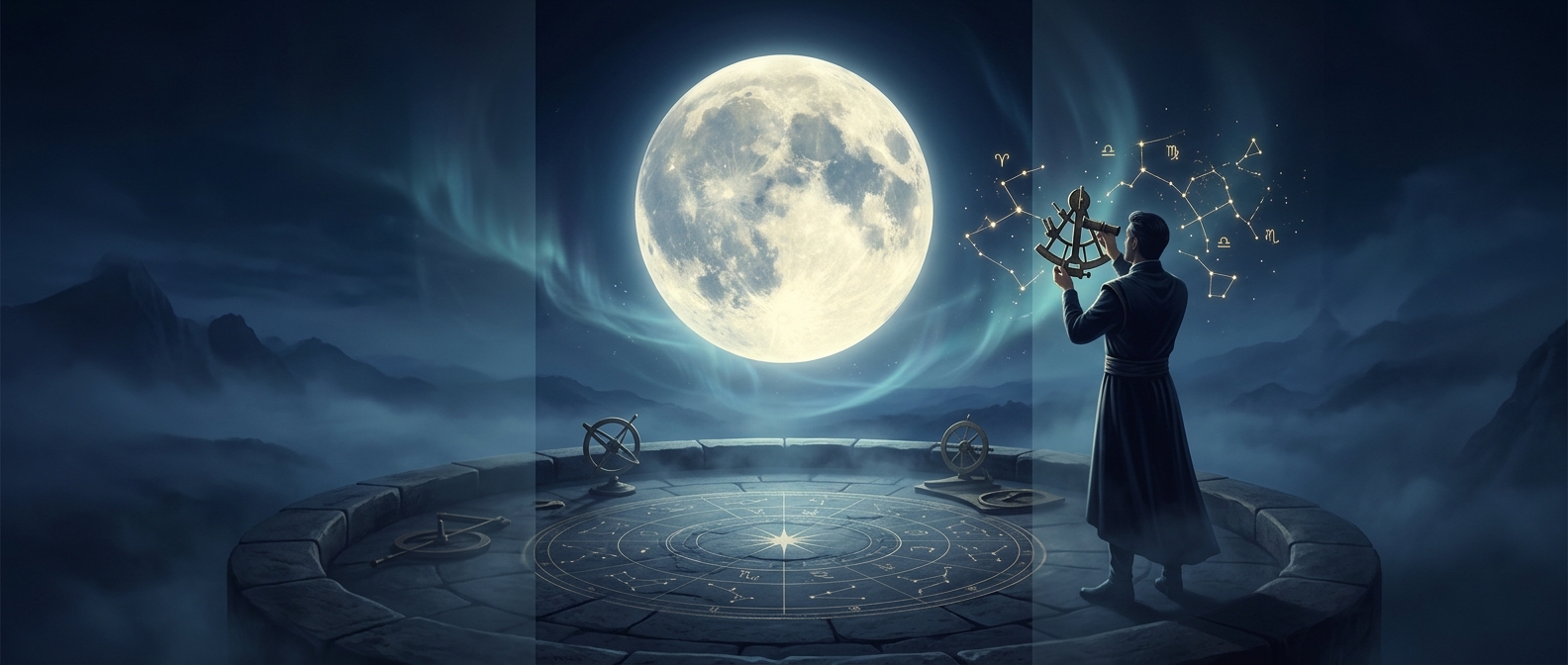
The Moon’s phase cycle and its changing distance are related but do not line up perfectly. A full moon happens when the Moon is opposite the Sun in the sky, while perigee is determined by where the Moon is along its orbit. When those events fall close together, the Moon appears somewhat larger in the sky than it does at apogee. The difference is real, though the label does not mean the Moon has suddenly changed size.
A new moon can also meet the definition, even though it is generally lost in the Sun’s glare and cannot be seen as a bright disk. That detail reflects the term’s original scope: it refers to the timing of a lunar phase and orbital position, not simply to a spectacular-looking full moon.
Why the name caught on
“Supermoon” gives a memorable name to a modest, predictable alignment, making it useful in popular descriptions of the night sky. But the word itself is not evidence of a special physical force or an astrological effect. It is a modern label for a familiar orbital coincidence—and knowing that helps separate what the Moon is doing from the meaning people may attach to it.