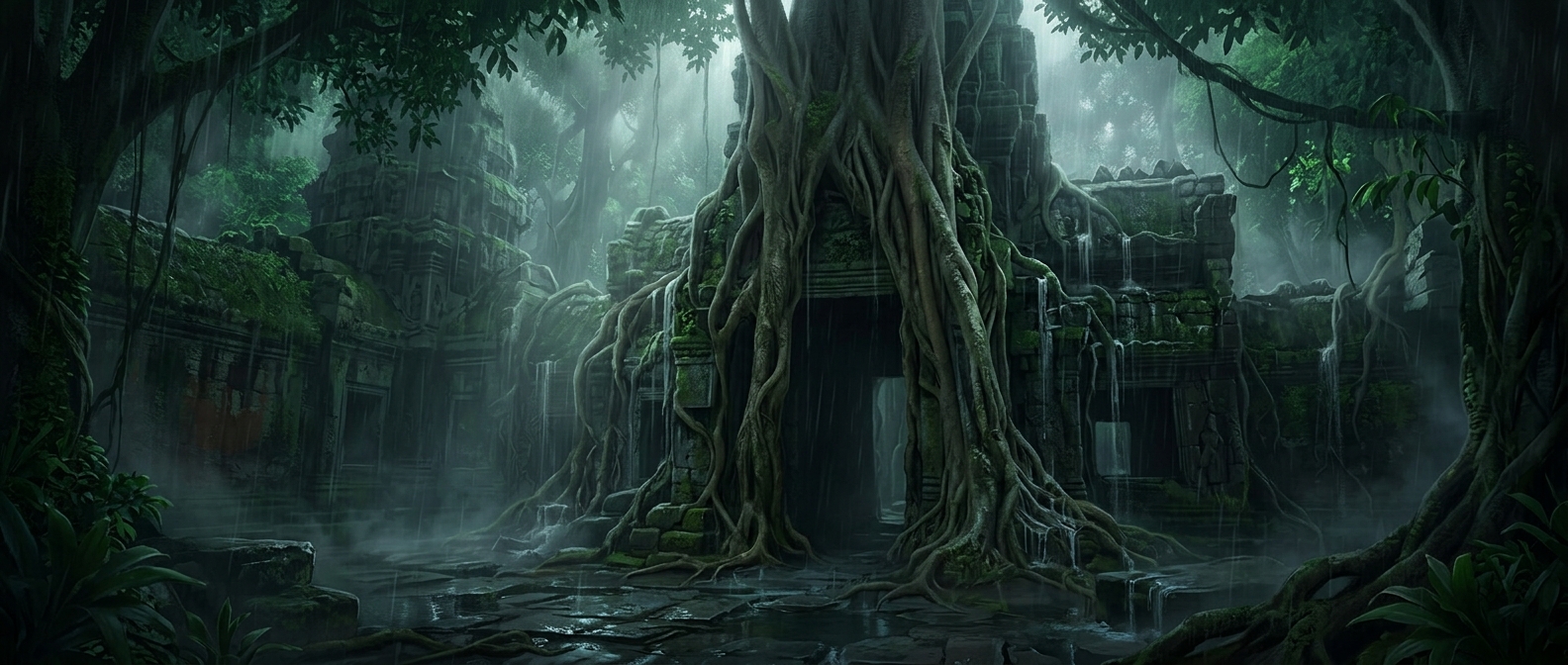
Rain sharpens the contrast at Ta Prohm
At Ta Prohm, stone and vegetation share the same crowded space: tree roots wind over walls, and moss and foliage cling close to the temple’s surfaces. In dry weather, dust can soften the details of carved sandstone. Rain clears some of that dust and darkens the wet stone, helping the carvings stand out against the surrounding green.
A temporary change in color and texture
Water makes moss and leaves look more saturated by coating their surfaces and, for living plants, supplying moisture. At the same time, wet sandstone often appears darker than dry stone, so carved lines and shapes can become easier to pick out. The shift is especially noticeable when the temple’s pale, dusty surfaces give way to deep greens and darker stone.
The rain does not make the roots grow in the moment; it changes how the temple’s existing textures and colors meet the eye. For a short while, the downpour turns Ta Prohm’s close entanglement of trees and masonry into a sharper scene: foliage vivid, roots pronounced, and carvings newly visible.