How one car turned the trackside crowd into a danger zone
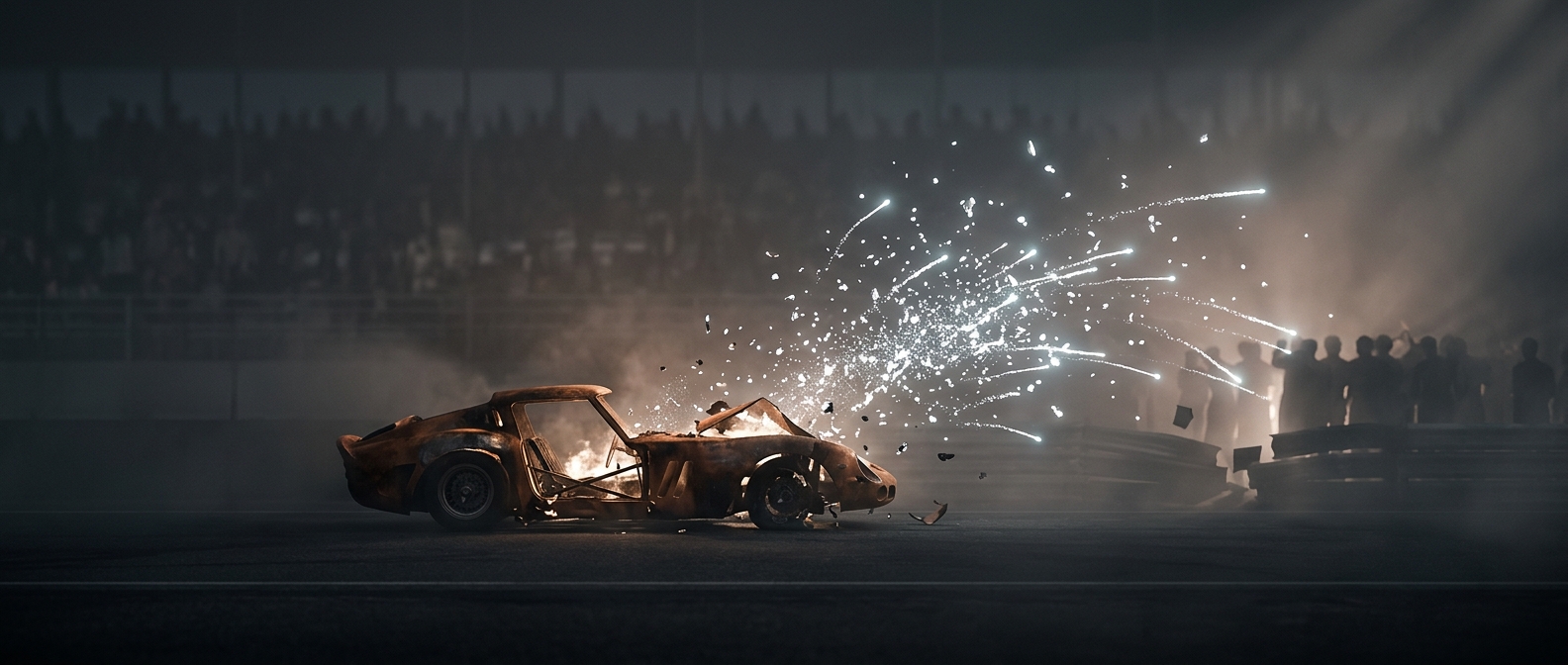
At Le Mans in 1955, a collision sent a fast-moving car off the course and into the spectator area. The danger came not only from the impact but from the way a race circuit was arranged: spectators stood close to the racing line, with little designed to stop a car or its debris from reaching them. A boundary fence could mark the edge of the track without functioning as a protective barrier.
Why the layout mattered
A racing car leaving the course carries its speed beyond the pavement. If the space beside the track is narrow, or the boundary offers little resistance, the car can reach people before it slows. The crash made that relationship impossible to treat as a spectators’ problem alone. Track design, barriers, and spectator placement were all parts of the same safety system.
From boundary to protection
The disaster helped drive changes to circuit layouts and safety barriers. That meant thinking about what could happen after a car lost control: where it might travel, what could slow or redirect it, and how much distance separated it from the crowd. A fence’s purpose was no longer just to keep spectators off the track or mark the edge of the show. It had to help keep the consequences of a crash from reaching them.
The lasting lesson was practical: safety depended not only on keeping cars on the course, but also on shaping the space around it for the moment one did not.