How a Few Frames Become a Decision
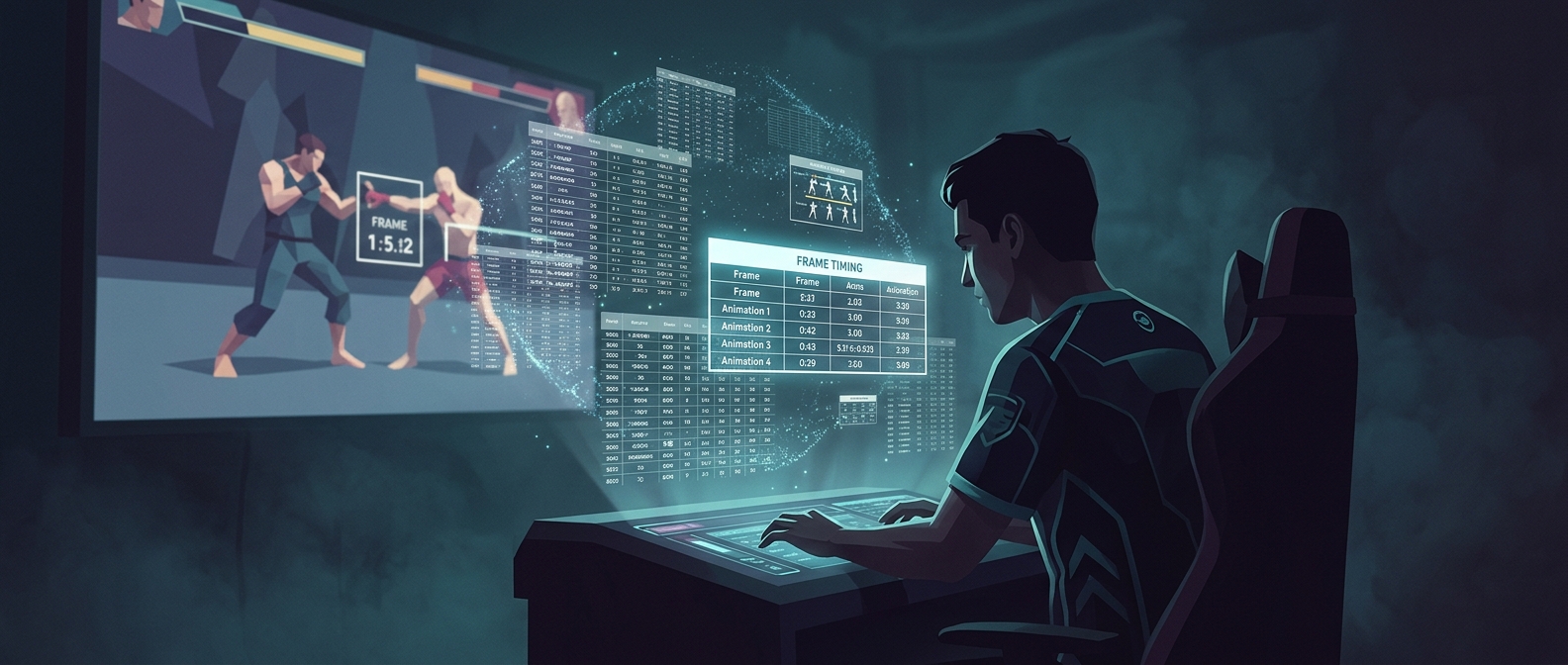
In a fighting game, an attack unfolds across moments the game calls frames—tiny steps in its animation and logic. A move may spend frames winding up before it can hit, remain dangerous while it is active, then leave the player unable to act as it finishes. Frame data records those timings, including how long an attacker or defender must wait before acting again.
That last comparison matters. If a blocked move leaves its user waiting longer than the defender, the defender may be able to act first. If the attacker recovers sooner, pressing a button in response could be a mistake. The numbers do not tell a player what to do in every situation, but they reveal which choices are even possible.
From Spreadsheet to Recognition
Studying the data is a way to build a mental map, not to recite a catalog. Players connect a move’s timing to its appearance, range, and the situation in which it tends to occur. With practice, a familiar animation can trigger a quick judgment: this is punishable, this is safe, or this opponent is likely to act again.
That recognition reduces the work required during a match. Instead of calculating every timing gap from scratch, an experienced player can focus on the opponent’s habits and choose among responses they have already tested. The spreadsheet is useful because it turns an invisible timing system into comparisons that can be practiced.
Why the Gap Matters
A timing advantage is not automatically a guaranteed hit: distance, the moves available to each character, and the player’s reaction all affect what follows. But knowing the gap changes the decision. A newcomer may see only a flurry of animations; a trained player sees when control shifts—and can be ready to claim the next turn before the opening is obvious.