A signature belongs to the character
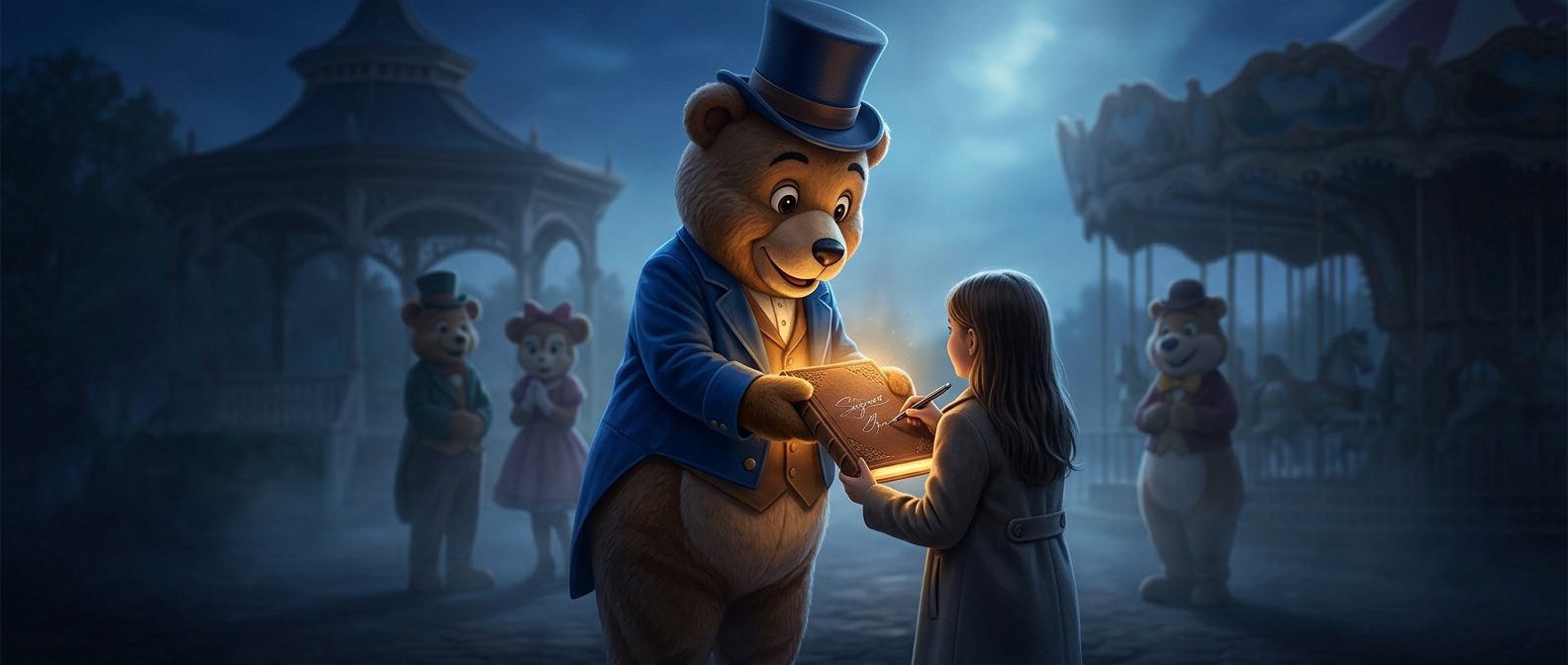
A mascot’s autograph is treated as part of the character’s identity, not as a personal signature from whichever performer is working that day. That distinction matters in a park: guests may meet the same character on different visits, or encounter several performers portraying that character in different places. A recognizable signature makes those encounters feel connected, much like a consistent costume or way of speaking.
The autograph also has to work in a practical setting. Performers may be signing quickly while standing in a crowded meet-and-greet area, and bulky costume gloves can make small, intricate handwriting difficult. A distinctive, repeatable design is easier to learn and reproduce under those conditions than an improvised signature.
Consistency takes rehearsal
Parks can give performers a model to practice, including the shape and order of the strokes. This creates a shared standard without requiring every autograph to look mechanically identical: handwriting naturally varies, but the key features remain recognizable. The design must be simple enough to reproduce and distinctive enough that a guest can identify whose autograph it is.
That small piece of choreography helps preserve the illusion that the character has a life beyond any one performer. For a child collecting autographs, the name on the page is not a record of who happened to be inside the costume; it is a keepsake from meeting the character.