How stones could help a crocodile underwater
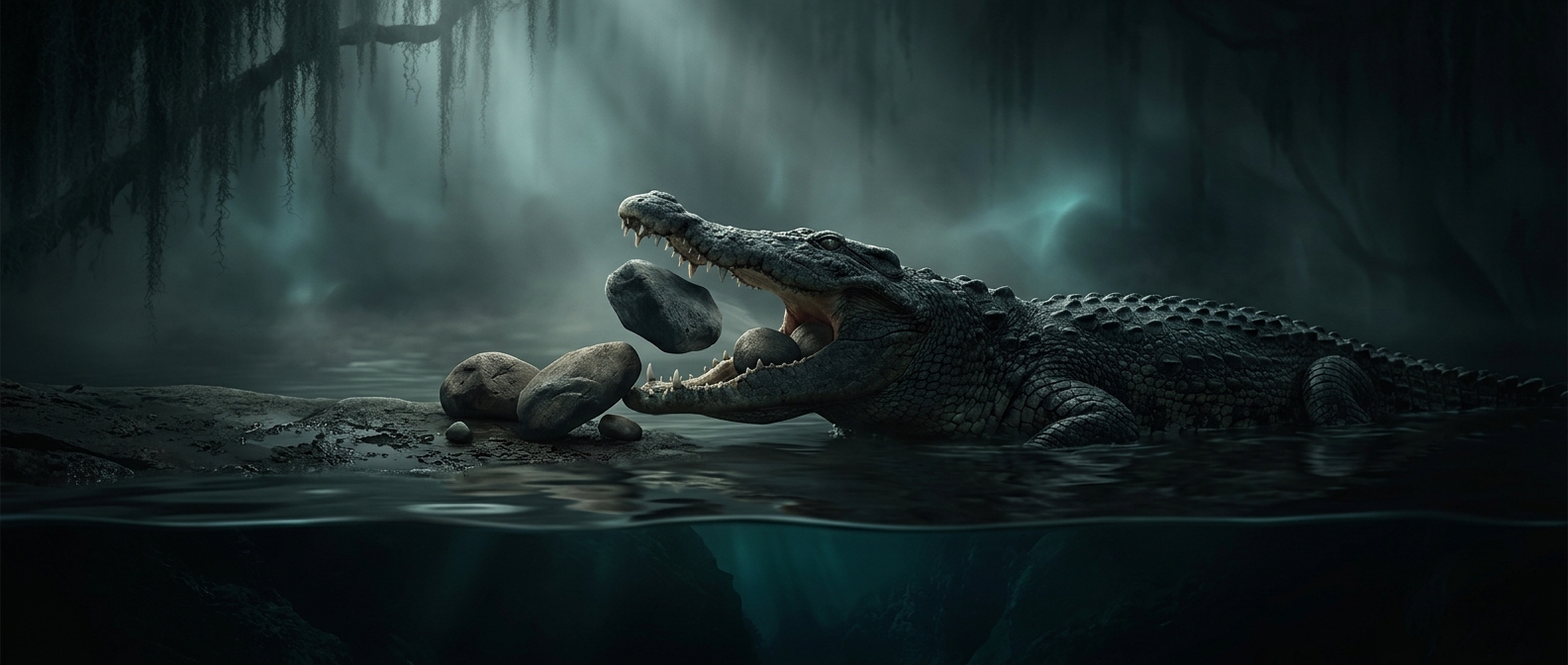
A crocodile’s body is close to neutrally buoyant in water, but its lungs contain air that tends to lift it toward the surface. Stones in the stomach add mass without adding much volume. That extra weight can offset some of the upward force, making it easier for the animal to remain submerged without constantly swimming downward. It would not make a crocodile sink like a rock; rather, it could change how much effort staying underwater takes.
The effect depends on more than the stones themselves. Lung air, body position, and water movement also influence buoyancy, so stomach stones are only one possible part of the picture. Their weight may be most useful when a crocodile is resting or moving slowly underwater.
A possible substitute for chewing
Crocodiles do not chew food into small pieces as mammals do. They may swallow chunks, leaving the stomach to do much of the later work. If stones move around as the muscular stomach contracts, they could press and scrape against food, helping break it into smaller pieces. Smaller pieces are easier for digestive juices to act on.
That proposed role is mechanical: the stones would help process food through physical contact, not by adding nutrients or chemically digesting it. How much this matters compared with the added weight is still unresolved. The two functions are not mutually exclusive, and the balance could vary among animals or situations. A stone in a crocodile’s stomach may therefore be more than a digestive aid—it may also subtly change how the animal moves and rests beneath the surface.