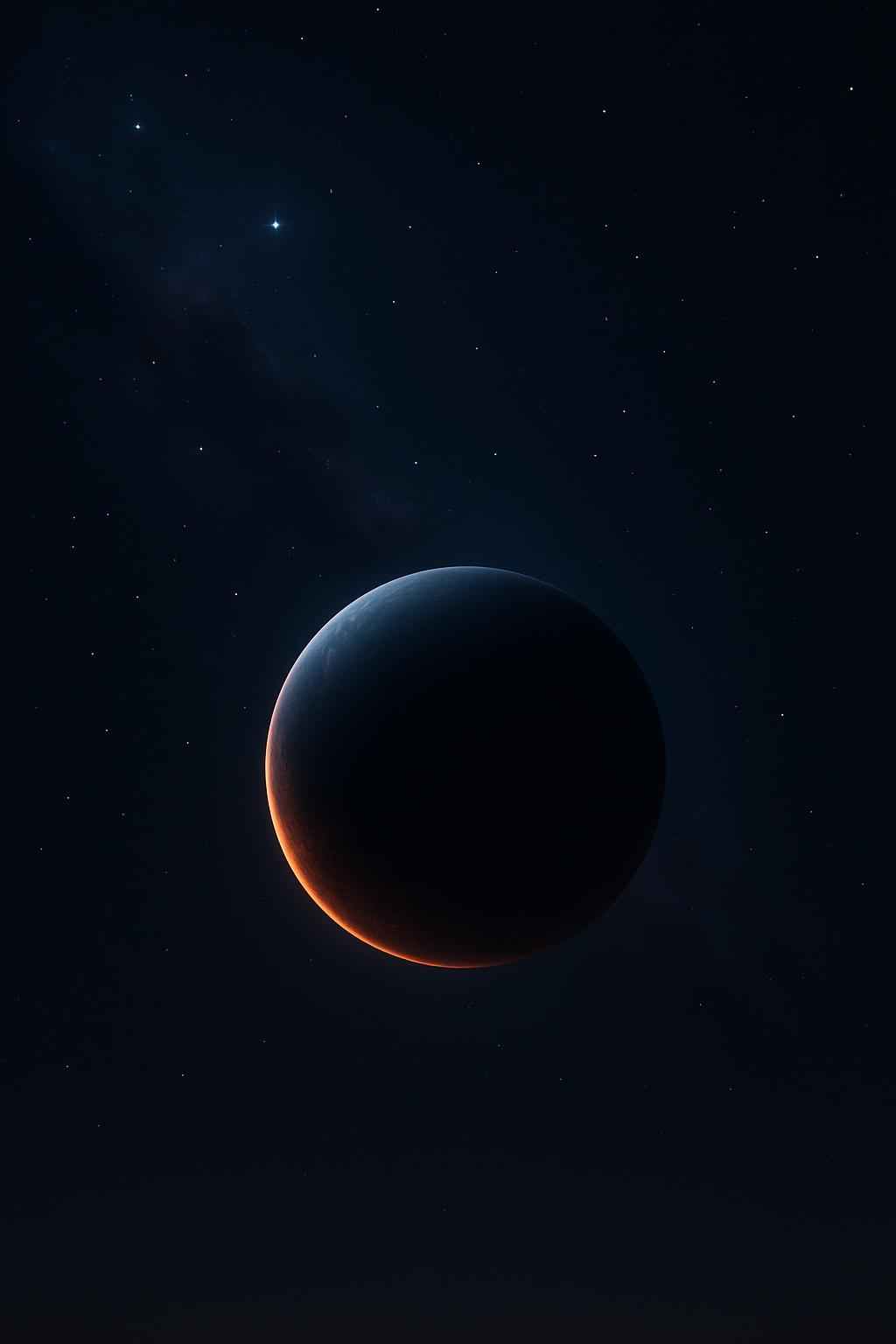
A planet can reveal itself without shining
A rogue planet is a planet traveling through space without orbiting a star. It may still emit a faint glow from heat left over after it formed, but as it cools, that light becomes difficult to detect across interstellar distances. Astronomers can search for a different signal: the planet’s gravity.
Gravity briefly magnifies a background star
When a rogue planet passes almost exactly between Earth and a distant star, its gravity bends the star’s light. This effect, called gravitational microlensing, can focus some of that light toward us, making the star appear temporarily brighter. The planet does not produce the brightening; it acts more like a moving lens.
The alignment has to be unusually close, so astronomers cannot predict which star will flare in advance. Instead, surveys monitor huge numbers of stars, looking for a brief, smooth rise and fall in brightness. The duration of the event offers clues: a lower-mass lens generally produces a shorter signal, though the planet’s distance and motion also matter.
A flash that leaves no portrait
Microlensing can expose an object too dim to see directly, but it usually does not reveal a clear image of the planet. A short brightening can indicate a planet-sized lens, yet estimating its mass is difficult unless astronomers can also constrain its distance and speed. Follow-up observations and patterns across many events help distinguish possible rogue planets from other explanations.
The method’s strength is also its limitation: the alignment is temporary, and the planet may never pass that way again. For a few hours or days, however, a dark wanderer can announce its presence by changing the light of a star it never touches.