A roaring saw can be a poor cutter
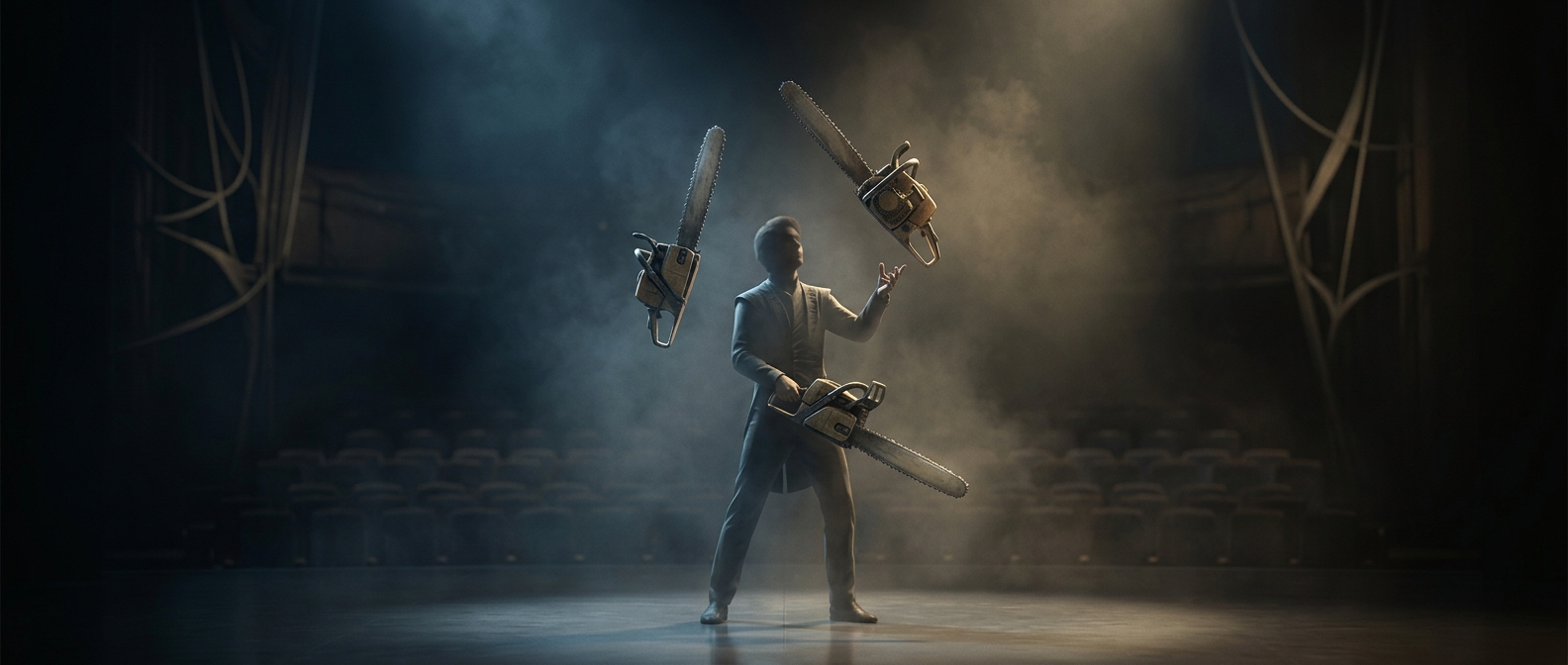
A chainsaw cuts because sharp metal teeth on its moving chain bite into wood and carry the chips away. In a juggling act, those teeth are filed dull, blunting the cutting edges. The engine can still rev and the chain can still race around the bar, producing the sound and motion audiences recognize, while the chain is far less able to bite into wood.
“Dull” does not mean harmless. The chain is still moving, and the saw is still a heavy machine with hard parts and substantial momentum. If a performer loses control or drops one, it can strike with dangerous force; contact with the chain can also injure. The trick depends on reducing the tool’s ability to cut, not turning it into a prop that is safe to handle casually.
The danger is part of the performance
That distinction lets the act preserve the unmistakable roar of a real motor while changing the most important part of the cutting mechanism. The spectacle comes from balancing a visibly working machine, not from making an ordinary sharp chainsaw safe to juggle. Its noise signals power; the dulled teeth limit what that power can do to wood.