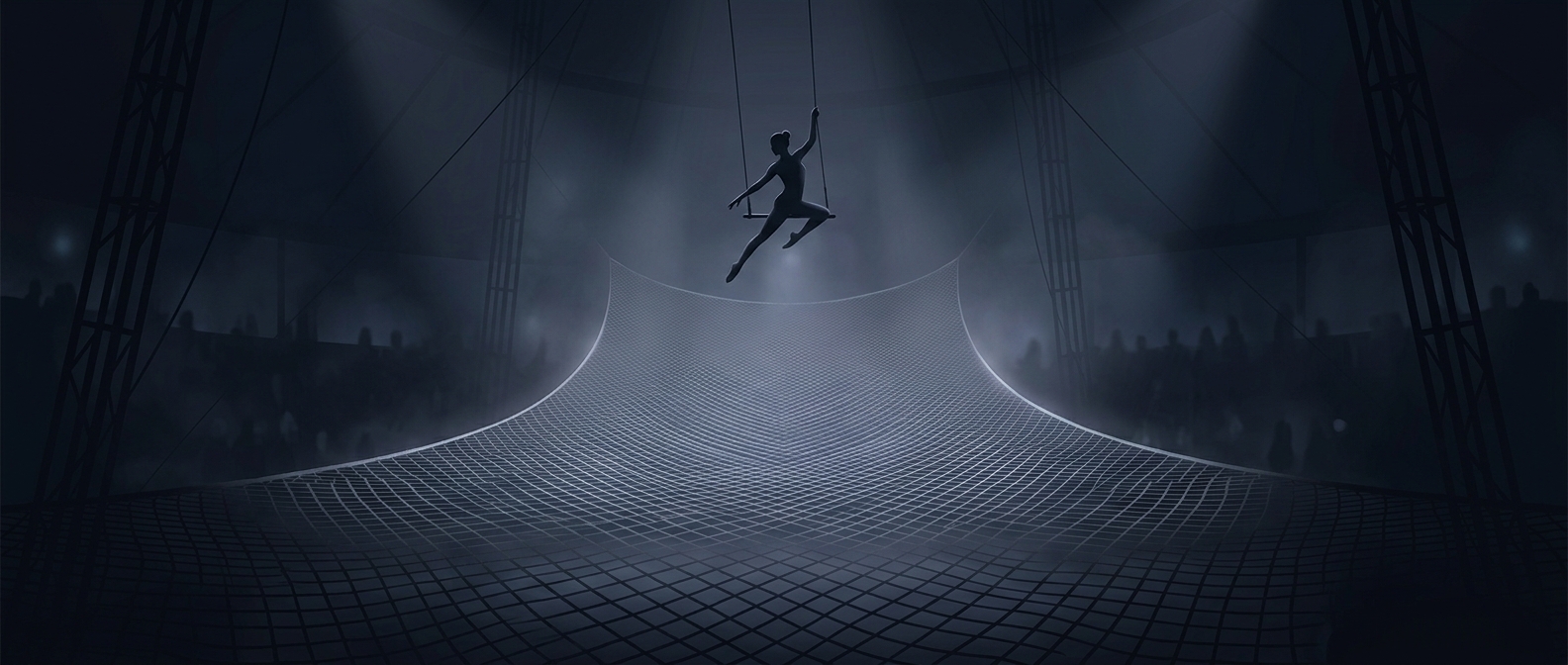
A Safety Net Designed for the Viewers
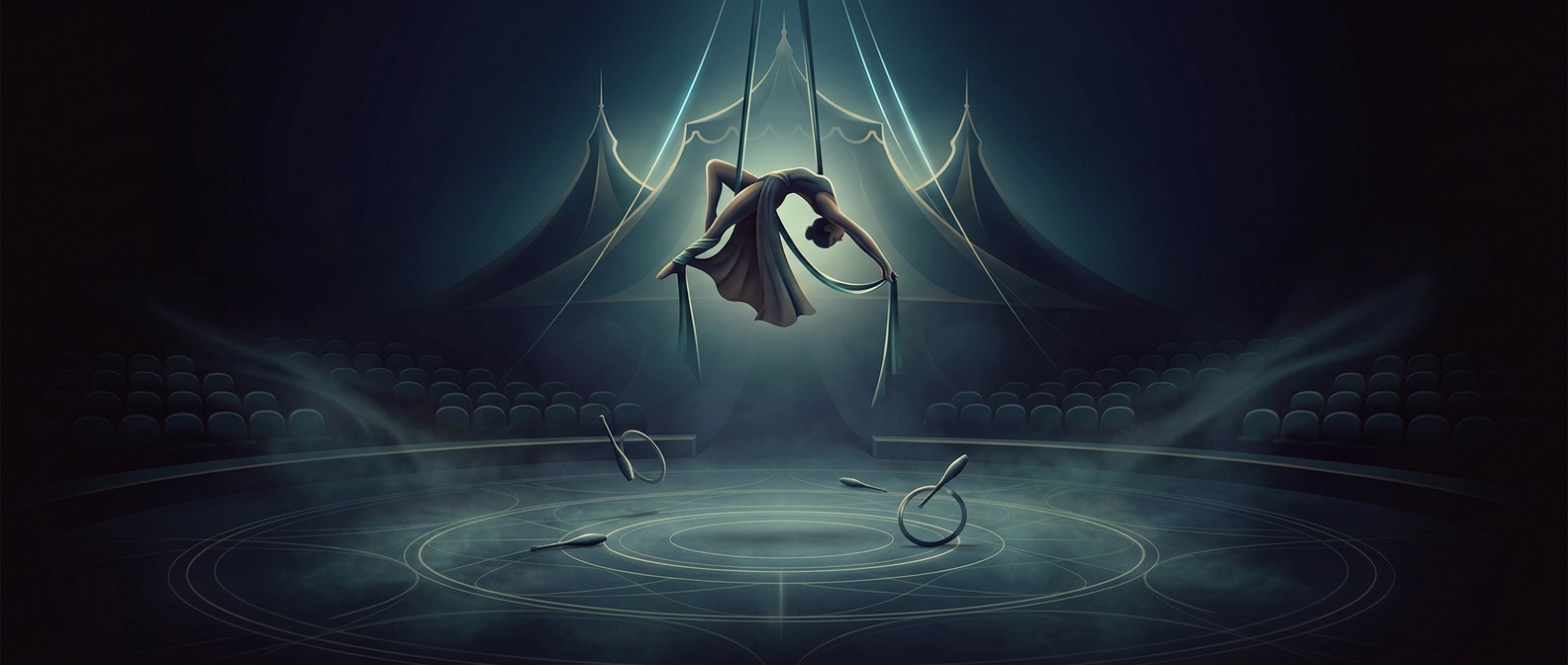
A flying-trapeze act depends on a visible risk: one performer releases a bar, travels through the air, and must meet another performer’s hands at just the right moment. A fall is part of the danger the audience can see—and, in the early history of trapeze, the net was reportedly introduced in part to keep a missed catch from becoming an ugly interruption to the show.
That purpose says something about live entertainment. A fall could injure an aerialist, but it could also shock spectators and break the act’s carefully built illusion of effortless flight. A net beneath the performers offered a fallback while keeping the audience’s attention on the attempt, not on a body hitting the ground.
The Net Changes the Risk, Not the Act
A net can catch a falling performer, but it does not make a miss harmless. The aerialist still has to land within its span, and the impact can cause injury. Nor does the net remove the risk that makes a catch compelling: spectators watch a real leap, with a real possibility that the hands will not meet.
Instead, the net creates a boundary around the spectacle. It lets the act present danger without making every mistake a catastrophe—and, in the account of its introduction, helped keep the audience from seeing the most disturbing outcome. The safety device is therefore part of the show’s visual design as well as its practical backup.