The flame burns in the spray, not in the lungs
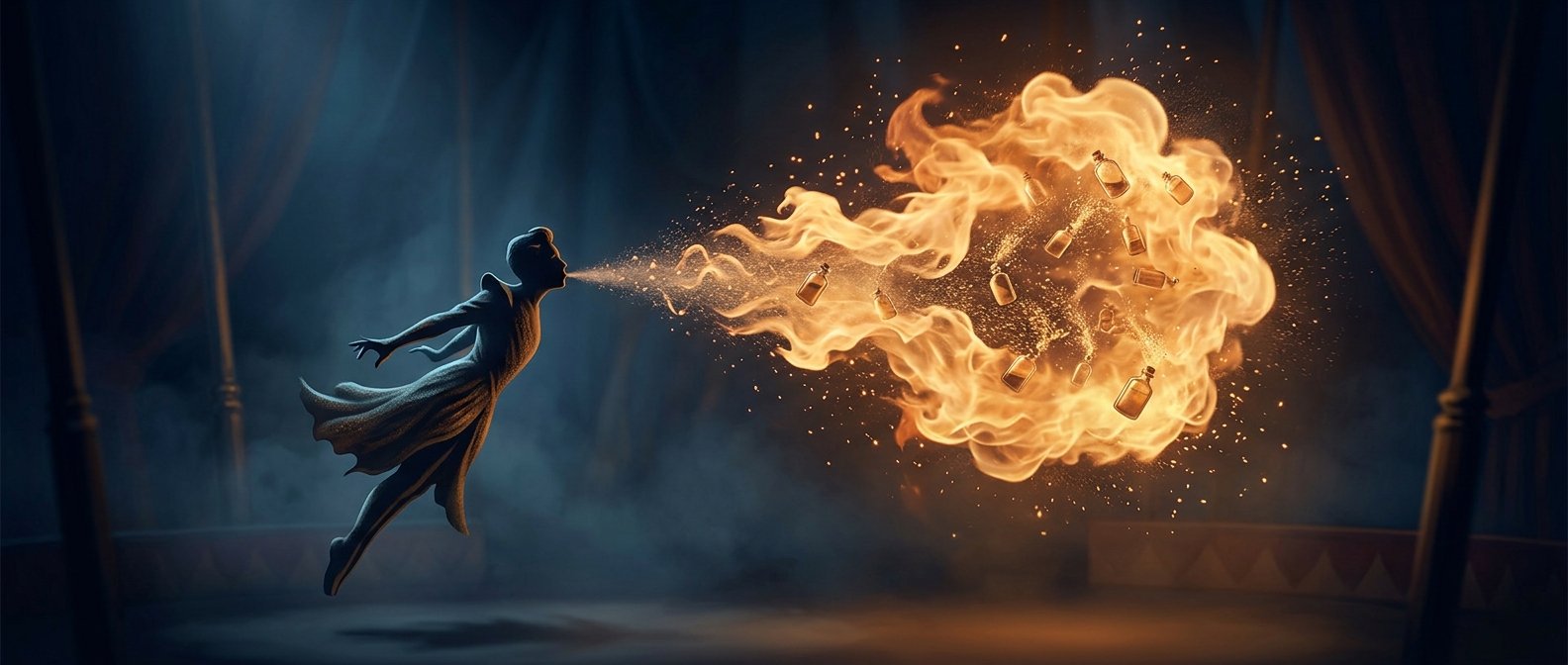
A fire breather creates a brief cloud of tiny fuel droplets and sends it across an open flame. The droplets have far more surface area than a pool of liquid, so they vaporize and burn quickly in the air. The visible fireball forms in front of the performer; it is not a flame traveling through the body.
That distinction is crucial, but it does not make the act safe. Fuel can enter the lungs if it is inhaled or accidentally aspirated, where it can cause severe injury. A gust, a mistimed breath, or a flame too close to the face can also turn a controlled burst into a burn.
Why the fuel matters
Performers choose fuels partly for how they vaporize and burn. Alcohol is volatile and can produce an intensely hot, fast-burning flame, making it especially hazardous for this effect. Less volatile fuels used in performance still burn readily and remain poisonous if swallowed or inhaled; “safer” is relative, not harmless.
The skill is therefore as much about controlling the spray and keeping fuel out of the airway as it is about making the fire appear. Even experienced performers face serious risks, which is why fire breathing belongs in tightly controlled performance settings—not as a trick to attempt casually. A successful burst lasts only moments; a single breath in the wrong direction can leave fuel in the lungs long after the flame has vanished.