Why a Board Book Holds Together
A board-book page is not a single sheet of ordinary paper. It is made from thick paperboard, often built up from bonded layers. That structure gives the page stiffness: a toddler can grab or bend it without folding it as easily as a thin page. The sturdy leaves also make the book easier for small hands to turn, even when a child has not yet learned to handle delicate paper gently.
The page edges and binding matter, too. Pages are joined into a compact block rather than attached as separate, easily torn sheets. Many board books have rounded corners, which avoid sharp points and are less likely to catch or crumple during rough handling.
Durable Does Not Mean Indestructible
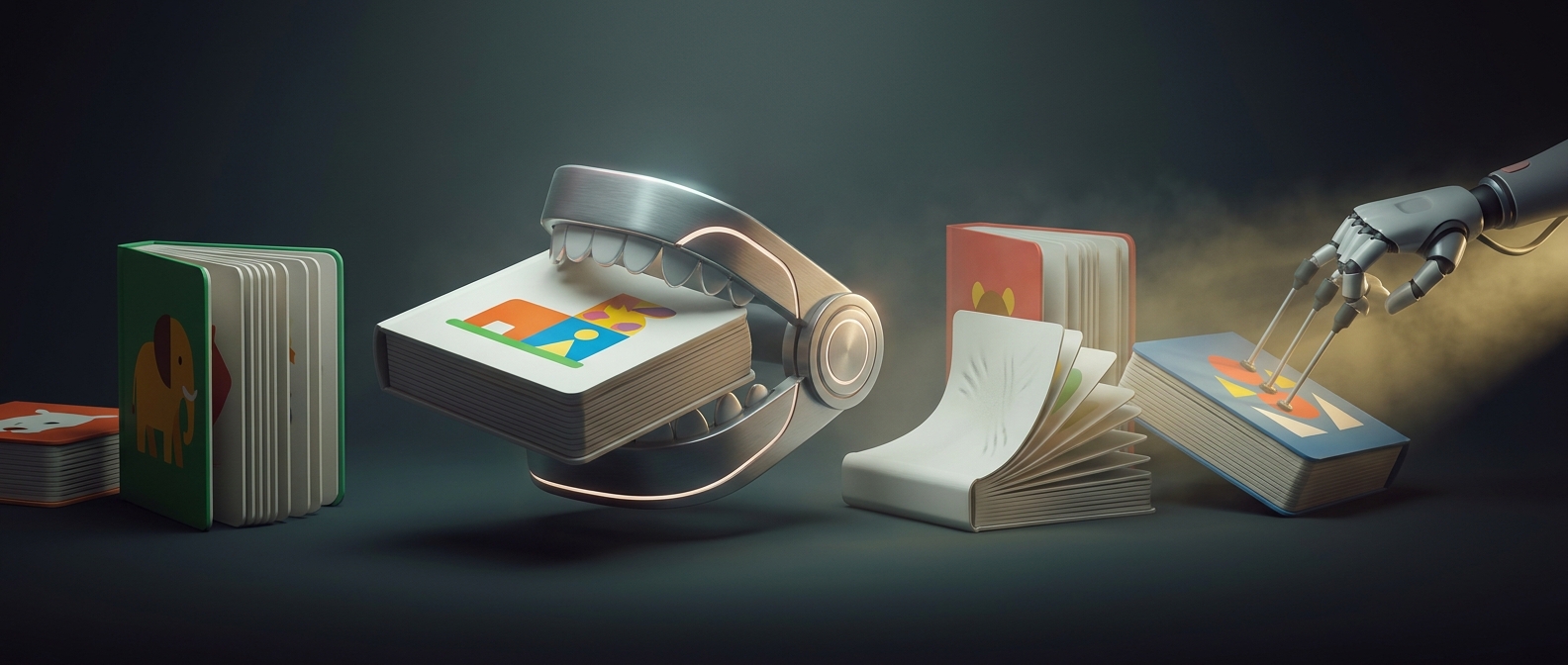
Chewing tests the book in a different way from turning pages. Saliva can soak into exposed edges, loosen layers, or soften the paperboard over time. A book may endure ordinary mouthing, but it is not designed to remain unharmed by prolonged chewing or to serve as a teething toy.
“Non-toxic” describes the inks and other materials as suitable for their intended use; it does not mean they are food. The practical distinction is simple: sturdy construction gives a child more room to explore a book independently, while an adult still needs to replace one that becomes damaged or begins to come apart.