What a fossil protein can reveal
Bones are not just mineral. In living animals, collagen forms a tough framework in bone, helping it resist stretching and cracking. Most of that tissue breaks down over time, but researchers reported recovering tiny fragments of collagen from a T. rex thigh bone. Comparing the fragments’ building-block sequence with proteins from living animals gave scientists another way to test where the dinosaur fits on the evolutionary tree.
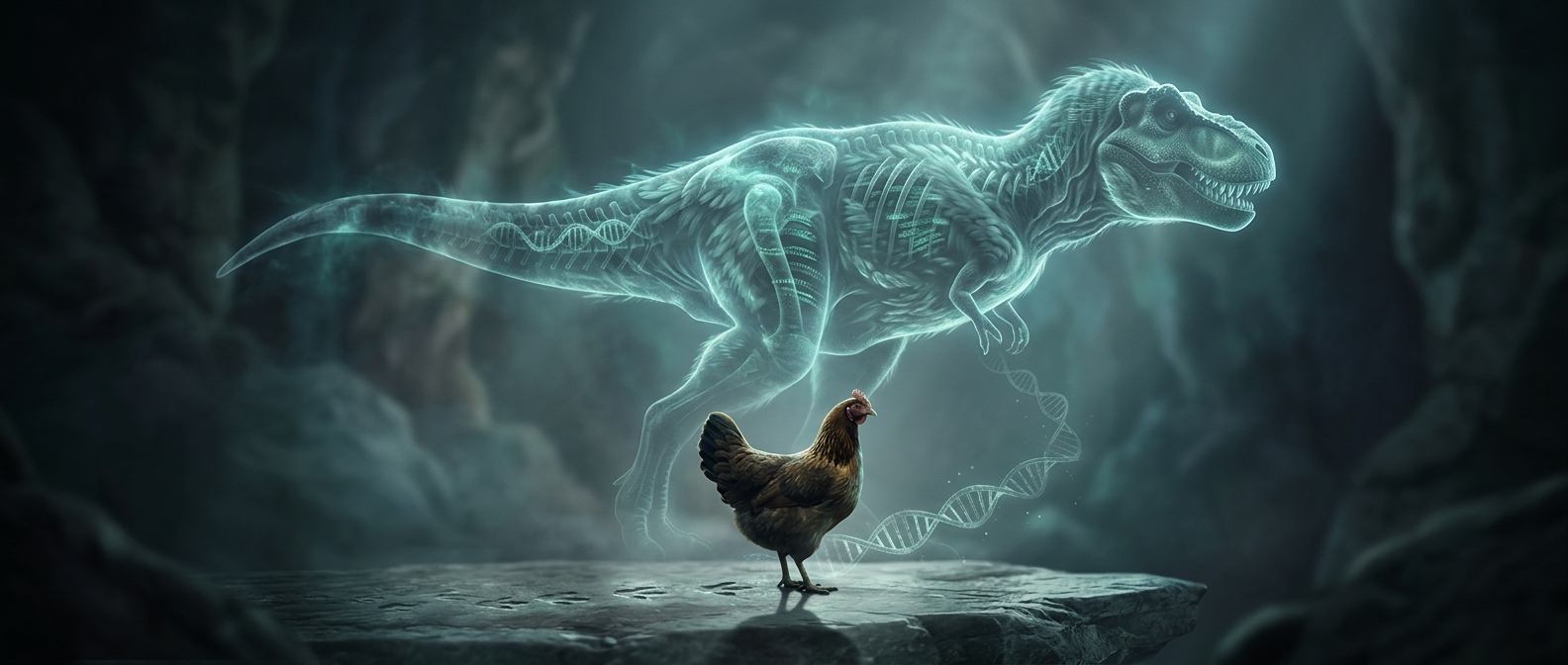
That comparison matters because a fossil’s shape and a molecule’s sequence preserve different kinds of clues. Bone anatomy records how an animal was built; protein sequence can reveal similarities too subtle to judge by appearance alone. The collagen fragments grouped T. rex closer to birds, including chickens and ostriches, than to many other animals in the comparison. The molecular evidence complemented the anatomical evidence; it did not replace it.
A family link, not a direct descent
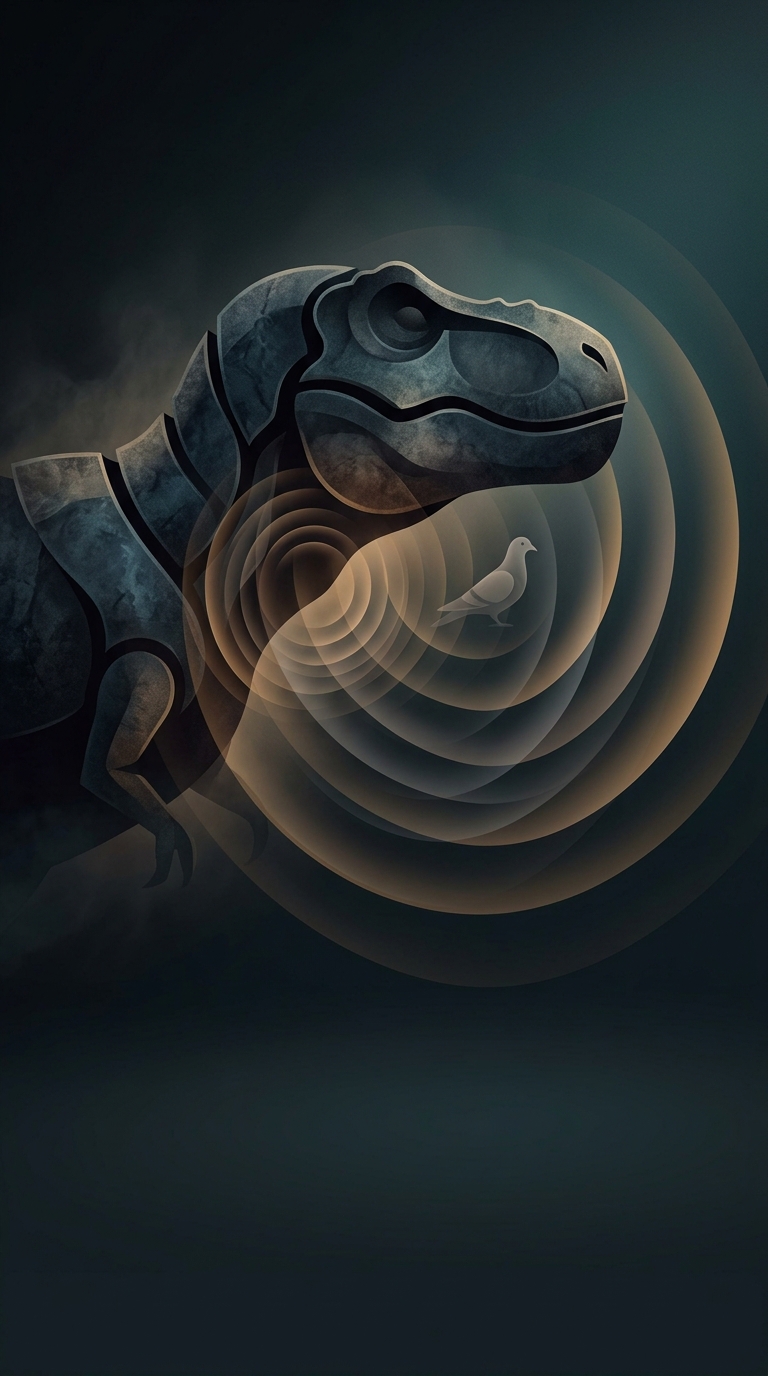
A shared protein pattern does not mean a chicken descended from the particular T. rex whose bone was studied. Evolution works through branching populations: two lineages can inherit similar features from an older common ancestor, then continue evolving separately. Modern birds belong to the dinosaur lineage, but the relationship is more like distant cousins than parent and child.
Collagen is also only one kind of evidence, and the recovered fragments were limited—not a complete genetic blueprint. They could not reconstruct the dinosaur or establish every detail of its family tree. Their importance was more precise: even a few surviving molecular clues could independently support the picture suggested by the bones. A chicken’s resemblance to T. rex is therefore not just a visual joke; it reflects a deep evolutionary connection recorded in both anatomy and ancient protein.