Why a Real Rally Car Changed the Performance
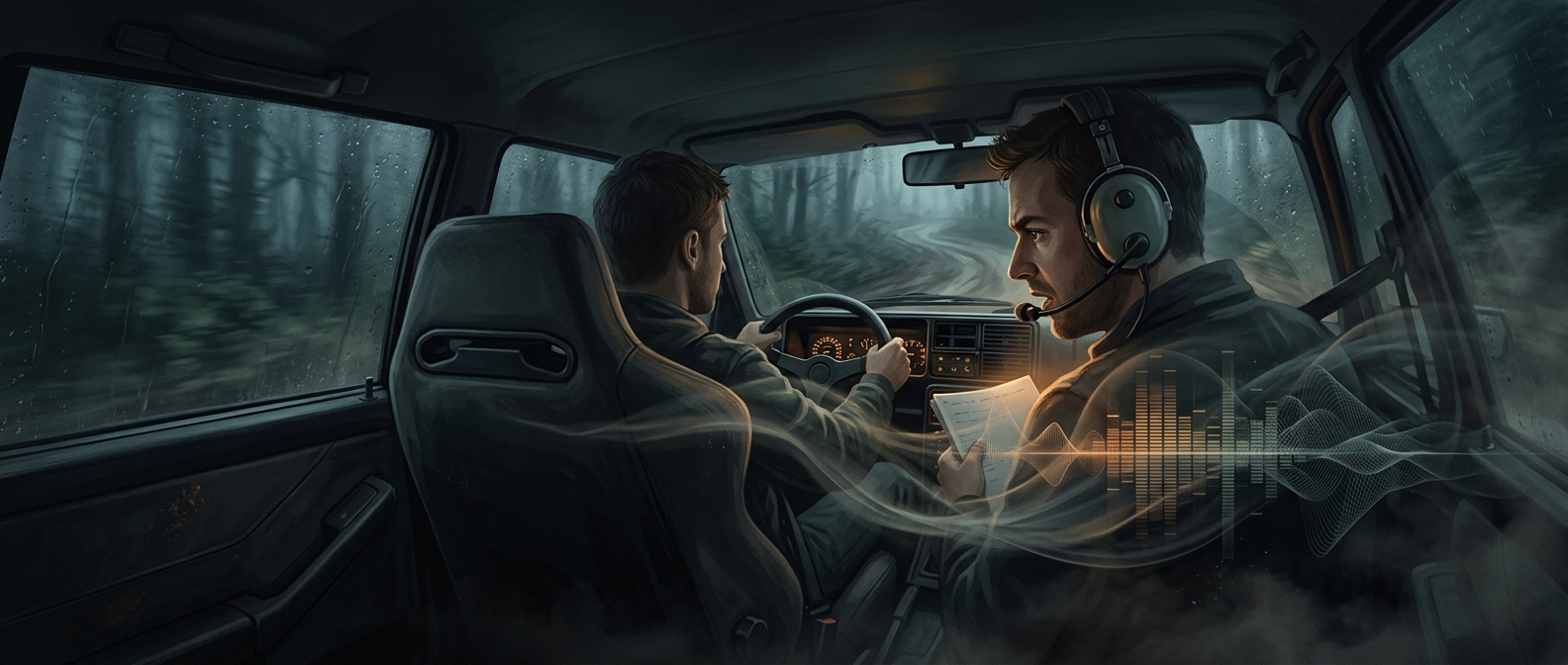
A rally co-driver’s voice is more than commentary: the calls tell the driver what is coming next, often while the car is bouncing over rough ground. In DiRT Rally, the audio team wanted the voice to sound as if it belonged inside that chaos. So the audio director strapped a voice actor into a real rally car and drove them around a dirt track, capturing reactions under actual jolts and movement.
That physical setting can affect a performance in ways a recording booth cannot. A sudden lurch interrupts breath; sustained vibration makes it harder to speak steadily; fear can tighten the voice before an actor has time to shape a polished line. The resulting screams gave the game a more immediate sense of danger than a clean studio take could provide on its own.
Panic Has to Fit the Game
The goal was not simply to record someone being frightened. Co-driver calls still have a job to do: help the player anticipate the road. The vocal performance therefore has to convey strain without making every sound indistinguishable from the engine, tires, and other effects. Real-world recording supplied the physical reaction; the game’s sound design could then place that reaction within the driving experience.
That choice links a small audio detail to the game’s central sensation. When the car bucks and the voice catches, the player hears not just a warning about danger but a human voice seemingly experiencing the same ride.