A cable route across a difficult gap
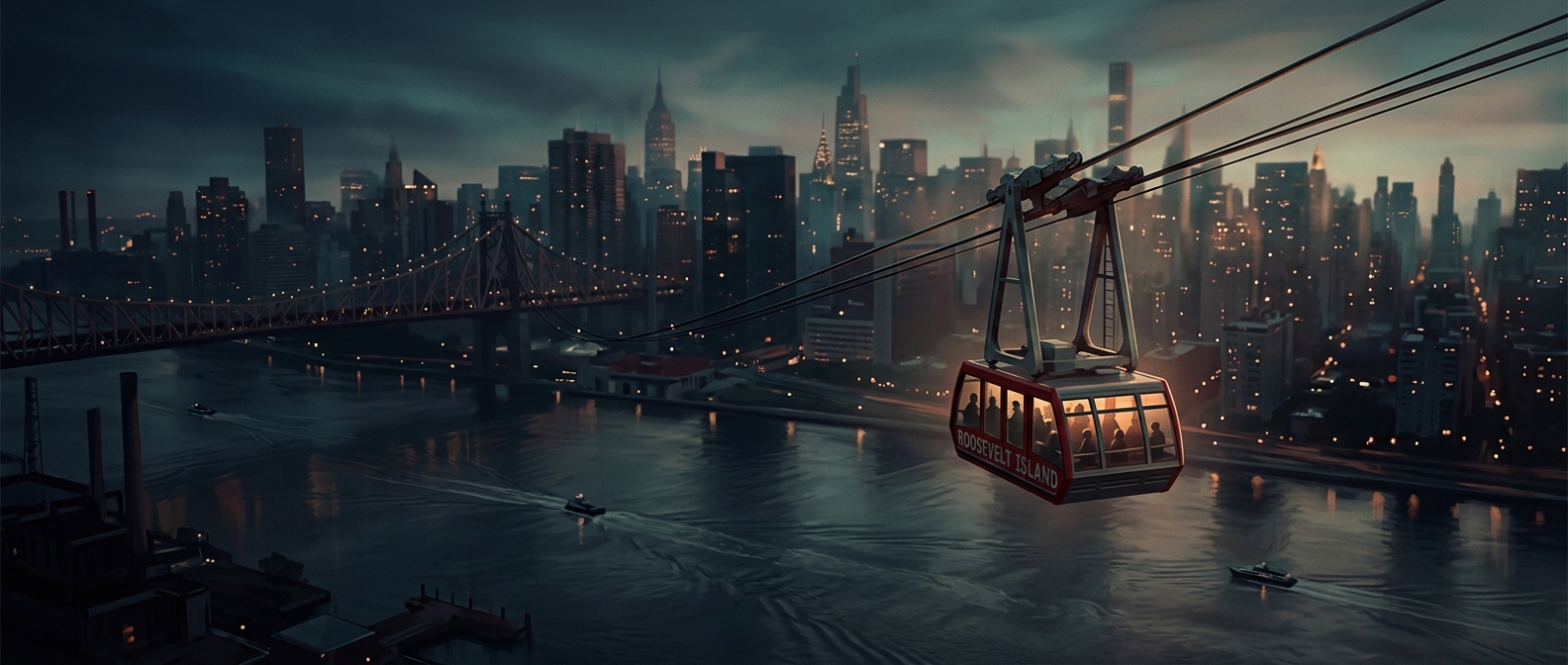
Roosevelt Island sits in the East River beside Manhattan, but its position does not make a direct street-level trip simple. The Queensboro Bridge connects the island to Queens, while reaching Manhattan by road means traveling away from the island and back toward the city. The tram provides a separate link: it rises from Manhattan, crosses the water, and descends onto the island.
How the tram carries its cabins
The cabins do not hang from one cable that both supports and moves them. In this kind of aerial tramway, fixed steel cables act like rails in the air, bearing the cabins’ weight. A moving cable pulls the cabins along that suspended track. This lets the system cross the river without building bridge piers in the water or laying a tunnel beneath it.
The route’s height is part of the engineering solution: the cabins need clearance over the river and its traffic, while their cables must span between towers on either shore. The ride is short, but it depends on a carefully tensioned system carrying passengers over open water.
A commute shaped by geography
The tram makes the island’s closeness to Manhattan usable in a way a map alone can’t show. Instead of following a road route around the river, passengers travel directly between the two shorelines. The skyline view is a byproduct of that practical choice: the fastest path through the gap happens to put the city in the window.