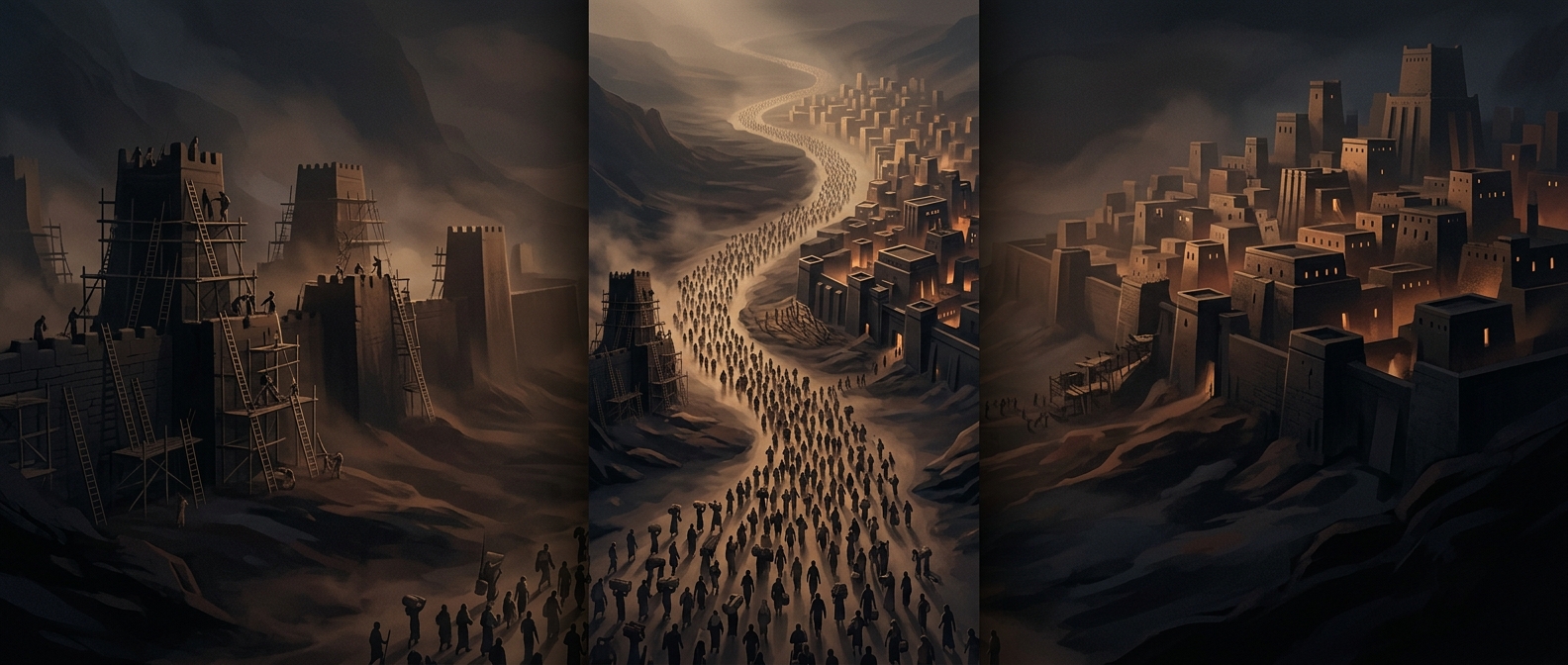
The Empire moved people as well as goods
Roman rule linked distant provinces through armies, roads, ports, and markets. A soldier recruited in one region might serve far from home; merchants and craftsmen followed routes where customers gathered. Mining also drew workers toward places rich in valuable materials, including salt. But these journeys did not all happen by choice: Roman mines and other labor systems could rely on enslaved people and convicts as well as free workers.
How movement changed local life
A posting or trading trip could bring people into contact with communities whose customs differed from their own. In towns near forts, mines, and busy routes, newcomers needed food, tools, lodging, and services. They bought from local sellers, married or settled in new places, and adapted to local habits. The result was not simply Roman culture replacing everything else. It was a patchwork shaped by imperial power, local choices, and daily exchange.
Language followed a similar path, though not as a neat record of who traveled where. Latin spread widely through administration and military life, while Greek and many regional languages remained in use. Words and ways of speaking could cross between them, but a shared word alone cannot tell us exactly who brought it or when.
The traces are often ordinary
Food is harder to reconstruct than a route on a map: recipes change, ingredients travel, and similar dishes can arise independently. It is safest to think of Roman-era cuisine as a set of local traditions in contact, not as a single imperial menu. The enduring point is that exchange happened in everyday settings—at a market, a military settlement, or a work camp—where people had to make a life together far from where they began.