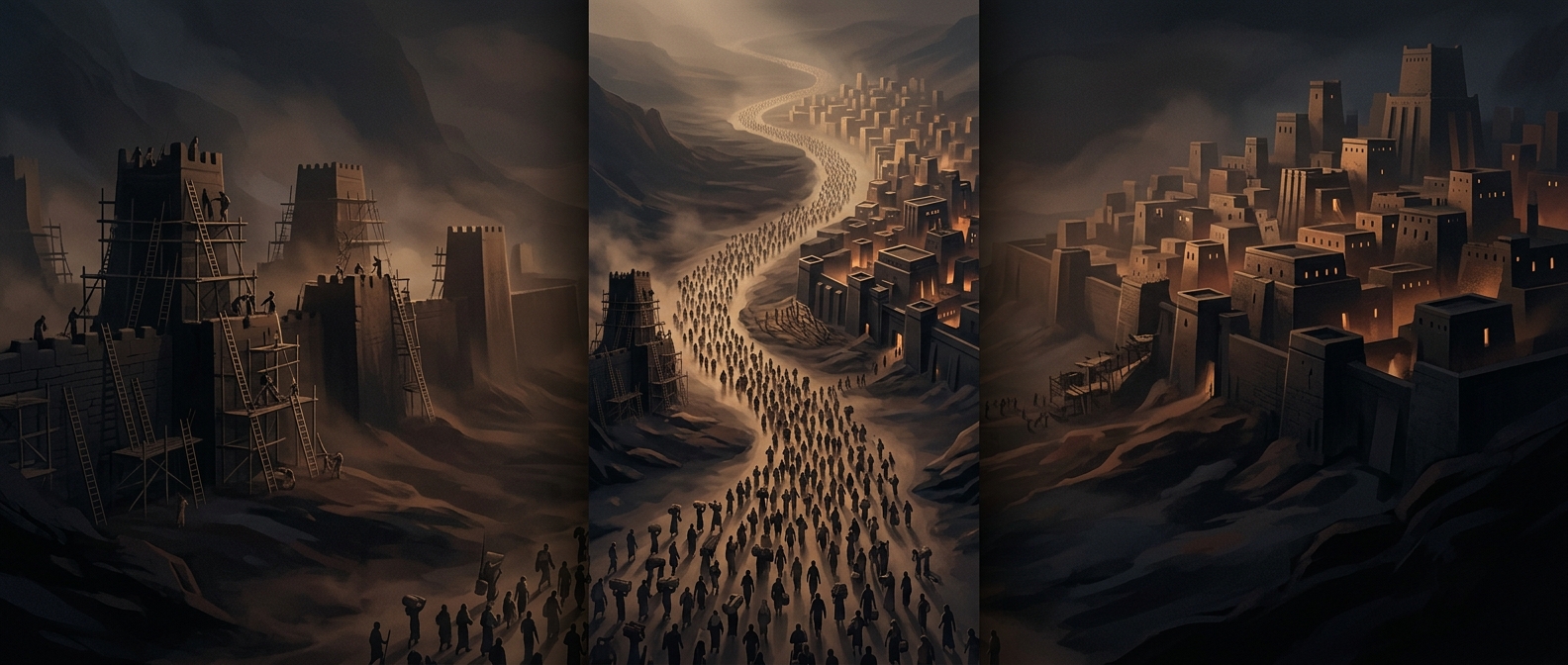
Why a new settlement could grow so quickly
A wave of newcomers did more than add people to a place. It brought many workers at once, and those workers could divide urgent tasks among themselves: some cleared ground and raised shelters, while others dug wells, made tools, or prepared food. When the settlers already knew one another or shared leaders and customs, they could coordinate this work more readily than isolated arrivals could.
That mattered because a settlement needed several things at the same time. People needed somewhere to live, but they also needed reliable food and water, places to exchange goods, and ways to protect the community. Building these in parallel could make a settlement feel established much sooner than a slow trickle of households would.
From camps to urban centers
As the population grew, not everyone had to farm or build. Some residents could specialize in crafts, trade, or organizing communal work. Markets then connected local producers with newcomers and travelers, while shared defenses—such as a wall, ditch, or guarded entrance—could protect homes and stores. These features helped turn a cluster of dwellings into a center that served people beyond its immediate residents.
The process was not simply a matter of numbers: a large group still needed water, food, workable land, and some way to manage disputes and coordinate labor. But when those conditions aligned, migration concentrated people and effort in one place. What made the change striking was the combination: newcomers did not merely fill a city; their shared work could create the infrastructure that made one possible.