How a mantis turns two views into a strike
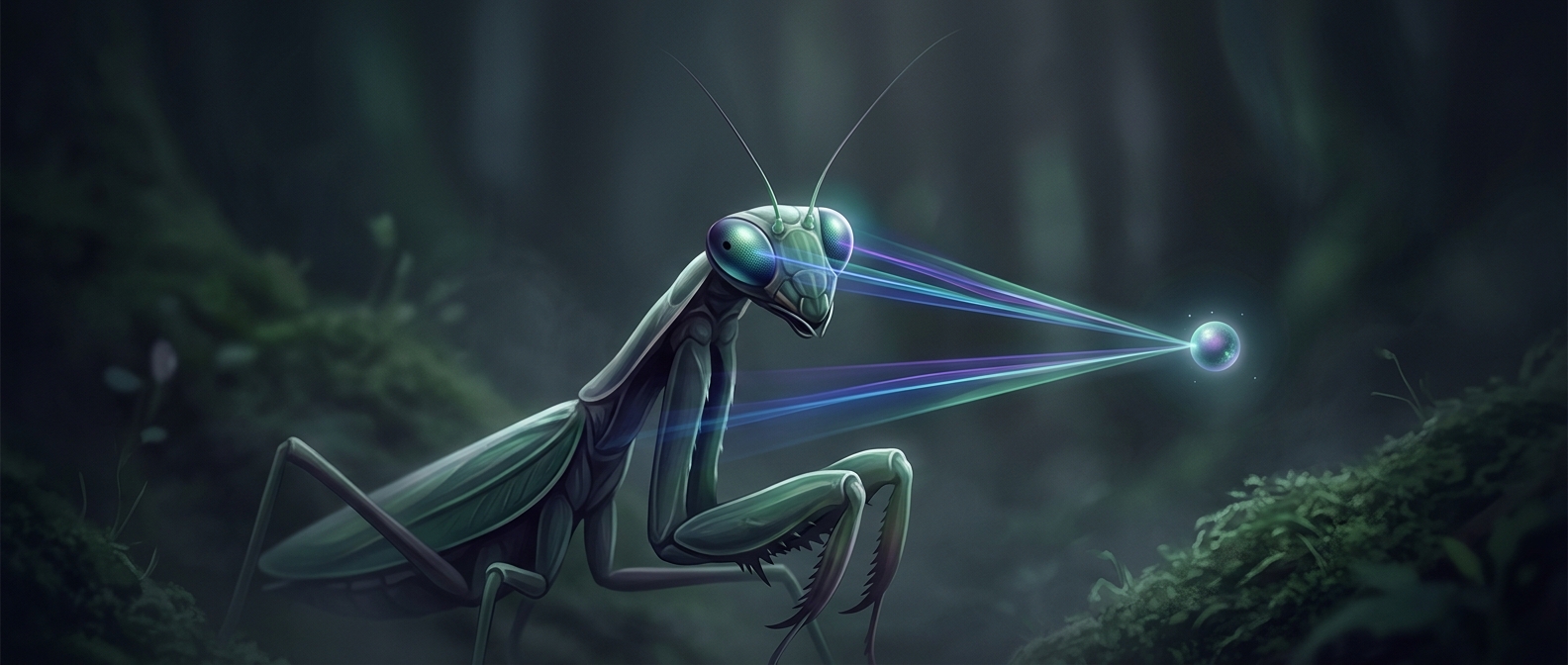
A praying mantis does not simply see prey as a tiny picture. Its brain compares what each large eye receives: because the eyes sit apart, each view shifts slightly relative to the other. That difference is called binocular disparity, and it provides a distance cue. The nearer an object is, the more its two views diverge.
For a predator that must reach out and seize moving prey, distance is a practical problem. A mantis can swivel its head to bring a target into view, then use the paired images to help estimate how far its forelegs must travel. The visual calculation need not produce a detailed map of the world; it needs to help answer a precise question: is the prey within striking range?
Motion makes depth easier to judge
The mantis’s depth vision is especially tuned to change. As prey moves across the visual field, its image shifts differently in the two eyes. The nervous system can use that changing mismatch to distinguish a nearby moving target from one farther away. This is a form of stereoscopic vision—the same broad principle that lets people perceive depth with two eyes—but mantises apply it to the split-second task of hunting.
The smaller eyes contribute a different kind of information. Rather than measuring a target’s distance, they are sensitive to changes in light, helping the insect register shifts in brightness. Keeping those jobs separate lets the mantis use its large eyes for the detailed, paired views needed to time a lunge.
The result is a predator whose strike depends not just on spotting prey, but on extracting the right depth clue at the right moment. A small error in distance can mean the difference between a foreleg closing around a meal and sweeping through empty air.