A Raindrop Can Act Like a Tiny Lens
A rounded water droplet bends light as it passes from air into water and back again. Because the droplet bulges outward, it behaves much like a convex lens—a lens that brings incoming rays together. Light from each point in the scene changes direction as it travels through the curved surfaces.
Where the Image Turns Over
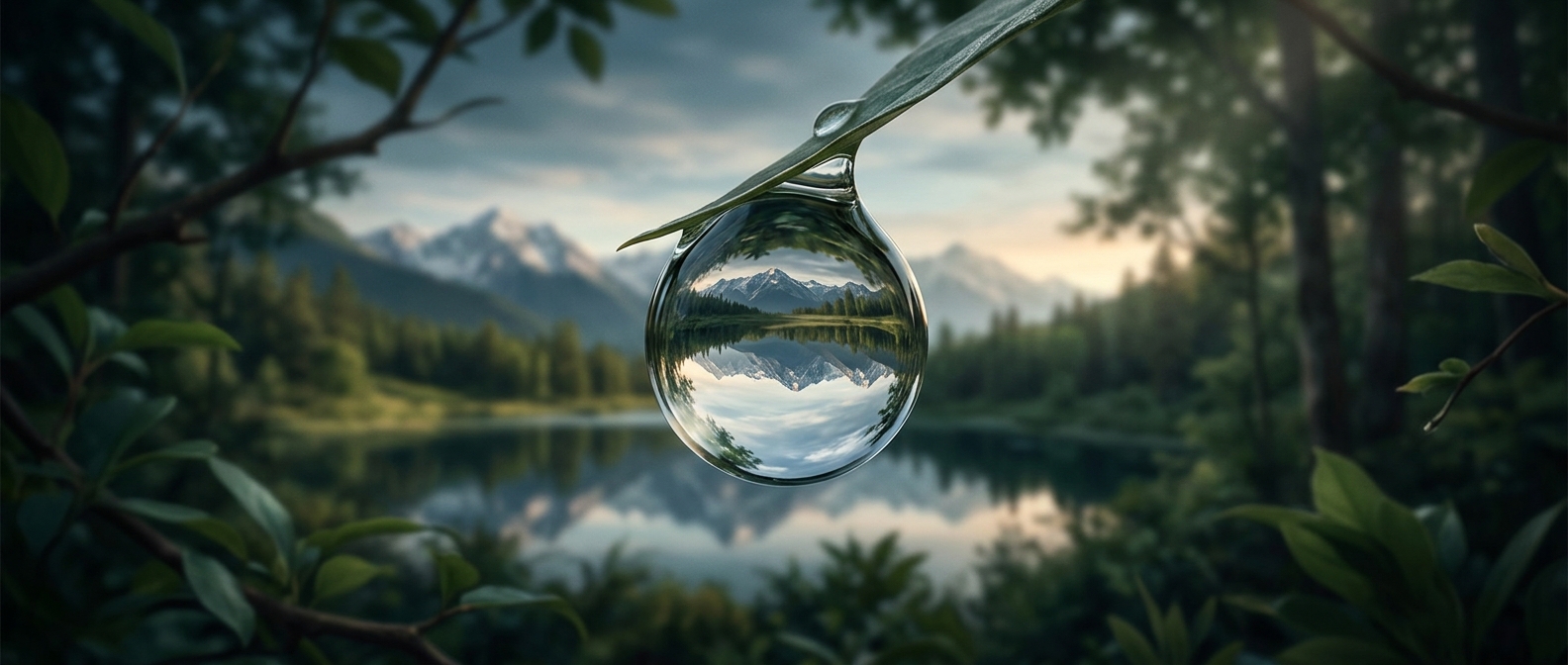
Rays from the top and bottom of an object enter different parts of the droplet. The curved water redirects them until they cross, then continue toward your eye. After that crossing, light that came from the top reaches the lower part of the image, while light from the bottom reaches the upper part. The result is an inverted projection: the scene appears upside down.
This is the same basic geometry that lets a simple magnifying lens form an inverted image when an object is far enough from the lens. The droplet is not reflecting a miniature scene from its surface; it is refracting it, meaning bending light as it passes between materials.
Why the Image Is Usually Blurry
A real droplet is small and rarely has the precise shape of a glass lens. Its surface may be uneven, and light entering near the edge bends differently from light entering near the center. Those imperfections spread the image, so you may see only a tiny, soft upside-down patch rather than a sharp miniature landscape.
Hold a rounded bead of water in front of a distant scene, and the reversal becomes easier to spot: the droplet is not merely sparkling in the light. It is briefly acting as a lens that projects the world through its curved body.