Why an Infinite Mirror Tunnel Can Turn Green
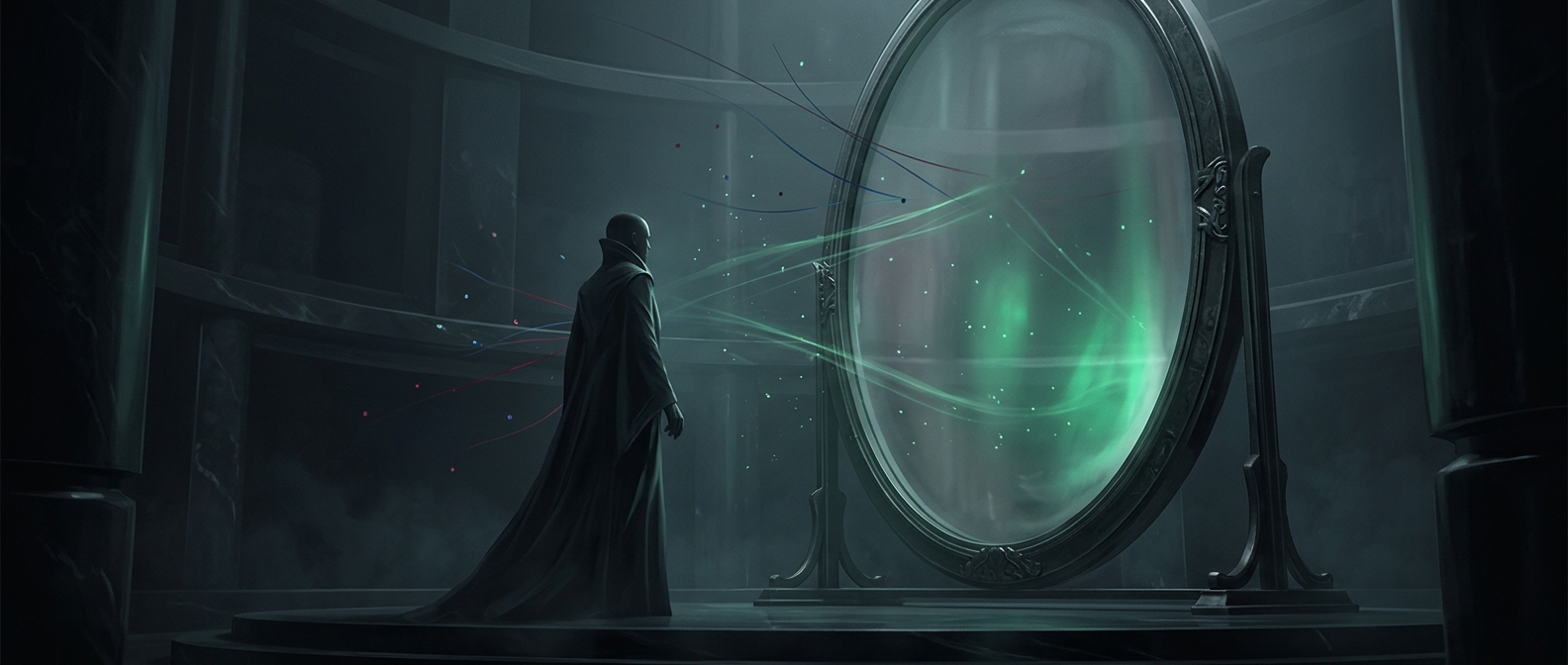
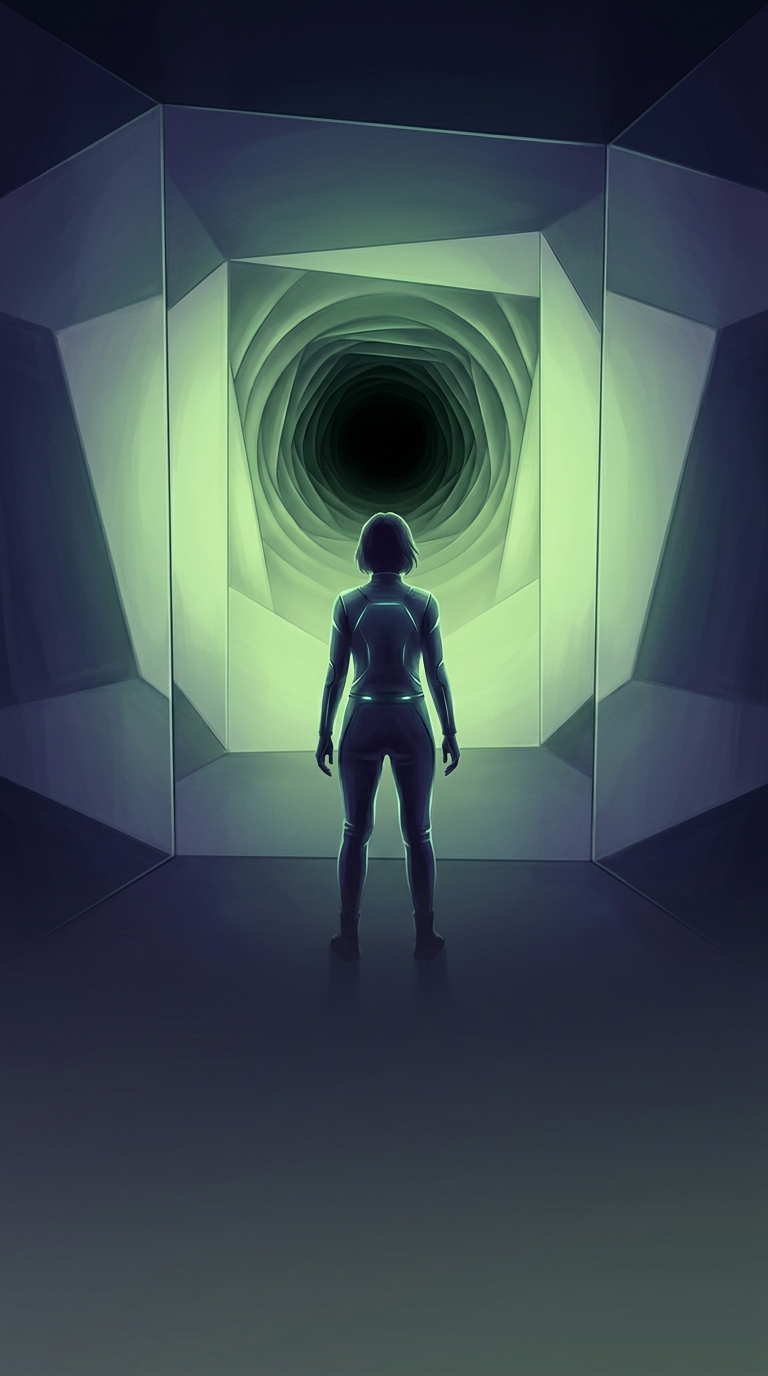
The repeated reflections do not preserve every color equally. Each time light bounces off a mirror, a small fraction is absorbed or scattered rather than reflected. If the mirrors reflect green light a little more efficiently than red or blue, that tiny difference is repeated with every bounce. Far down the tunnel, the surviving light can take on a noticeable green cast.
A Small Difference, Multiplied
A single reflection usually looks neutral because the color shift is subtle. But an apparent “infinite” tunnel is made from many reflections stacked in sequence. Even a slight preference in reflectivity compounds: light that loses more red or blue at each bounce falls behind the green.
The effect depends on the mirrors and their coatings. Some setups may show little color shift, or a different tint; there is no universal color built into the infinite-mirror effect itself.
Darkness Grows Alongside the Tint
Color is only part of the change. Since each bounce also removes some light, reflections become dimmer with distance. The far end therefore looks both darker and, when the mirrors have a slight green bias, greener. The tunnel is not creating green light; it is letting green survive the journey better than the other colors.