Why Shorter Light Spreads Across the Sky
Sunlight contains a mixture of colors. As it passes through the atmosphere, its electric field makes air molecules—mostly nitrogen and oxygen—move slightly. Those moving molecules send light back out in many directions, a process called scattering. The scattered light can reach your eyes from parts of the sky far from the Sun.
For molecules much smaller than a wavelength of light, scattering is far more effective at shorter wavelengths. In the idealized rule known as Rayleigh scattering, the effect grows roughly as the inverse fourth power of wavelength. Blue light is therefore redirected much more readily than red light; the atmosphere does not create blue, but redistributes sunlight so blue is prominent overhead.
What the Experiment Reveals
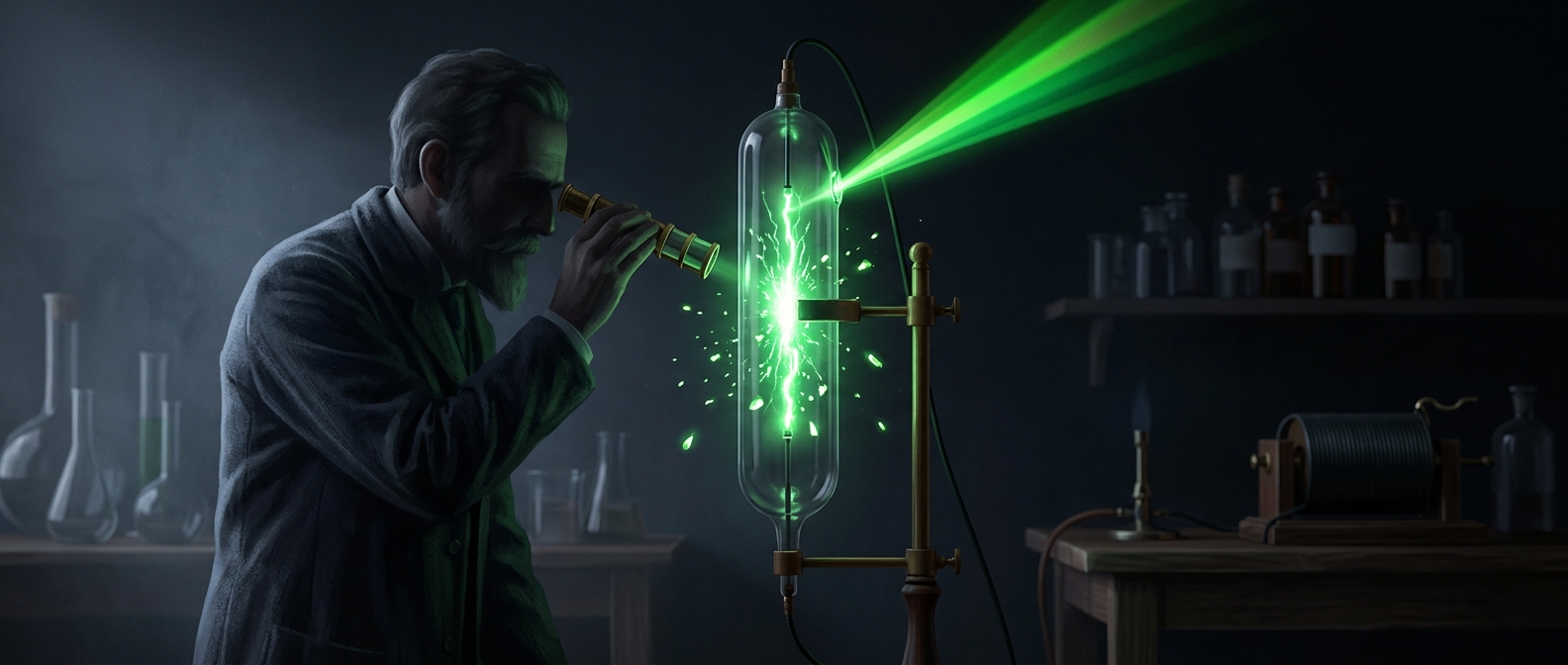
The key experimental comparison is to send different colors through the same small-particle medium and observe how much light is scattered sideways. Shorter wavelengths appear more strongly in that side light, while longer wavelengths remain more concentrated in the direct beam. This makes the mechanism visible: the color of the scattered light depends on the wavelength, not on clouds or colored material in the air.
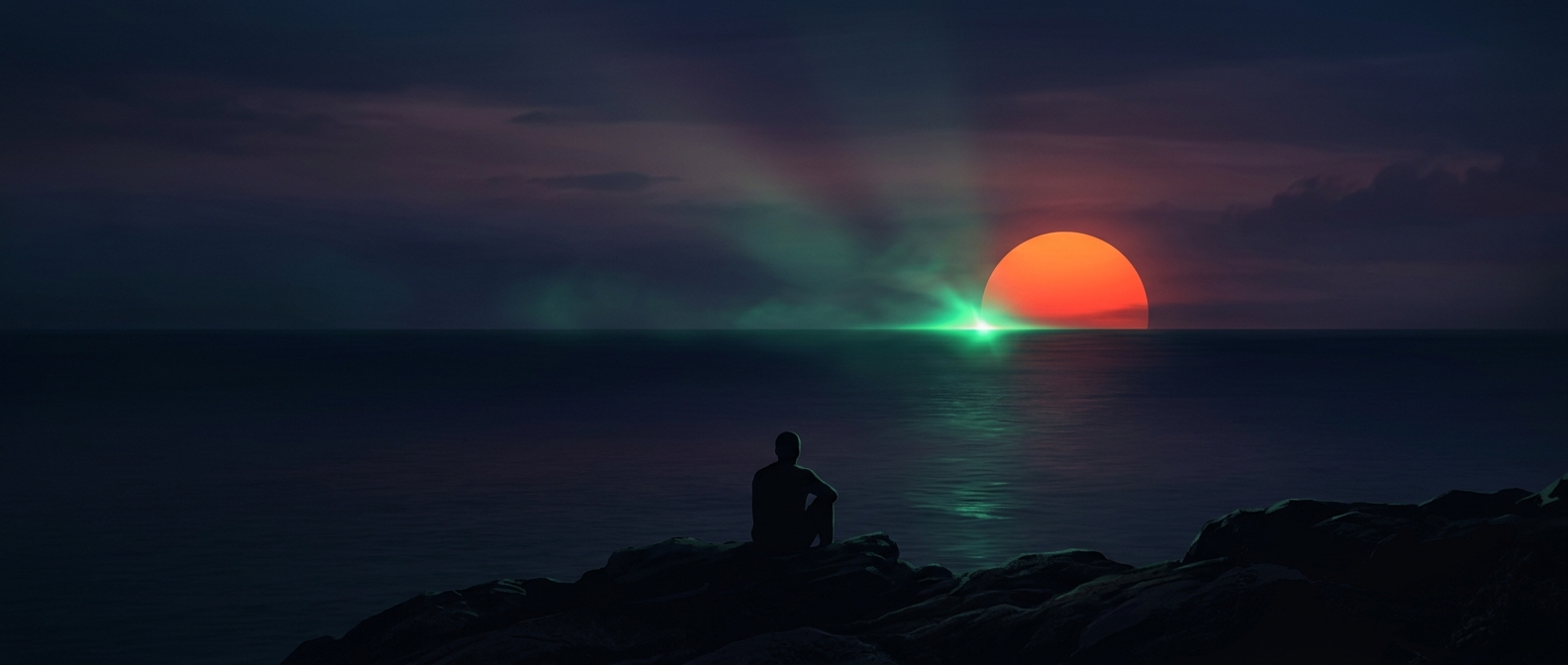
Violet light is shorter-wavelength than blue and scatters even more, but the sky does not look violet. The Sun emits less violet light, some is absorbed in the upper atmosphere, and human vision is more sensitive to blue. What reaches the eye is a broad mix perceived as blue. The same process also explains why the Sun looks redder near the horizon: its light travels through more atmosphere, losing more of its blue component from the direct beam along the way.