Why the Sun can flash green at the horizon
Sunlight looks white, but it contains many colors. Earth’s atmosphere bends each color by a slightly different amount, much as a prism does. Near the horizon, sunlight travels through a long stretch of air, so this separation becomes easier to notice: green light appears just above red and orange light in the Sun’s image.
The brief gap that reveals green
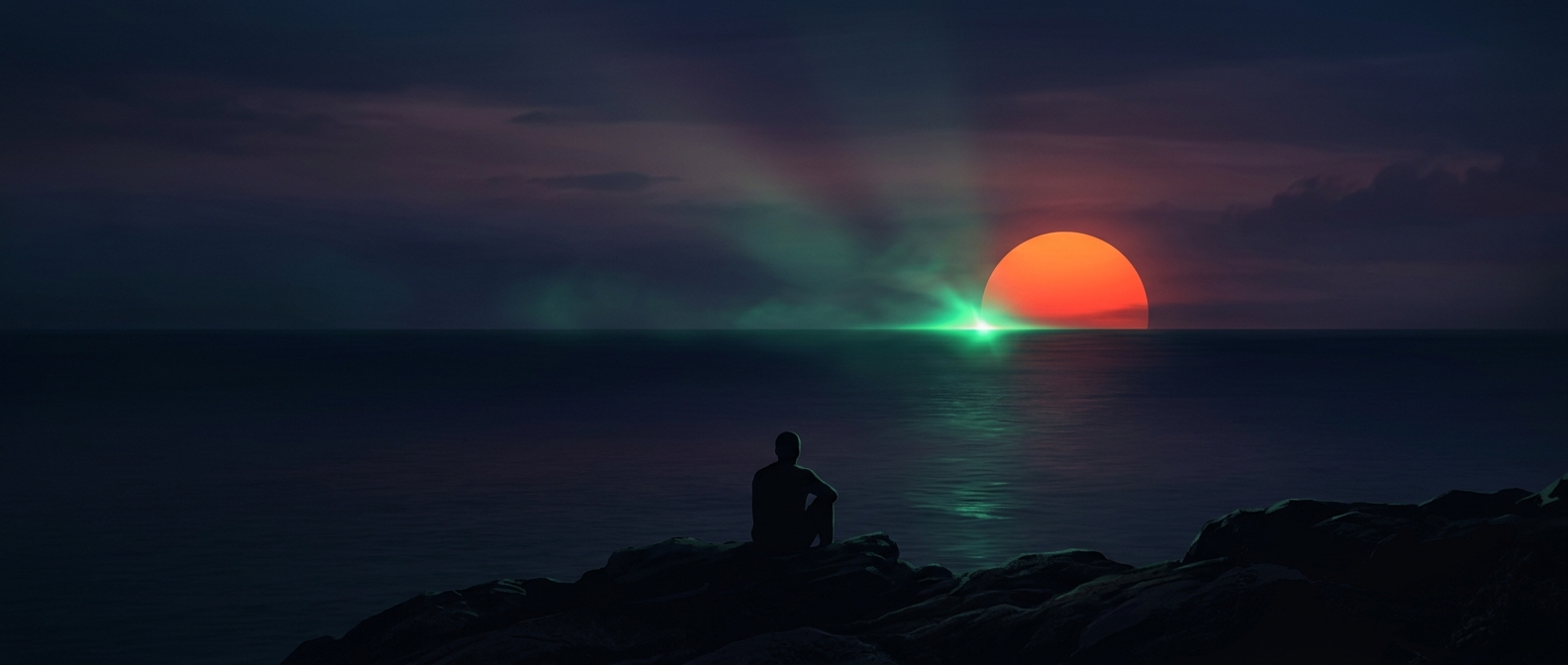
As the Sun sets, the horizon blocks its lower edge first. The colors do not disappear all at once: red and orange images lie slightly lower, while the green image sits a little higher. For a moment, the upper rim can therefore appear green. Once the Sun slips below the horizon, that last visible light is gone.
The effect is usually a thin rim rather than a vivid green disk. Atmospheric turbulence—shifting pockets of air at different temperatures—can blur or distort the separated colors, making the flash harder to see. A distant, unobstructed horizon helps because it gives the Sun’s final edge a clean outline; haze and clouds can erase it.
Why it is easy to miss
The green edge can last only a second or two, and it is visible only when the atmosphere bends the light cleanly enough. Looking at the Sun itself can damage eyesight, even at sunset, so the flash is best observed indirectly—for example, as the Sun disappears behind a distant horizon or object. Its fleeting appearance is the visible trace of sunlight being sorted by the air just before the horizon cuts it off.