Why Sirius Became a Summer Scapegoat
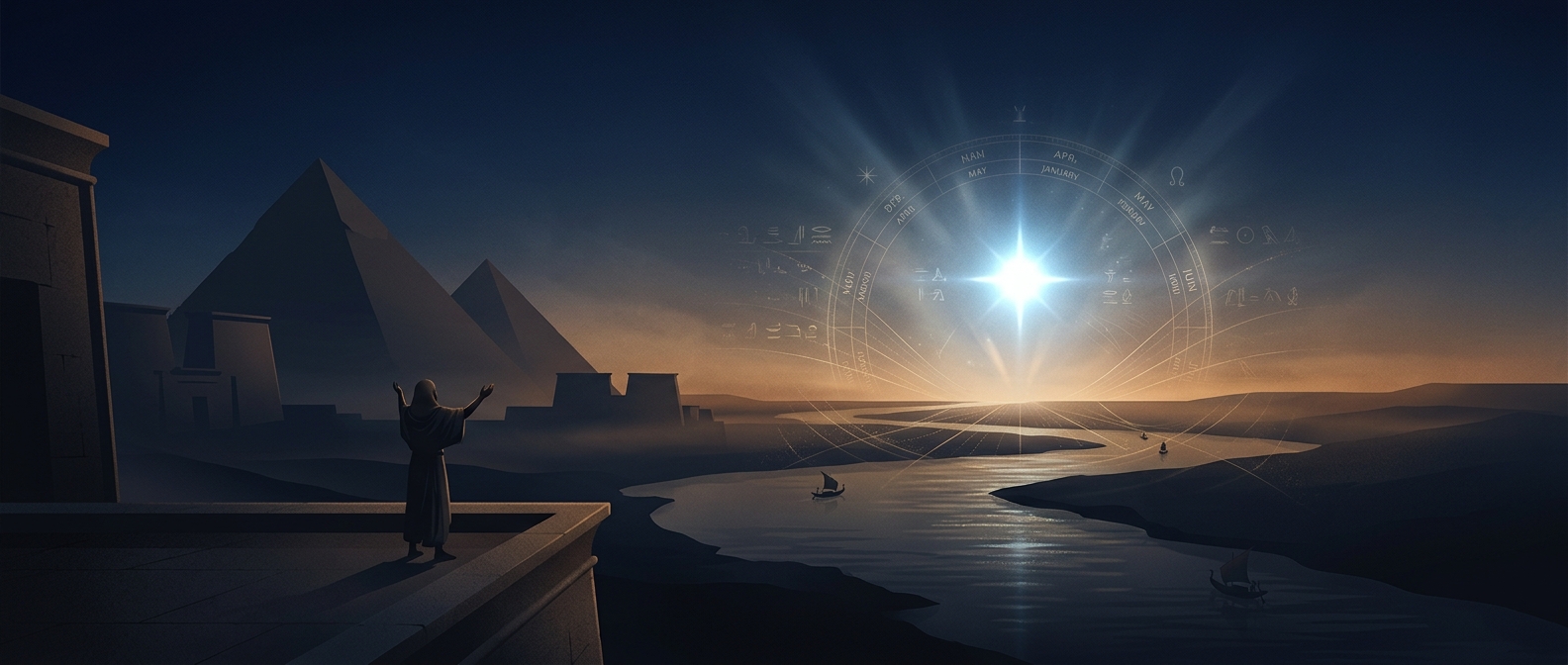
To Romans, the hottest stretch of summer seemed to have a celestial accomplice. Sirius, the brightest star in the night sky, rose around dawn during that season. Its appearance near the Sun made it easy to imagine that the two were adding their heat together—and that the star helped drive the oppressive weather.
Sirius belongs to the constellation Canis Major, or “Great Dog,” which gave it the familiar name the Dog Star. The Romans called the season associated with its rising dies caniculares, “days of the dogs.” The phrase survived as “dog days,” even as the old explanation faded.
From a Sky Pattern to a Cause
The timing was the persuasive part. Sirius’s return to view coincided with summer heat, so the star could seem to signal—or even produce—the weather. This was an ancient way of making sense of a recurring pattern: a visible event in the heavens was linked to changes on Earth.
Romans also associated Sirius with danger to dogs. The belief that its influence could make them mad fit the same picture of summer as a force that unsettled living things. It was not a measured account of how heat affects animals; it was a cultural explanation that joined the star’s name, seasonal timing, and familiar summer risks.
What the “Dog Days” Still Preserve
Sirius does not add heat to the Sun. Its seasonal appearance is a matter of where Earth’s orbit places the star in the sky: for a time, sunlight overwhelms it, and later it becomes visible again near dawn. But the old phrase still carries the Roman interpretation inside it. When someone calls a hot spell the dog days, they are repeating a calendar shaped by a star once imagined as an active force in the weather.