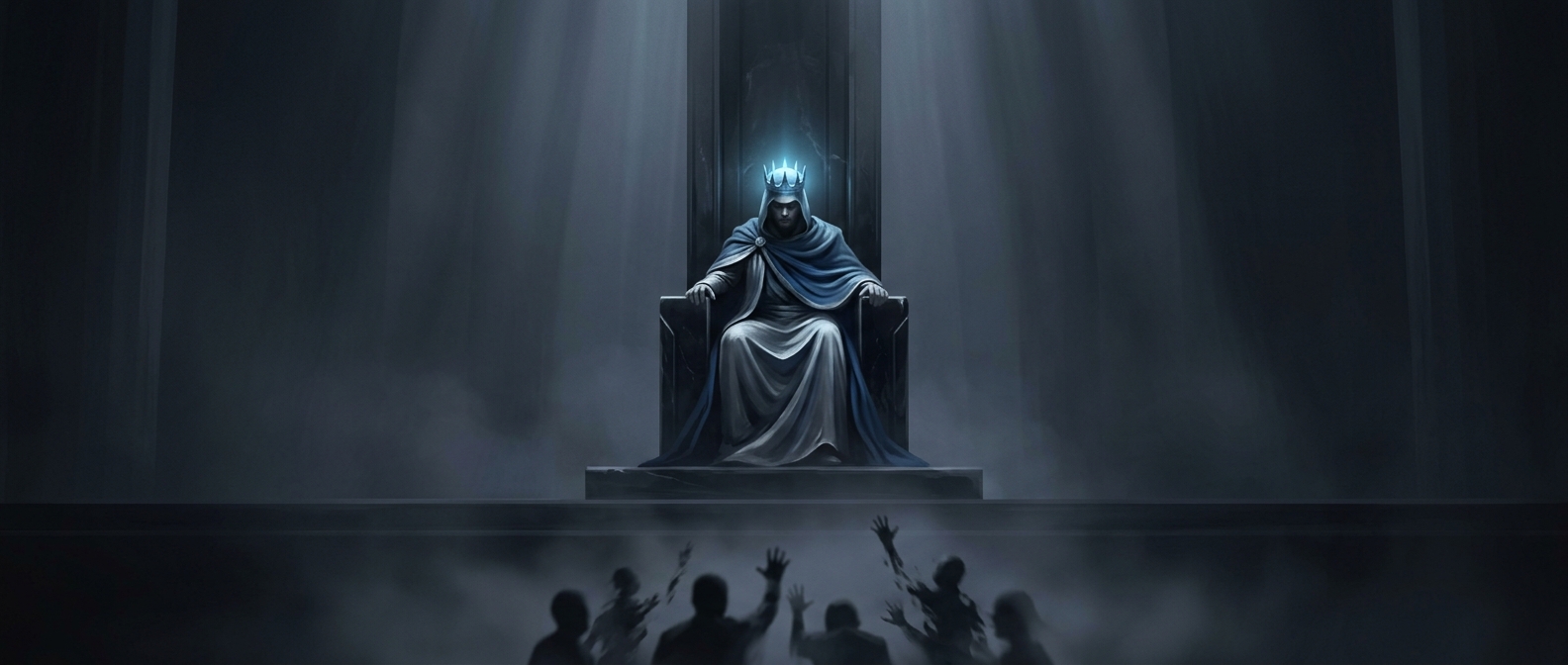
A movement can begin before it feels chosen
When you reach for a button, your brain does not wait for a fully formed sentence—“I’ll press it”—before preparing your hand. Networks involved in movement can begin shifting toward action while the choice is still entering awareness. The conscious intention may therefore feel like the starting gun even though some preparation is already under way.
Researchers can detect one sign of this preparation in brain activity called the readiness potential: a gradual change that often appears before a voluntary movement. It is not a hidden command announcing that a particular action is settled. It is better understood as evidence that the brain’s movement system is moving toward action.
The feeling of deciding has its own timing
The apparent gap between preparation and conscious intention is difficult to measure directly. In classic laboratory tasks, participants make a simple movement when they feel like it and report when they first noticed the intention. That report depends on memory and attention: people must notice a fleeting inner experience and place it in time. So the measured moment is an estimate, not a timestamp attached to a thought.
The brain signal also does not necessarily mean the hand’s movement is inevitable. Preparation can build gradually, and a person can still refrain or change course. A readiness signal is not the same as a completed decision, just as leaning toward standing up does not guarantee that you will rise.
The narrator may be catching up
This finding complicates the everyday picture of a conscious self issuing commands to a passive brain. Conscious awareness may be one stage in a larger process—helping evaluate, guide, or interrupt actions—rather than the first spark in every movement. The practical implication is modest but striking: when you decide to press a button, the feeling of “now I choose” may describe the point at which the choice becomes noticeable, not the instant the underlying process began.