A tiny signal turns the whole room into a suspect pool
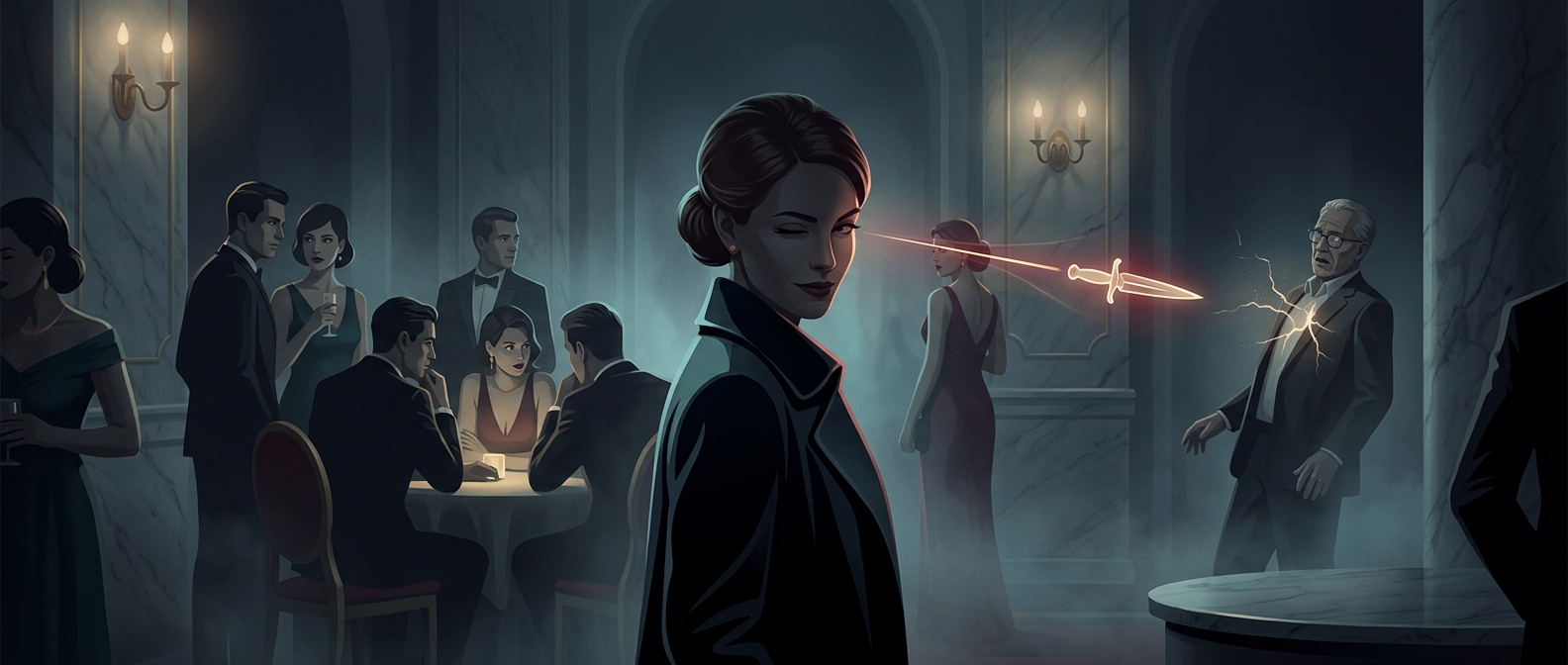
In Wink Murder, the murderer’s weapon is also the clue: a deliberately ordinary gesture that is hard to notice in a busy room. Players have to keep watching one another while acting as though nothing unusual is happening. That split attention is the game’s engine. Look too intently at one person and you may miss the wink; look everywhere and you may not catch who made it.
The rules create a timing puzzle
After the secret role is assigned, the murderer tries to wink at players without being caught. A winked-at player waits a beat, then theatrically “dies,” giving the rest of the group evidence that something happened. The delay matters: an immediate reaction can reveal the target, but a slow one may leave everyone wondering whether the signal was missed.
The other players are not simply searching for a suspicious face. They must connect a particular wink to a later reaction, often while the murderer is making the same casual eye contact as everyone else. Accusations add a second challenge: act too soon and an innocent player may be blamed; wait too long and the murderer may claim the room.
Why the simplest version works
The game needs almost no equipment because its main resource is social attention. A group, a shared space, and a way to assign roles are enough. Its simplicity also makes the limits part of the design: lighting, seating, group size, and how convincingly players perform their roles can all affect what anyone is able to see.
That makes each round a little performance as well as a deduction game. The murderer must appear unremarkable; the watchers must avoid giving away what they noticed. A successful wink can change the room without making a sound—and leave everyone debating whether the decisive clue was a blink or just a blink.