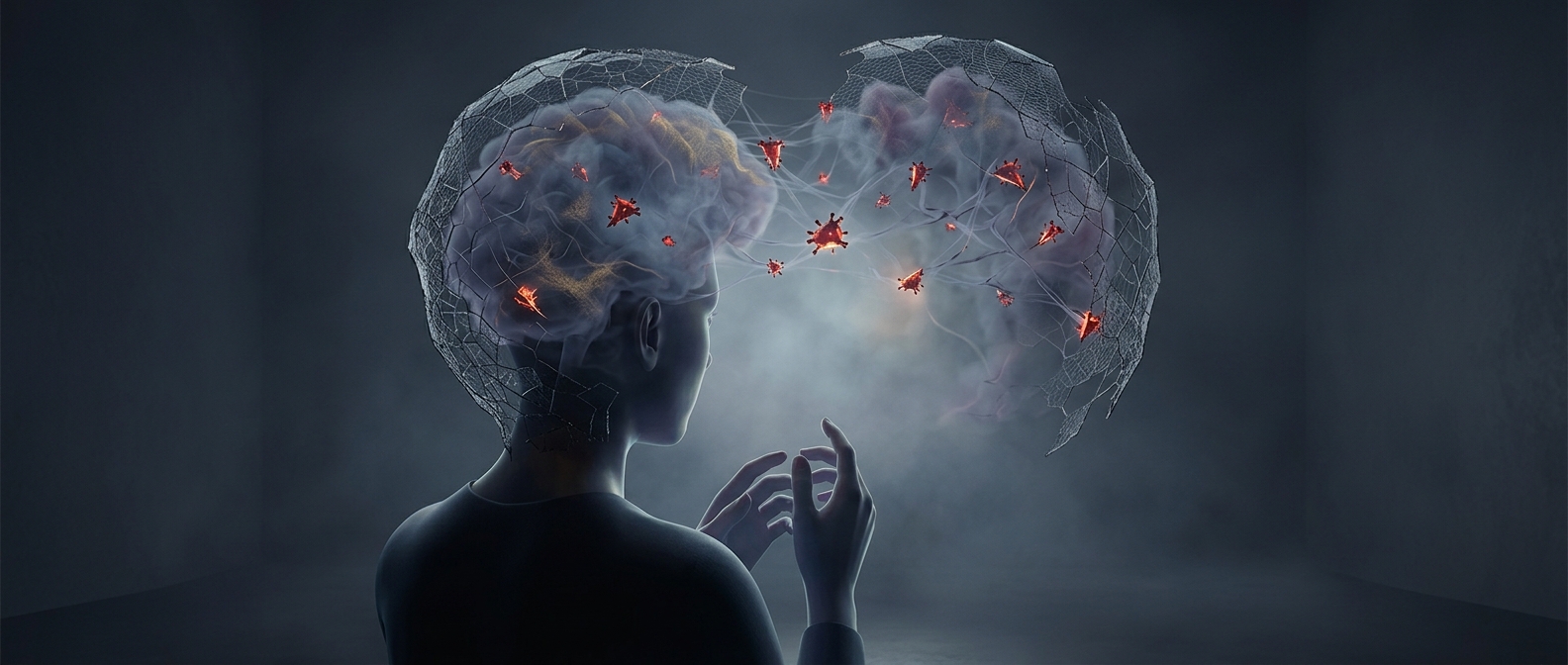
How immune signals can cloud thinking
The brain depends on carefully regulated communication among nerve cells. During an immune response, chemical messengers help coordinate the body’s defenses. If immune activity remains heightened after an infection, those signals may alter how brain cells communicate and use energy, making attention and mental effort feel less reliable.
One proposed trigger is viral material that persists after the acute illness. The material need not mean that the virus is actively multiplying: immune sensors can respond to remnants as well as to an ongoing infection. That response may keep inflammatory signaling going, though researchers are still working out when this happens and how much it explains post-COVID symptoms.
Why the effect can feel like “fog”
Thinking clearly is not a single task. Holding a thought in mind, switching between tasks, and finding a word all rely on networks coordinating smoothly. When their activity is disrupted, ordinary work—following a conversation or reading a page—can demand more effort. The result may feel like slowness or distraction rather than a problem with memory alone.
This proposed mechanism also helps explain why brain fog can outlast the period when someone feels acutely ill: the immune response and its effects may not settle at the same pace as fever or other immediate symptoms. It remains one explanation among questions still under study, not a complete account of every person’s experience. The practical consequence is that lingering difficulty thinking can reflect changes in how the brain is functioning, even when the person looks well.