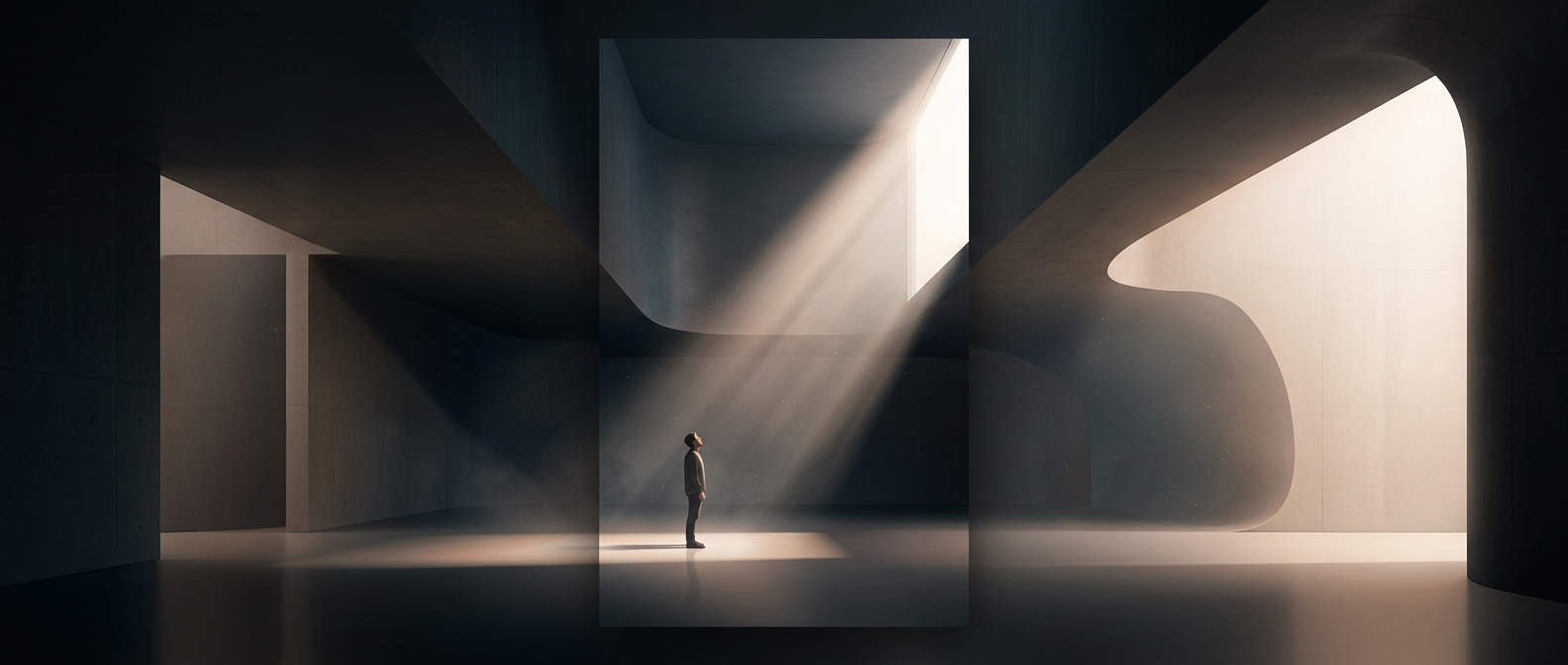
How daylight changes the room’s visual boundaries
Your eyes do not measure a room the way a tape measure does. They infer its shape from cues such as edges, contrast, and shadows. In dim light, a dark corner or a deep shadow under furniture can read as a strong visual boundary, making part of the room seem closed off. When daylight reaches those areas, the contrast often softens. The corner is easier to see, but it may feel less like a dark pocket pressing into the space.
Light also makes walls, floors, and furnishings easier to distinguish. That can help the eye take in more of the room at once instead of dwelling on isolated dark patches. The result is not a new depth cue so much as a change in how imposing the existing boundaries feel: the space can seem more continuous and less crowded.
Why the effect depends on the light
Sunlight does not always make a room feel larger. A low, direct beam can cast sharp shadows, while glare from a bright window can make nearby details harder to see. Those effects may emphasize divisions or draw attention to the window rather than the room’s full shape. The impression of openness is most likely when daylight reaches surfaces and corners without creating distracting glare or stark patches.
That is why the same room can feel different as the sun moves. Its walls stay put, but the balance of light and shadow changes—and with it, the visual cues your brain uses to judge how open the space feels.