How one seated performer creates a whole cast
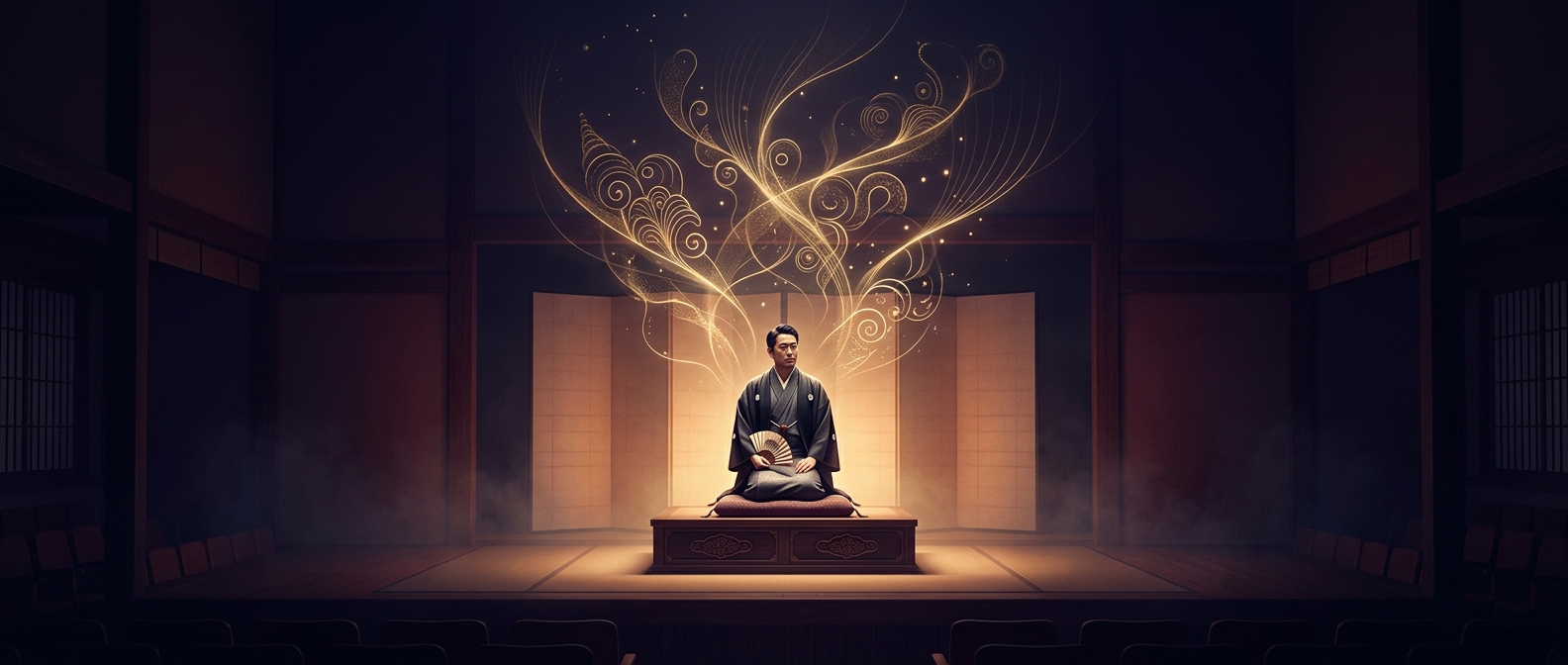
Rakugo turns a single voice and a few precise gestures into a scene the audience can picture for itself. The storyteller—called a rakugoka—performs a comic narrative while seated on a cushion, shifting speech, expression, and the angle of the head to distinguish one character from another. A slight turn can suggest that two people are facing each other; a change in voice tells the audience who has begun speaking.
Because the performer does not get up to act out the scene, the audience supplies much of its movement and setting. A conversation, a meal, or a mishap can unfold through words and small motions rather than a literal stage transformation.
Two props, many imagined objects
The paper fan, or sensu, and a small cloth, or tenugui, serve as flexible stage props. In the storyteller’s hands, a fan may suggest a chopstick, a pipe, or another narrow object; the cloth can stand in for something a character holds. Their meaning comes from the action and the story, not from a realistic imitation.
These limits are part of the craft. A rakugoka has to make each object legible with a brief gesture, while leaving room for listeners to complete the picture. The restraint also keeps attention on timing: a pause, a change of voice, or the moment a character realizes something can carry the joke.
The ending is built into the telling
Many rakugo stories are shaped toward a comic final turn, known as an ochi—a punchline or twist that reinterprets what came before. Since the performer is alone, the payoff depends on the audience recognizing that shift in the words and performance. The cushion is not a barrier to the action; it is the fixed point from which the audience imagines it.