A pirate’s image built for the first moments of a fight
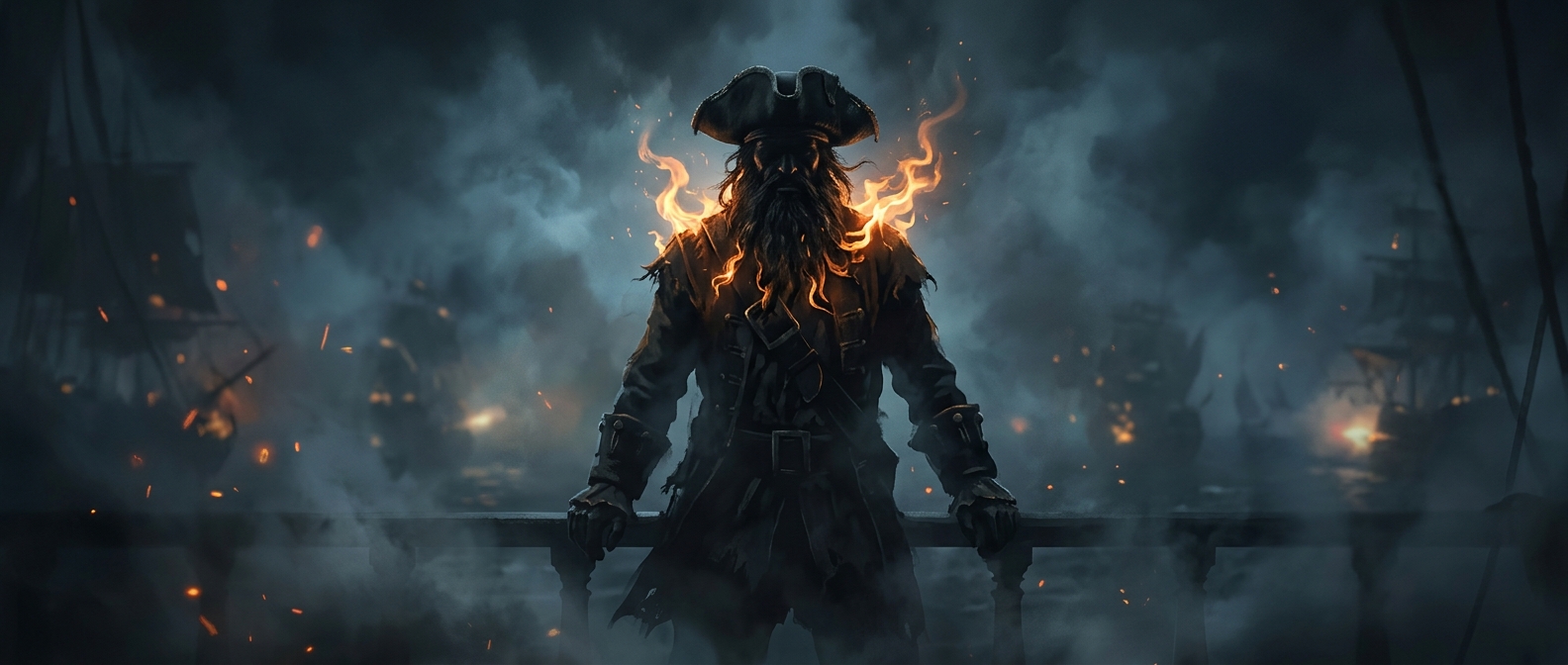
Blackbeard’s burning beard was part of a calculated effort to frighten people before he had to fight them. In an age when a boarding attack meant close-quarters violence, the sight of a pirate captain advancing through smoke and sparks could make an already frightening encounter feel almost unreal. The aim was to unsettle a crew and encourage surrender while resistance was still a choice.
How the spectacle worked
Slow-burning hemp fuses—cords made from the plant fiber—could smolder rather than flare up all at once. Braided into his beard and lit before boarding, they would produce smoke around Blackbeard’s face. Against the chaos of a ship being approached or boarded, that dramatic silhouette could make him seem less like an ordinary man and more like a threatening apparition.
The effect was psychological, not supernatural: smoke obscured his features, while fire drew the eye. A crew confronting that display also had to judge whether fighting was worth the danger. If fear tipped that decision toward surrender, the spectacle could help secure a ship without a prolonged battle.
Fear as a practical weapon
Piracy depended on intimidation as well as weapons. A reputation for brutality could make the threat of violence seem credible before anyone exchanged blows. Blackbeard’s appearance made that threat visible at the decisive moment, turning his own body into part of the message.
The practical payoff was simple: the more convincing the threat, the less often a pirate needed to prove it through combat.