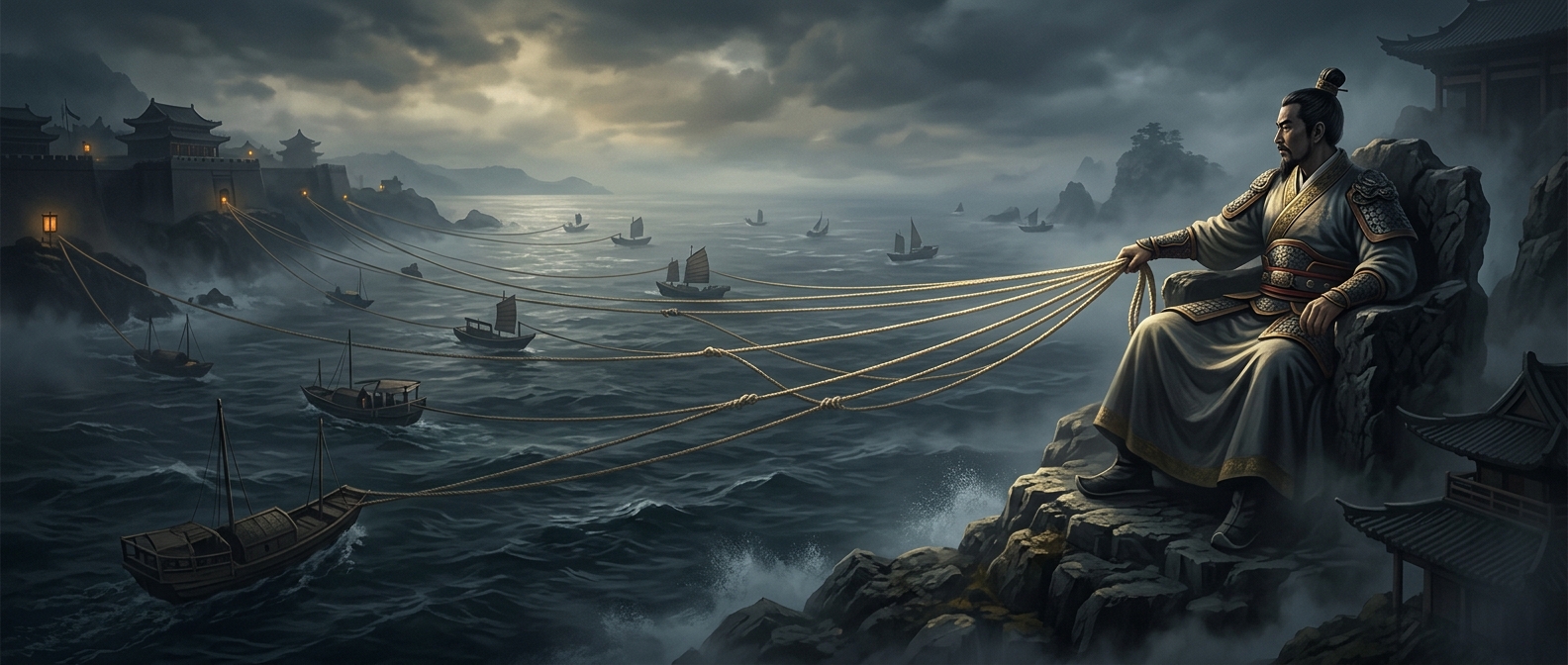
A ban turned trade into a source of power
In the sixteenth century, Ming China restricted private overseas trade. The court sought to channel foreign commerce through official, controlled routes, but demand for Chinese silk and other goods did not disappear. Nor did the silver available through trade with Japan. When merchants could not trade legally, some took to sea without permission—and armed protection became part of the business.
Wang Zhi built influence in this illicit world from bases in Japan. His network linked traders and seafarers across waters where the Ming government struggled to enforce its restrictions. Silver could move toward China, while silk and other Chinese goods moved outward. The ban had not stopped exchange; it had made the people who could organize it, and defend it, harder to ignore.
Why the court had to deal with him
A smuggling network could threaten coastal communities, but it could also serve as a channel for commerce the government could not readily control. That gave Wang leverage: suppressing him was not simply a matter of catching one outlaw. Officials faced a larger problem of maritime trade and coastal disorder, and negotiating with a powerful intermediary offered a possible way to address it.
The bargain was precarious. Wang eventually returned to China after officials held out the prospect of accommodation. The court then took him into custody and executed him. His fate shows the limits of his power: he could make the state negotiate, but he could not make it honor the arrangement once he was within its reach.
The policy’s unintended consequence
The episode exposes a basic weakness in prohibition. By closing ordinary channels without erasing the incentives to trade, the Ming ban helped push commerce into networks that were less visible and more difficult to police. Those networks could become armed and politically consequential. Wang Zhi was both a target of the policy and evidence of what it had helped create.