A Mount Built for Patience, Not Speed
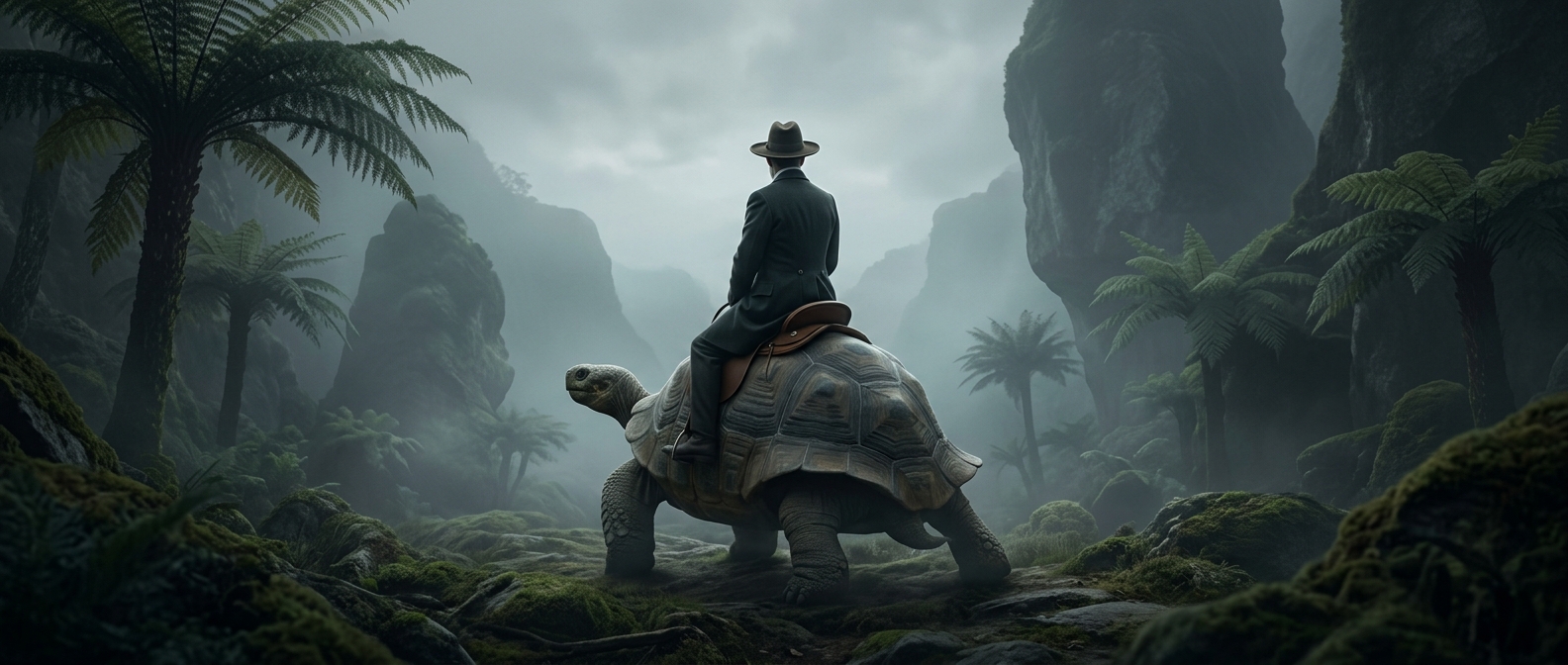
A giant tortoise does not move like a horse waiting for a rider’s cue. Its short, sturdy legs carry a heavy body close to the ground, and its deliberate gait favors steady movement over quick acceleration. That made a tortoise a peculiar kind of mount: it could bear a person’s weight, but it could not turn that weight into a fast ride.
The shell is not a separate pack strapped onto the animal; it is part of its body, supported by its skeleton. A rider added weight to a creature already built to carry a substantial load. The practical limit was therefore set by the tortoise’s own pace and capacity, not by how urgently the passenger wanted to travel.
The Animal Set the Schedule
A slow, economical gait helps a large tortoise conserve energy as it moves. That same efficiency comes with a tradeoff: each step advances the rider only gradually. There is no burst of speed to make up lost time, so a journey aboard one would be measured in the animal’s unhurried progress.
That is the odd appeal of the idea. A giant tortoise could function as a living platform for a rider, but not as transportation in the familiar sense of getting somewhere quickly. The passenger could climb aboard; the tortoise still decided how fast the trip went.