How an Ice Resurfacer Rebuilds the Surface
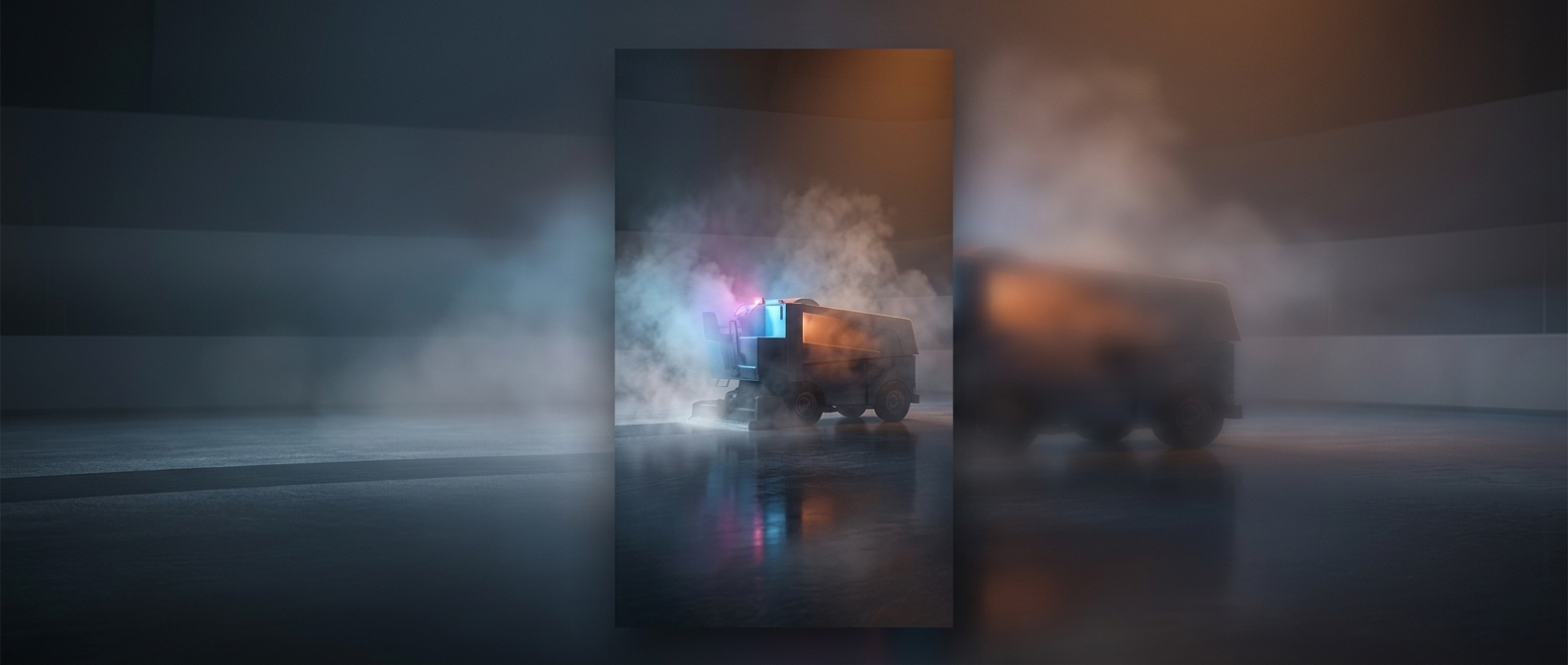
A resurfacer does more than rinse the rink. Its blade shaves off the raised, chipped parts of the ice, while a conveyor carries the loose snow into a storage tank. That leaves a flatter base—but also tiny grooves and scratches that can catch skate blades.
The machine then lays down a thin film of heated water. Because it is warm, the water can soften the ice just beneath it and flow into small cuts rather than freezing as droplets on top. As the rink’s refrigeration system pulls heat away, the film freezes into a continuous layer bonded to the older ice.
Why the Water Must Be Carefully Applied
The resurfacer is balancing two jobs: adding enough water to fill surface damage, but not so much that it leaves a deep layer that takes too long to freeze. A spreader bar distributes the water across the rink; too little leaves scratches exposed, while too much can create uneven or soft ice.
The result is not literally glass, but a newly frozen surface with fewer ridges and gaps. That smoother skin gives skates a more consistent path—and means the machine must remove the next round of cuts and shavings before they harden into bumps.