The Look Down Is the Punch Line
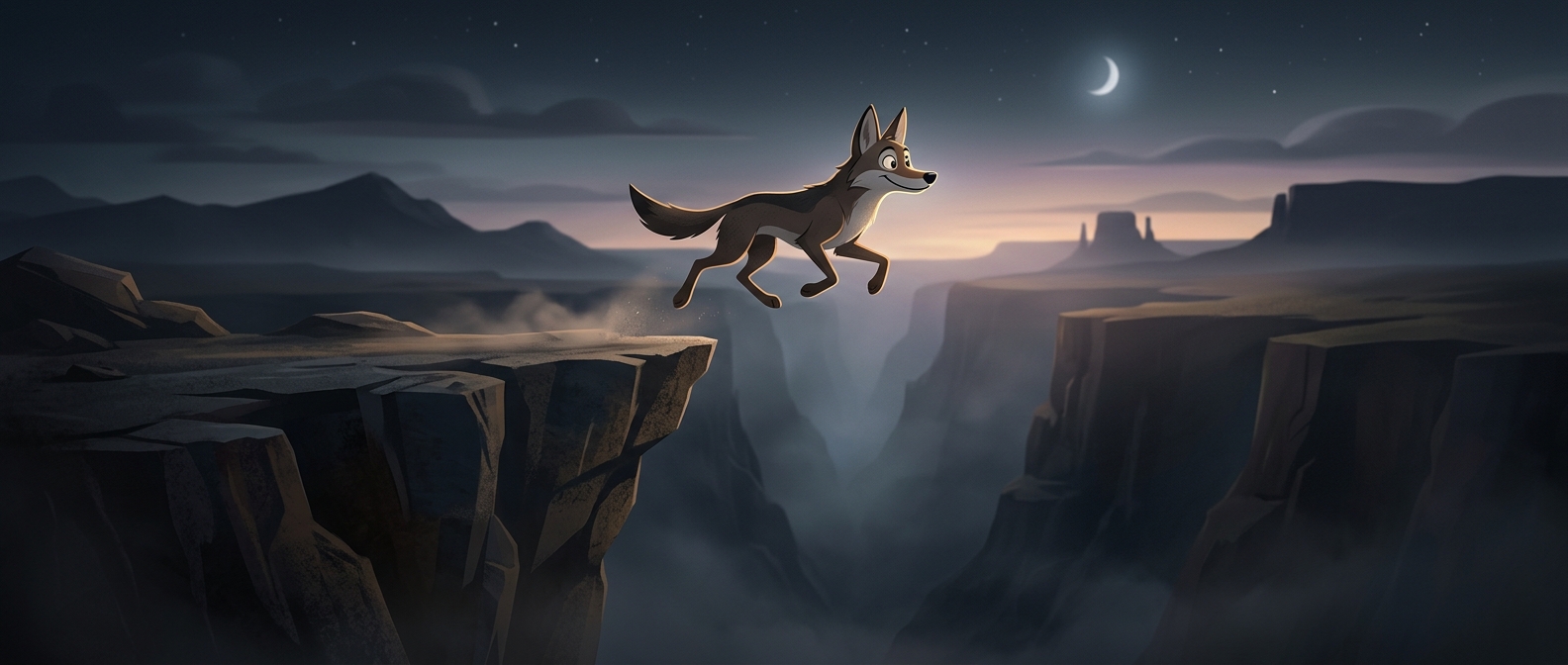
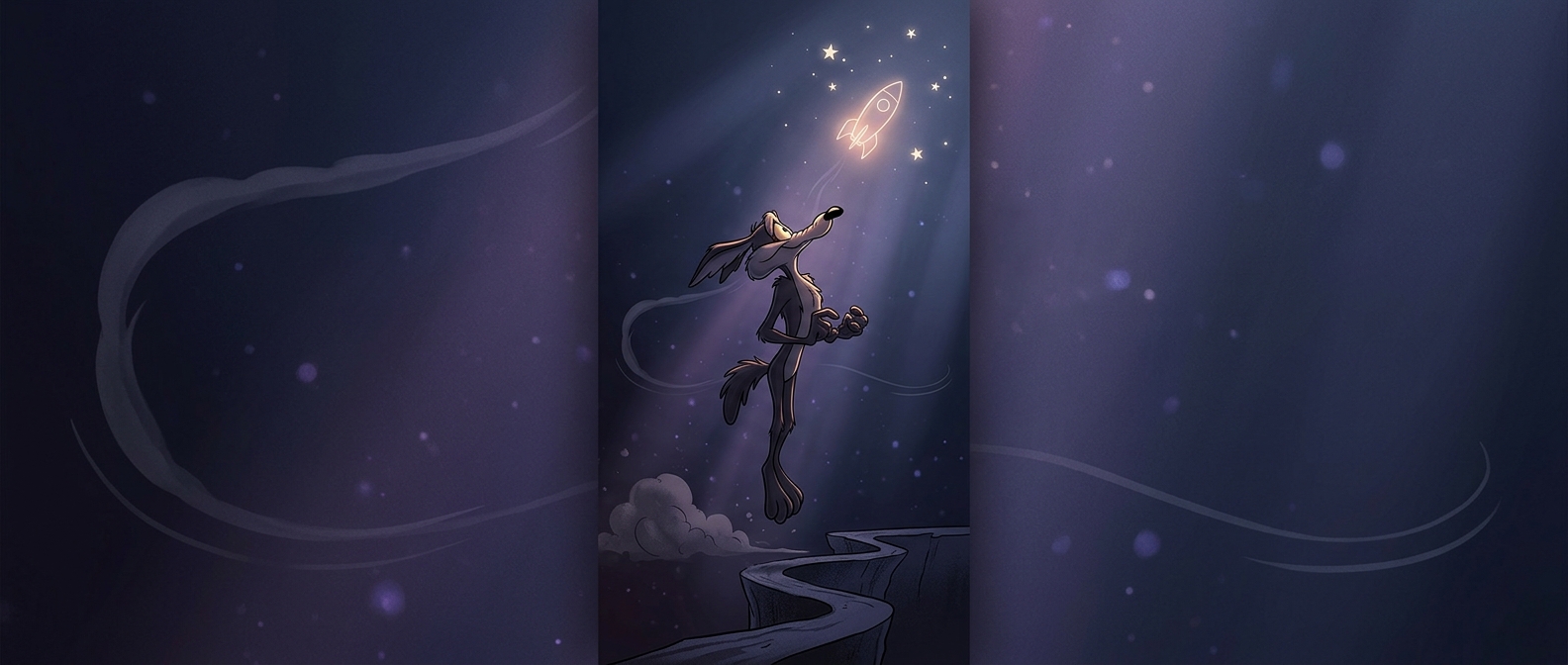
A character who runs beyond a cliff should fall immediately. In cartoon logic, the fall can wait while the character keeps moving—or stands in midair—because the scene is playing by the rules of a visual gag, not gravity. The coyote’s confidence becomes part of the mechanism: he behaves as if the ground still supports him, so the film lets the impossible moment continue.
Looking down changes the scene. It tells both character and audience that he has noticed the gap. The pause ends, his confidence disappears, and the fall begins. The gag makes awareness feel like the trigger, though the real trigger is the animator’s choice of timing.
Why the Pause Works
The delay gives viewers a moment to understand the contradiction: the coyote is plainly over empty space, yet nothing has happened. His downward glance resolves that tension and cues the consequence. If he fell at once, the image would be a simple impact; if he never looked down, the suspended moment could lose its payoff.
That tiny look turns the fall into a character beat. He is not merely defeated by the landscape; he discovers, too late, what his momentum has carried him into. The cliff becomes funny not just because he runs off it, but because the cartoon lets him realize it first.