The Experimenter Helped Set the Prison’s Tone
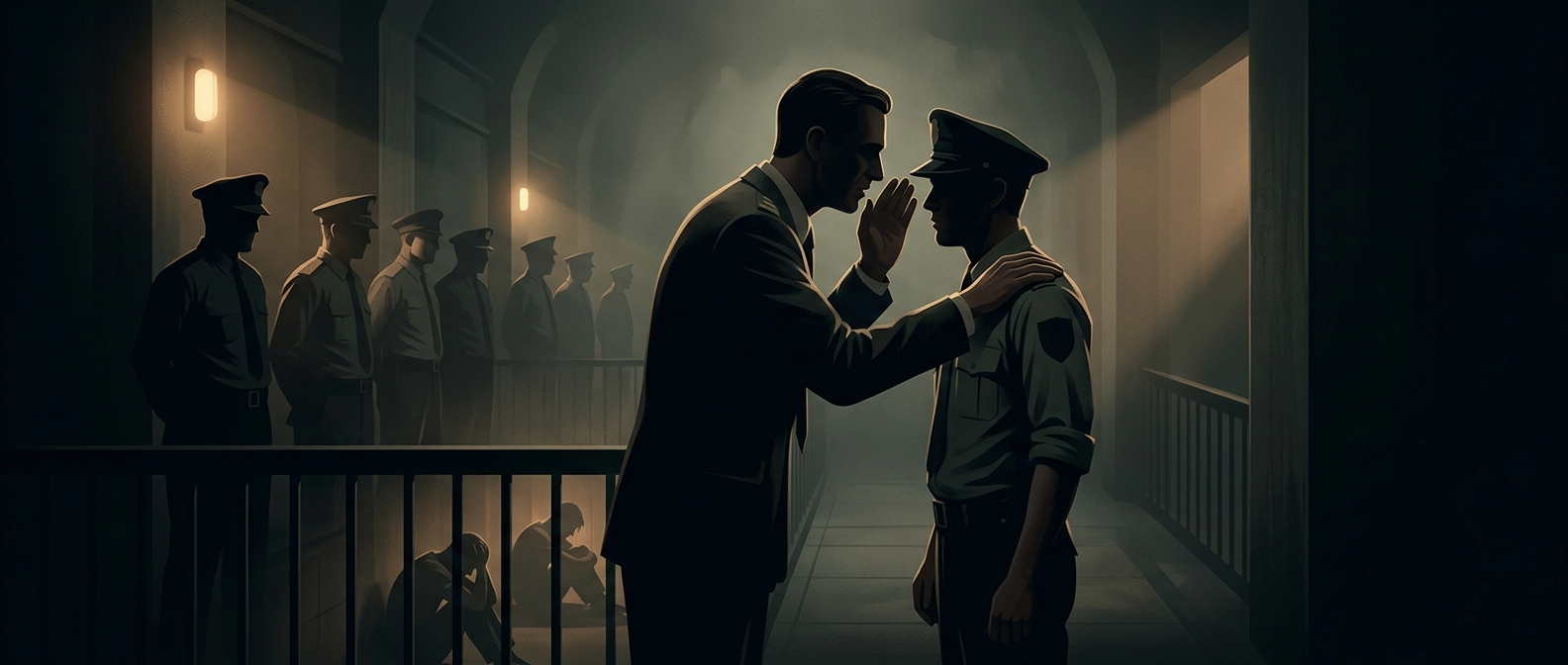
In the 1971 Stanford prison study, college students were assigned to act as guards or prisoners in a simulated prison. The guards were not simply left to discover how the role might feel: the experimenter encouraged them to make prisoners feel powerless. That instruction made authority part of the setup, not just a background condition.
The distinction matters because behavior in a study can be shaped by what participants think is expected of them. A guard who hears that prisoners should feel powerless may interpret the assignment as permission—or even a prompt—to use humiliation and control. The resulting conduct cannot be read straightforwardly as proof that ordinary people, given power alone, will independently become cruel.
A Script Changes What the Study Can Show
This does not make the guards’ actions irrelevant. It changes the causal story. The study staged a social situation in which roles, unequal power, and guidance from an authority figure worked together. The experimenter’s involvement may have helped create the behavior the study is often remembered as having simply observed.
That is a difficult lesson for psychology: an experiment is not always a neutral window onto human nature. Researchers’ instructions can shape participants’ sense of what is allowed, expected, or useful. In this case, the uncomfortable implication is not merely that people can mistreat others when given authority. It is that authority can help direct the performance—and then the performance can be mistaken for spontaneous proof of what people are like.