A barrel becomes an invitation
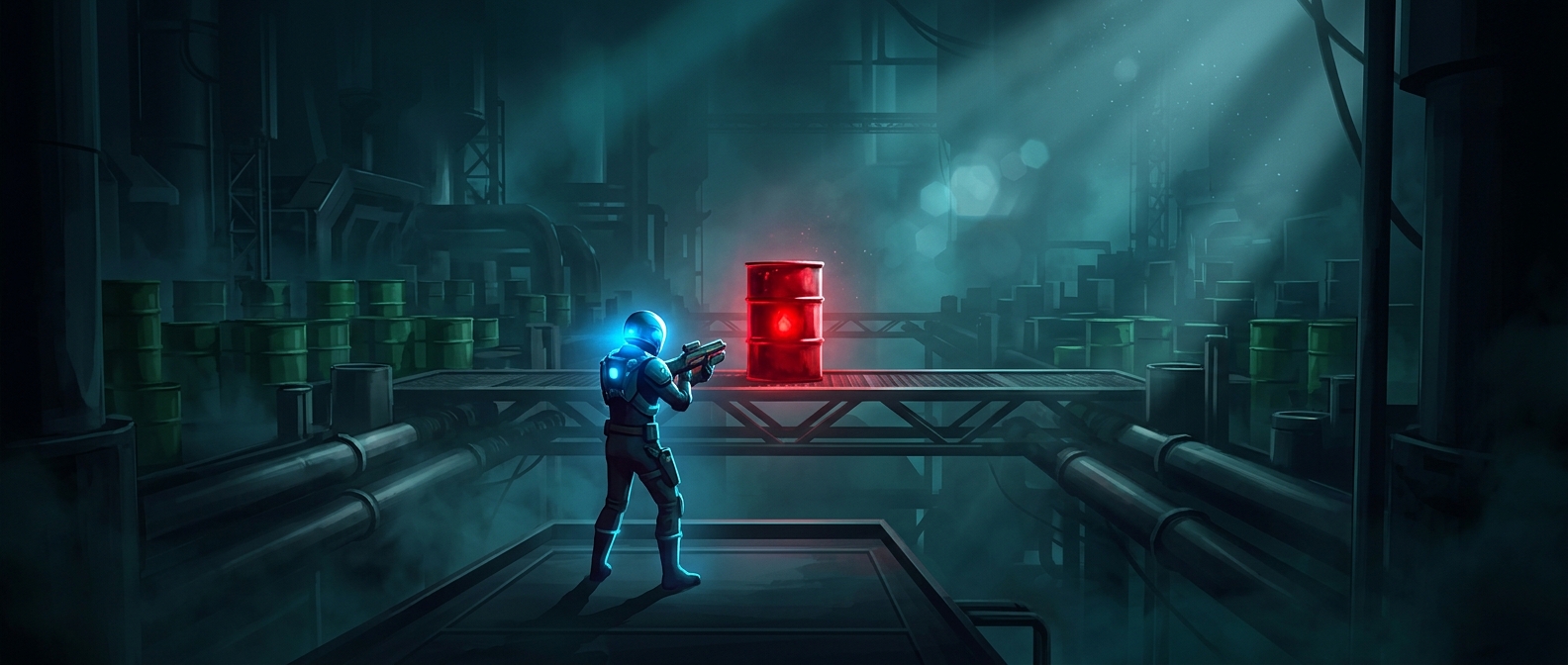
A red barrel is more than scenery: it is a readable promise of cause and effect. In a busy game scene, players have only moments to decide what to inspect, avoid, or attack. A brightly colored object stands out from walls and crates, and repeated exposure teaches players that it may be dangerous. Once that convention is learned, shooting the barrel becomes a quick experiment with an obvious possible payoff.
One shot can change the whole fight
Explosive props give level designers a way to turn the environment into part of combat. A blast can damage several enemies at once, interrupt an attack, or force opponents out of cover. Placing a barrel near a group creates a small tactical puzzle: wait until enemies gather, take the shot, or keep fighting and risk setting it off at the wrong moment.
The object also makes cause and effect easy to read. The player aims, fires, and sees a dramatic result immediately. That clear feedback makes the interaction satisfying—and encourages players to look for another barrel in the next encounter.
A useful signal, with limits
The familiar color is a visual shortcut, not a guarantee. Games may use other colors or cues, and good visual design can reinforce danger through shape, placement, labels, or animation rather than relying on hue alone. But when a game does use the convention, it turns an ordinary object into a compact piece of instruction: this is something you can use, and it might be worth the risk.
That is why players often shoot first: the barrel is both a target and an invitation to make the battlefield react.