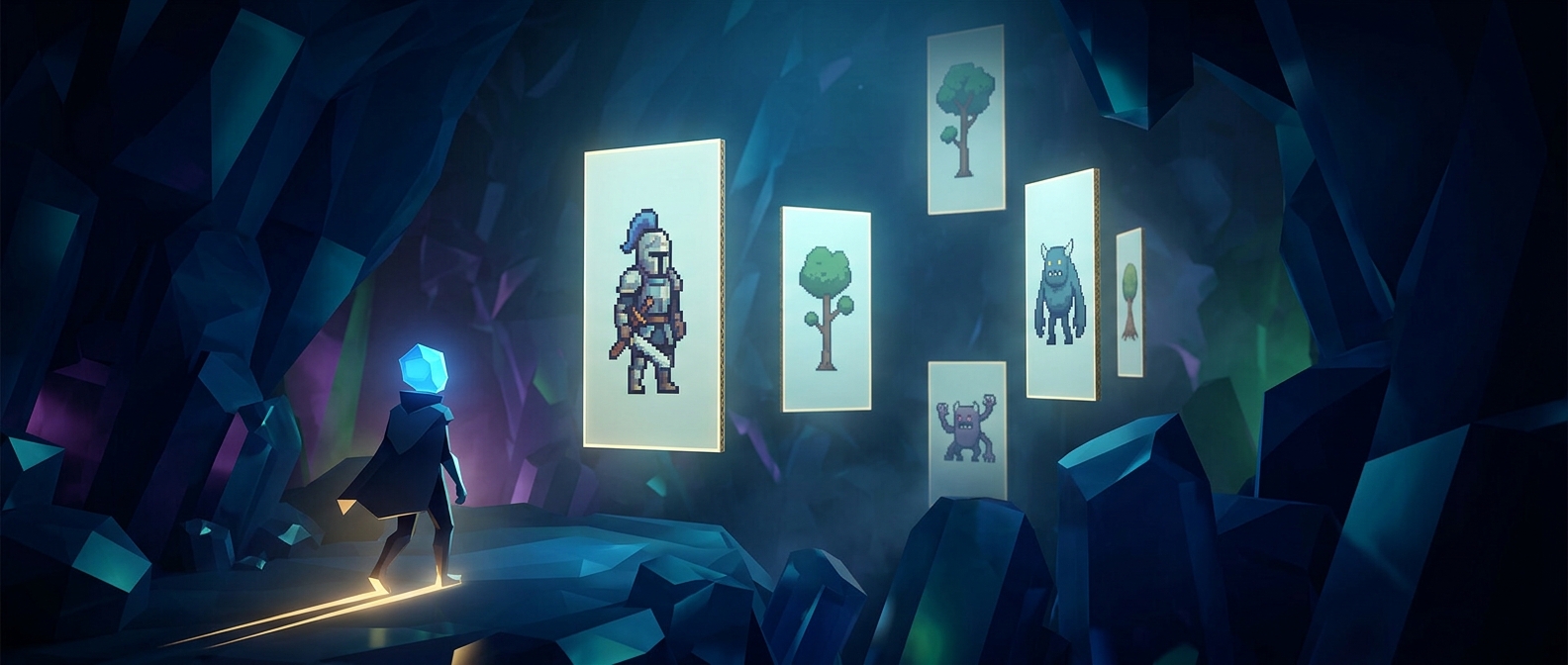
The 2D image that turns with the camera
A sprite is a flat image placed inside a 3D scene. To keep it looking like a character or object rather than a paper cutout, a game can rotate the image so its front points toward the camera. This technique is called billboarding: the sprite pivots as the viewpoint moves, while the surrounding world remains fully three-dimensional.
The trick works because players usually need to recognize a figure, not inspect its geometry from every angle. A tree, distant enemy, or cloud can read clearly as an image from the front, even though it has no modeled sides or back.
Why not build everything in 3D?
A detailed 3D model takes geometry, textures, and animation data. A sprite can represent the same distant detail with a single textured surface, which can be cheaper to draw and easier to animate. That matters when many small objects fill the scene or when an object is too far away for its shape to be noticeable.
Billboarding also gives artists control over a fixed, polished image: the character’s silhouette and facial details remain legible instead of changing with an incomplete model. Some sprites rotate freely; others turn only around a vertical axis, so they stay upright while facing the player.
The illusion has limits
Because the image does not have real depth, walking around it can reveal the trick. A sprite may appear to slide or swivel, and it cannot show a genuinely different back. Games manage this by using billboards at a distance, choosing camera angles that hide awkward views, or replacing the sprite with a 3D model as the player gets closer. The result is a world that can look rich without modeling every leaf, flame, or far-off figure from all sides.