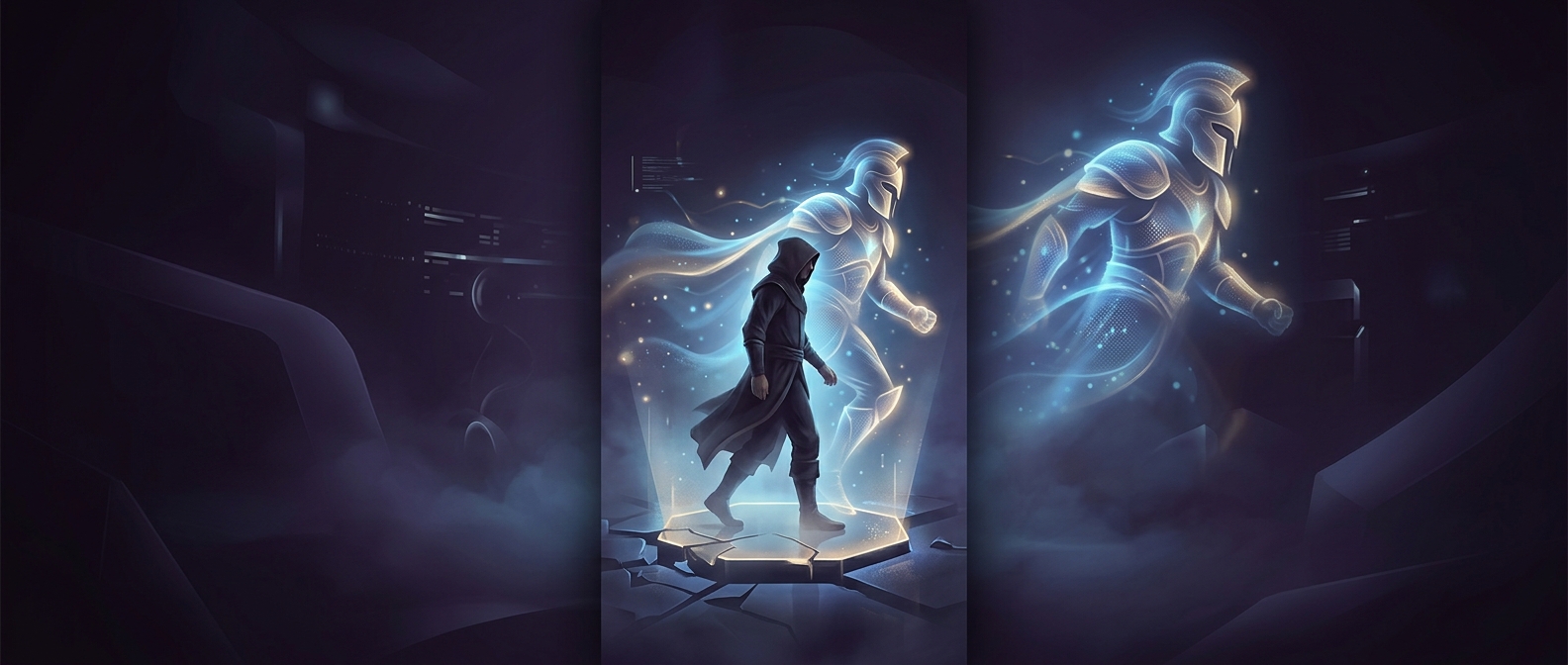
From divine descent to a player’s role
The word avatar comes from the Sanskrit avatāra, meaning a “descent.” In Hindu traditions, it refers especially to a deity—most famously Vishnu—appearing in the world in a particular form. It does not simply mean any fictional character; it carries the idea of a presence taking shape in another realm.
Game designer Richard Garriott adapted the term for the player-controlled hero in Ultima IV: Quest of the Avatar. The choice made the character feel less like a separate protagonist the player watched and more like the player’s own presence inside the game world.
Why the name fit the game
That distinction mattered because Ultima IV asked players to follow virtues such as honesty, compassion, and courage. The game’s moral tests were not just things the hero observed: the player chose how to act. Calling the character an avatar tied those choices to the person holding the controller, giving the fantasy a personal edge.
The term later spread through games and online spaces, where it came to mean a user’s digital representation. Its meaning broadened, but the original metaphor still fits: an avatar is the form through which someone acts in a world they cannot physically enter.