How a Dish Dealer Reached HBO’s Audience
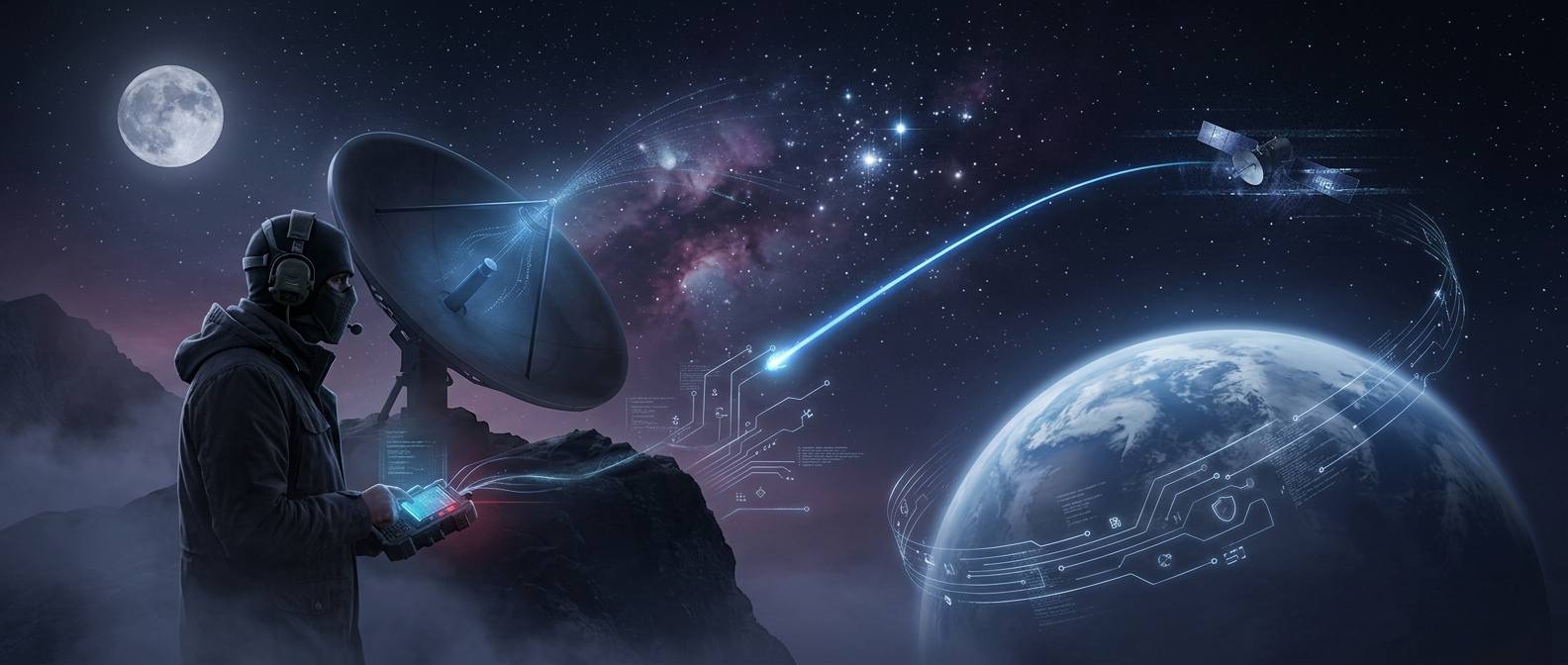
In 1986, satellite television was not yet the sealed, one-way service many viewers imagine today. Programming traveled from a broadcaster’s ground station up to a communications satellite, then back down to dishes across a wide area. The satellite relayed the signal; it did not decide whose transmission was legitimate.
That left a vulnerable point on the ground: the uplink, where a signal was sent to the satellite. John MacDougall, a Florida satellite-dish dealer, had access to the equipment and technical knowledge needed to transmit toward it. By sending a signal on HBO’s satellite channel, he briefly displaced the network’s own programming for viewers receiving that feed. His message appeared during The Falcon and the Snowman under the name “Captain Midnight.”
A Protest That Became a Broadcast
MacDougall’s target was HBO’s subscription fees. In the era of large home satellite dishes, viewers could receive satellite broadcasts directly, and the cost of watching premium programming was a visible point of friction. His stunt turned that private complaint into a message carried along the same route as the show itself.
The episode also exposed a basic weakness of satellite broadcasting: a satellite can relay a signal without verifying who sent it. Protecting a broadcast therefore depended on safeguards and control at the transmitting end, not on the satellite itself. The interruption was possible because access to ground equipment could translate into reach across a much larger audience.
That is what made “Captain Midnight” more than an unusual on-screen signature. A local dealer’s access to an uplink let him interrupt a national entertainment service—using the infrastructure of satellite TV to challenge the price of watching it.