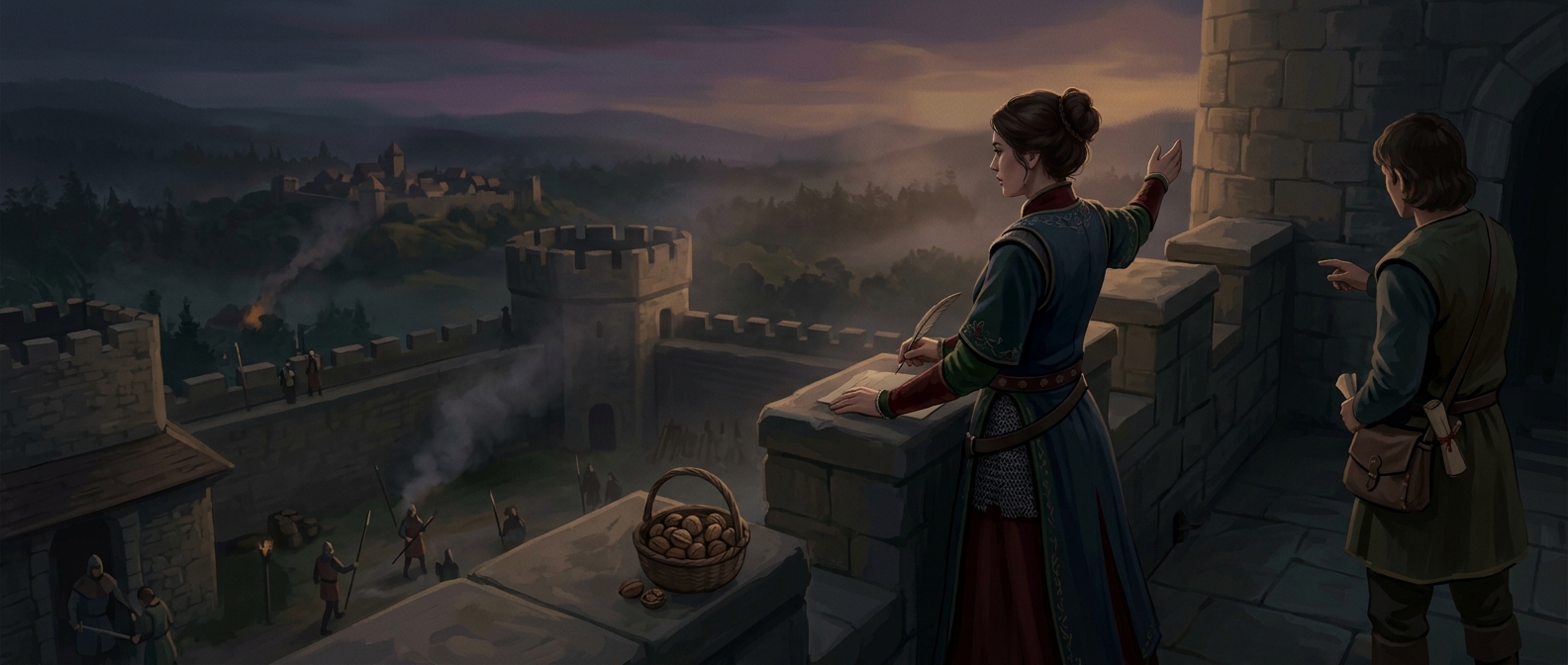
A siege did not suspend estate business
Margaret Paston’s letters preserve a kind of history that battle narratives often leave out: a household under threat still had to be supplied, directed, and kept running. A manor was not just a residence. It was the center of an estate, with workers, stores, animals, and obligations that did not disappear when armed men arrived.
That made management part of the crisis. Messages had to travel between the manor and people who could obtain goods or handle business elsewhere. Requests for almonds or fabric might sound almost comically ordinary beside siege ladders, but they point to the practical work of maintaining a household while danger pressed close.
The letters show authority in action
In a fifteenth-century gentry family, a woman left in charge could have to make decisions, issue instructions, and protect property. Margaret’s correspondence shows her doing more than enduring events: she was actively coordinating the estate and household. The same letter-writing network that carried news of danger could also carry routine requests and directions.
That mixture is what makes the record revealing. The siege was not a separate episode that neatly paused daily life; it intruded into daily life, while daily responsibilities continued around it. In Margaret Paston’s world, the person confronting attackers might also have to think about what the household would need next.