One Route, Many Animals
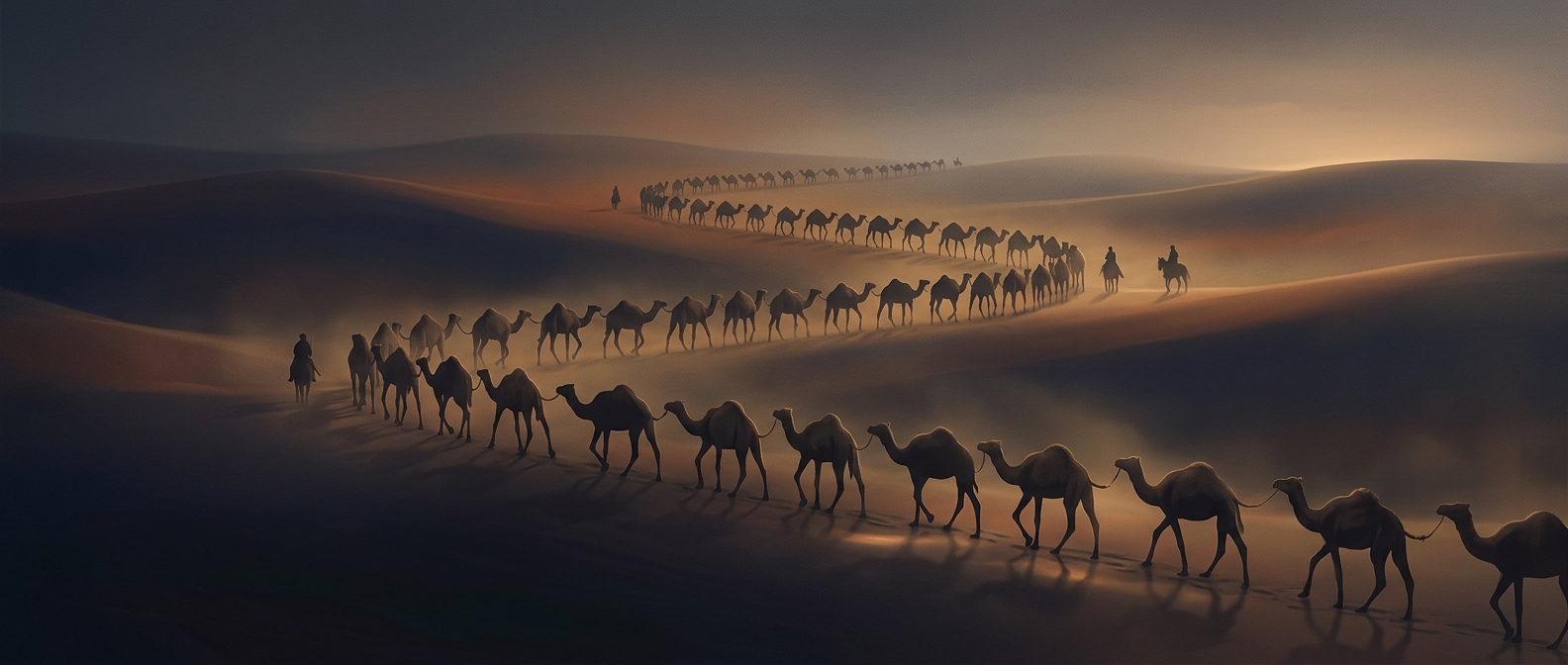
A caravan is easier to manage when its camels make the same few decisions rather than dozens of separate ones. The lead animal establishes the route and pace; each follower can concentrate on keeping up and placing its feet along the path already chosen. Handlers, in turn, have a clearer line to guide and monitor than a broad, shifting group.
That order matters most where the ground leaves little room to maneuver. On a narrow track, a camel that steps aside can crowd another animal or leave the usable path. Single file keeps the caravan within one corridor and makes turns easier to negotiate without animals pressing shoulder to shoulder.
The Tradeoff of Following
A line is not the fastest arrangement everywhere. It can stretch over a long distance, and a delay near the front may ripple backward as each camel slows. But spreading out would make the group wider and harder to direct, especially when the route itself is the constraint.
The practical advantage is simple: instead of steering every camel across the landscape, handlers can guide the front and keep the rest moving in sequence. Across a long journey, that turns a large, cumbersome group into a line that can pass through places too tight for a crowd.