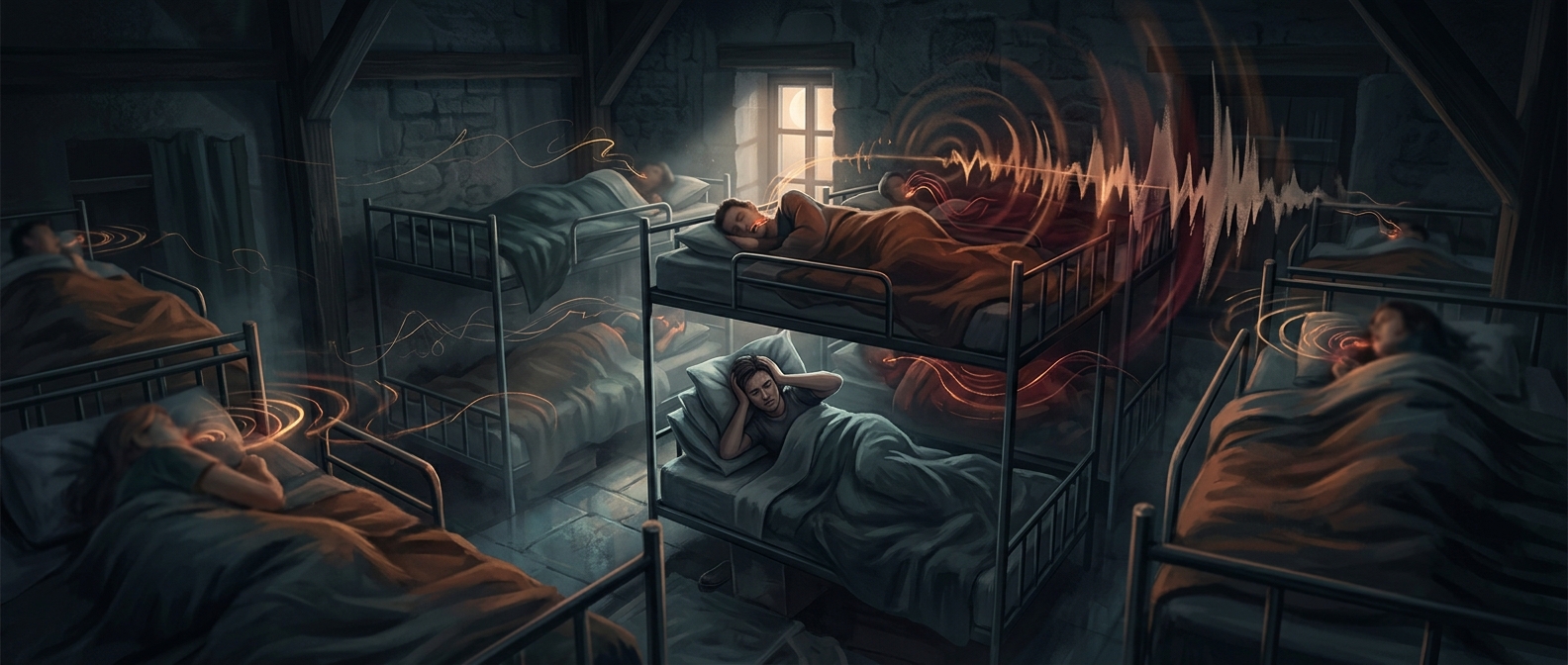
A Dorm Room Is Shared Space, Even After Lights-Out
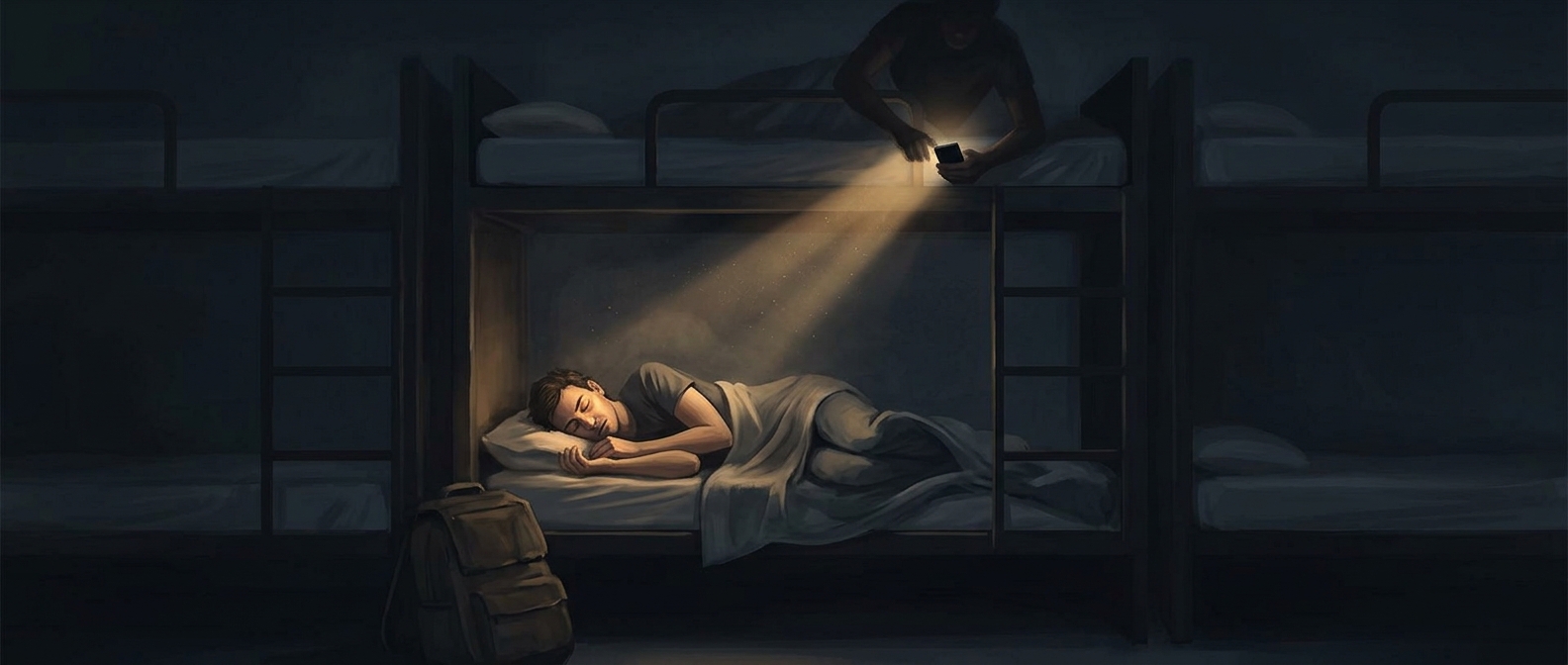
A hostel dorm sells access to a bed, not control over the room around it. Several travelers may be sleeping on different schedules, and the person trying to rest has little separation from someone snoring or still playing guitar. A bunk curtain can screen light and provide a small sense of privacy, but it cannot make a shared room acoustically private.
That is the tradeoff behind the low-cost bed: guests share not only facilities but also the ordinary sounds and routines of strangers. Snoring is involuntary; a late-night guitar session is a choice, but both can travel across a room when people are close together. What feels like a minor inconvenience to one traveler can become the main event for someone who needs sleep before an early train.
The Unwritten Work of Sharing a Room
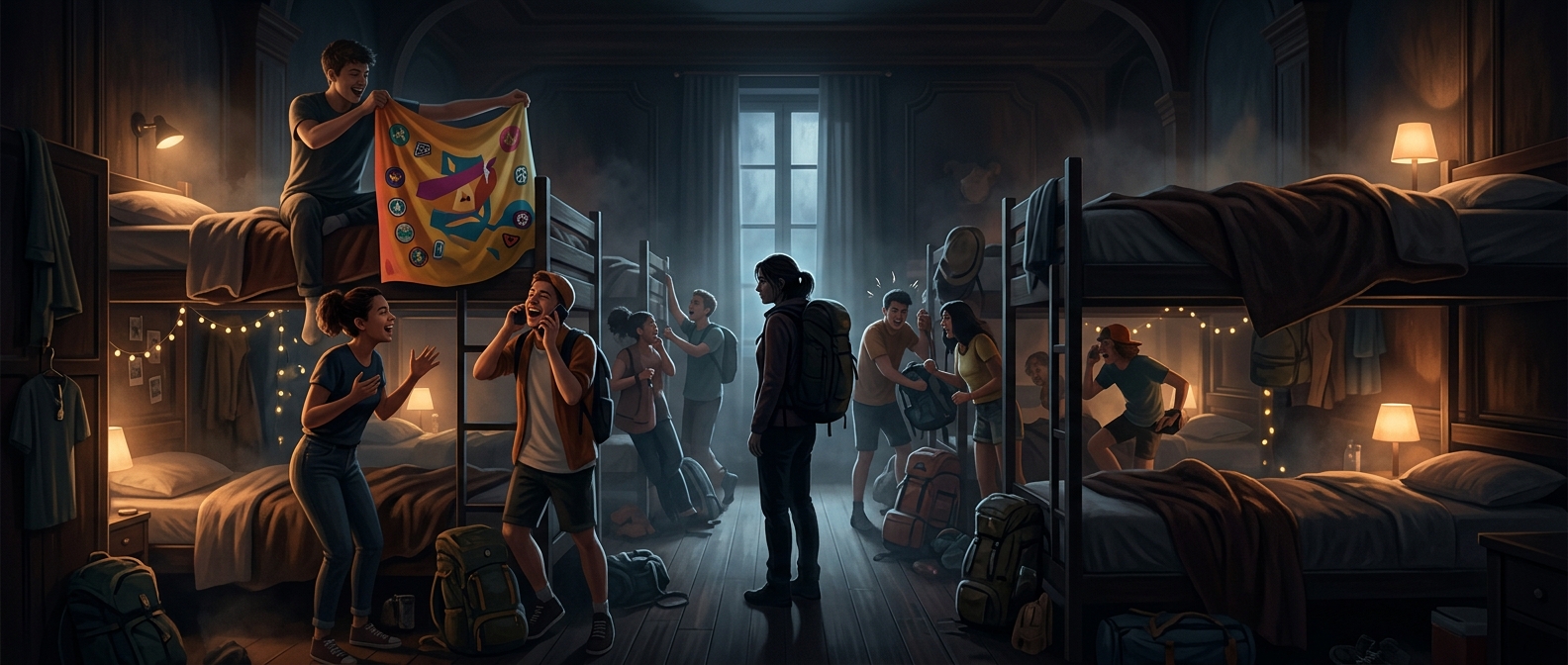
Dorm life depends partly on guests negotiating around one another. People may lower their voices, move an activity elsewhere, or use earplugs, but no single solution works for every noise—or every traveler. The room is not a private retreat so much as a temporary neighborhood, where courtesy matters because there is no wall between one person’s evening and another’s night.
That is why a dorm bed can be both a bargain and an adventure: you save money, but surrender some control over quiet. The stranger’s snoring may be the most memorable part of a night that otherwise consisted of nothing more than finding your bunk.