What inactive muscles stop doing
When your leg muscles contract, they use energy and draw glucose—the sugar circulating in your blood—into muscle cells. They also help the body handle fats after a meal. One part of that process involves lipoprotein lipase, an enzyme that helps tissues take up fat carried through the bloodstream.
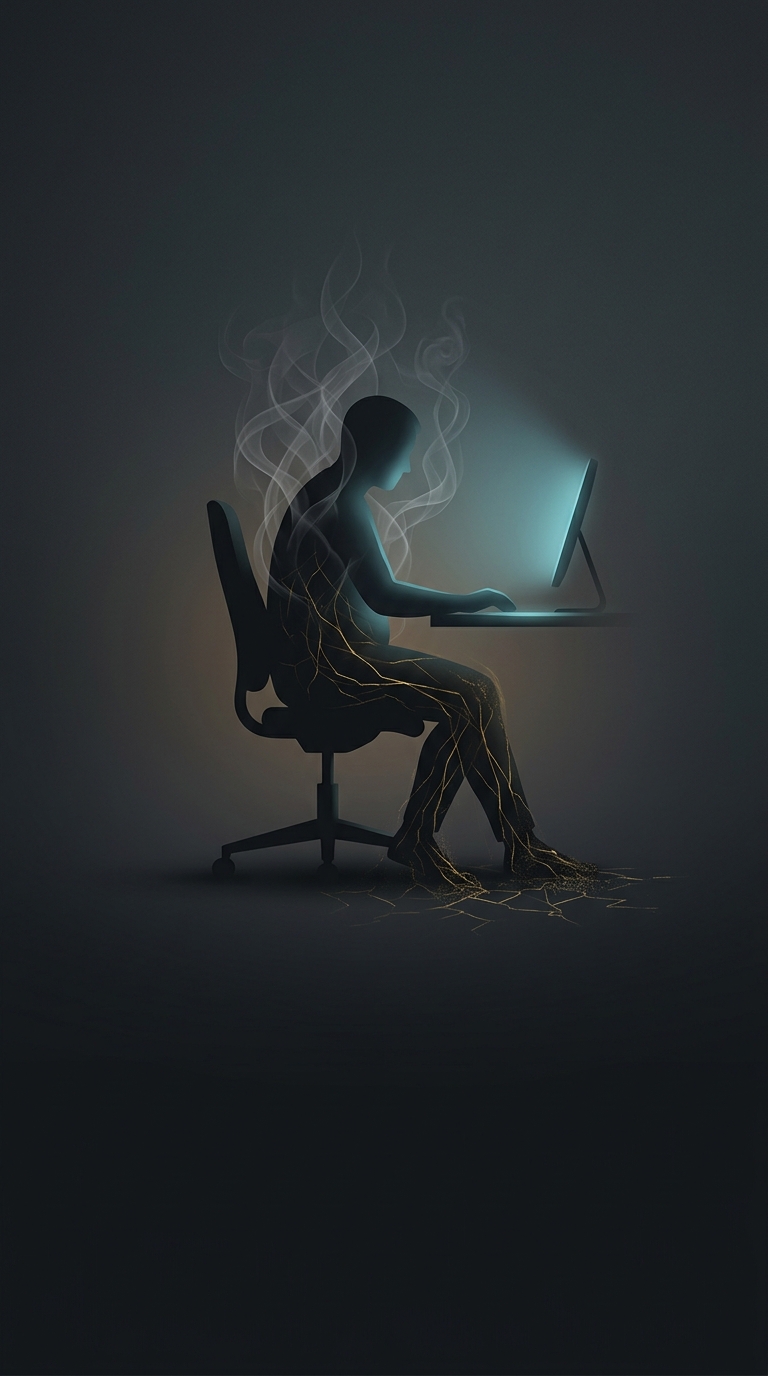
During long stretches of sitting, the large muscles of the legs do far fewer contractions. Their demand for fuel falls, and some of the machinery involved in processing glucose and fats becomes less active. This is not a sudden shutdown, but a change in what the body is being asked to do: muscles that remain still need less fuel than muscles that regularly move.
Why a workout is not a complete reset
A gym session still matters for fitness and health. But an hour of exercise cannot make the other hours of the day physically active. A brisk workout is a distinct burst of muscle work; sitting afterward leaves the legs inactive again. That is why researchers distinguish exercise from sedentary time—the hours spent sitting or reclining while awake.
The concern is about the pattern over time, not one afternoon at a desk. Studies link more sedentary time with poorer health outcomes, though an association does not mean sitting alone guarantees illness or a particular lifespan. How much someone moves, their overall health, and other habits also matter. The evidence does not make sitting equivalent to smoking; that comparison overstates what can be concluded.
Small interruptions change the muscle’s workload
Brief movement breaks—standing, walking to refill water, or taking a call on your feet—give leg muscles a chance to contract between longer bouts of sitting. They do not replace regular exercise, but they interrupt the long period of low muscle activity. The practical point is simple: a workout is valuable, and so is giving your legs reasons to work during the rest of the day.