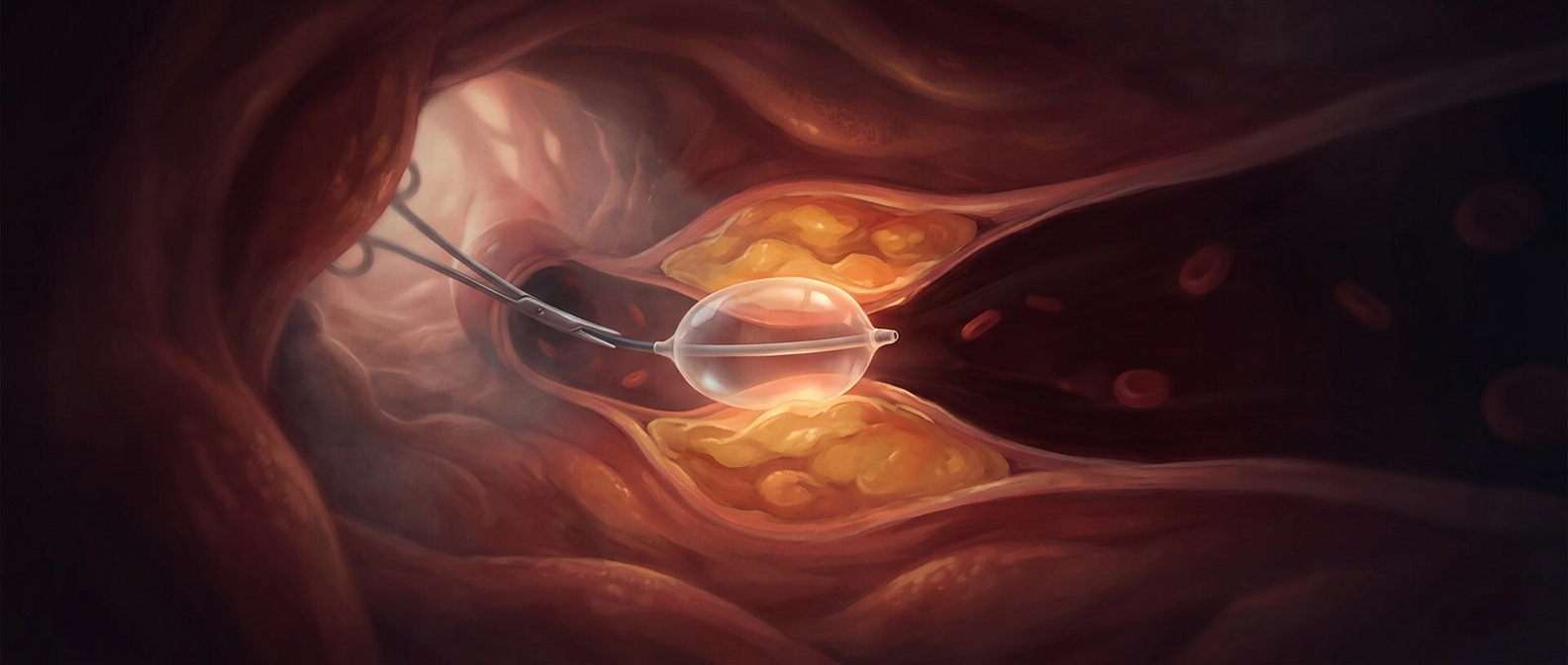
Why an aortic aneurysm can stay unnoticed
The aorta is the body’s main artery, carrying blood from the heart to the rest of the body. An aneurysm is a widened, weakened area of that artery. As blood presses against the wall with every heartbeat, the affected section can enlarge gradually—often without blocking blood flow or producing a clear warning sign.
Where the bulge forms matters. An aneurysm in the chest may cause no noticeable symptoms; one in the abdomen may also remain silent. Some people do feel pain or a pulsing sensation, but symptoms are not dependable enough to rule an aneurysm in or out. That is why a person can feel well while the vessel changes.
Why size changes the stakes
A larger aneurysm is more likely to rupture, though growth and risk vary from person to person. A rupture can cause severe internal bleeding and is a medical emergency. The danger is not simply that the artery has widened: the wall has become less able to contain the force of blood flowing through it.
Doctors can find an aneurysm with imaging, such as an ultrasound or CT scan. If it is found before rupture, clinicians may track its size over time and consider treatment based on its location, growth, and the person’s overall health. The quiet period matters because it can create an opportunity to detect and manage the problem before a crisis.