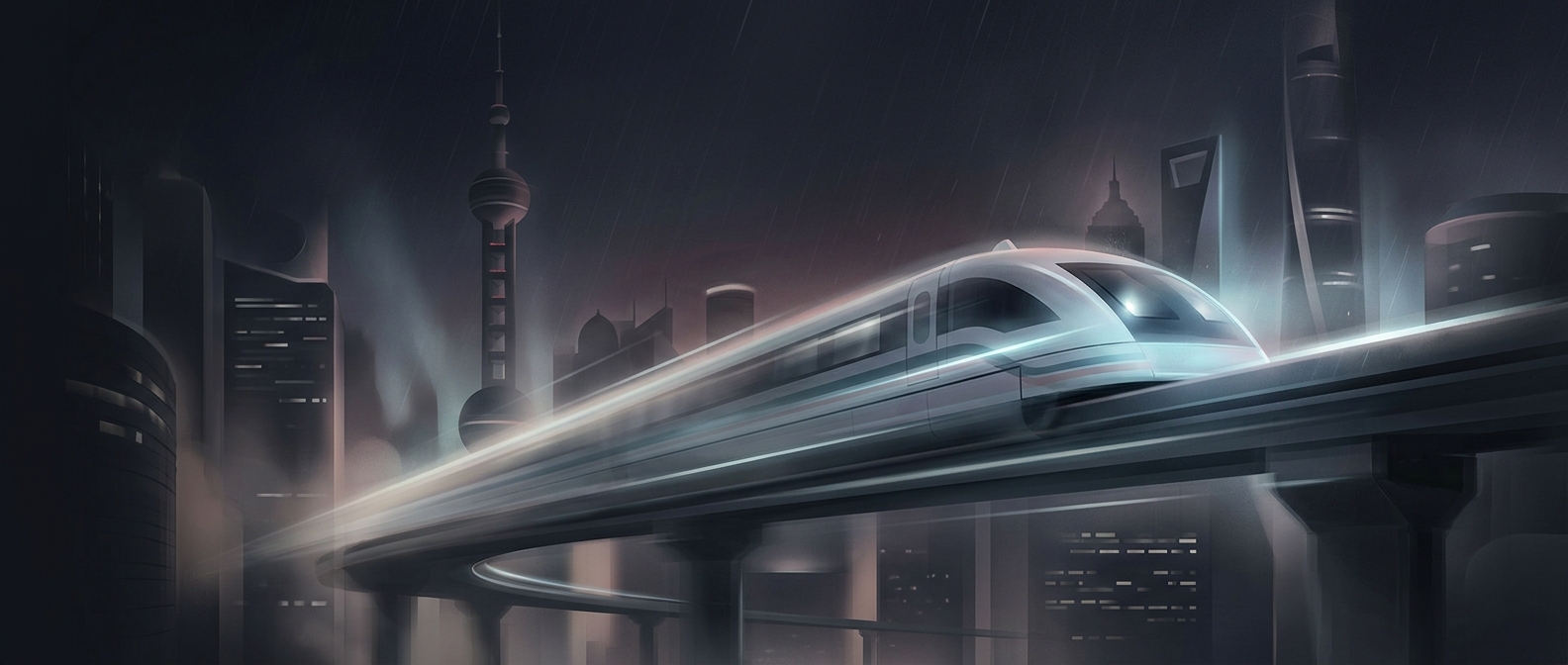
How magnetic levitation keeps the train moving
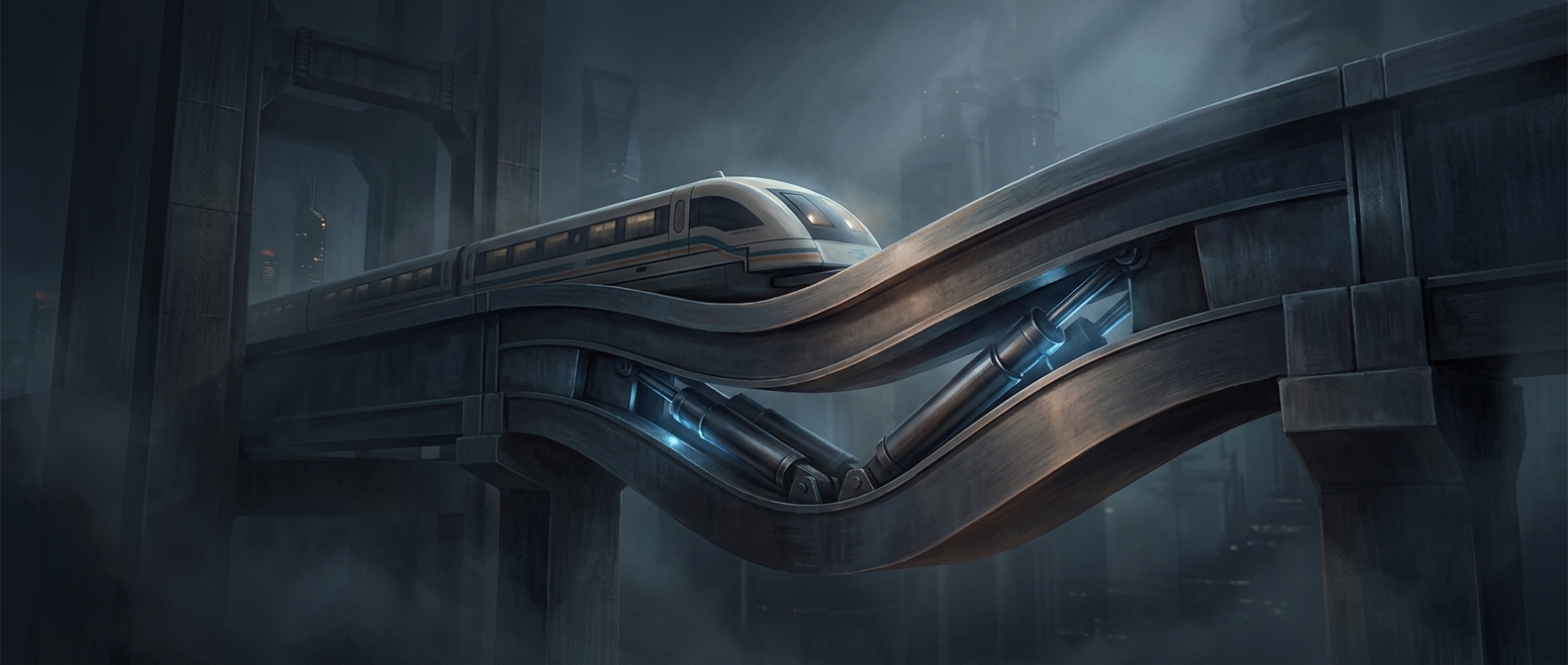
A maglev train does not simply ride on a magnetic cushion. Its guideway—the track-like structure that supports and directs it—contains magnets that work with magnets or electrically controlled coils on the train. Their forces lift the vehicle clear of the guideway and keep it aligned as it travels.
A separate magnetic interaction provides thrust. Coils along the guideway switch their magnetic fields in a timed sequence, pulling the train toward the next field and pushing it onward. The train’s control system coordinates those changes with its position, so the force keeps moving forward rather than merely holding the vehicle in place.
What the lack of wheels changes
Once the train is levitating, its weight no longer presses wheels against rails. That removes rolling friction, the resistance created when wheels deform slightly as they roll. It does not eliminate every source of drag: air still pushes against the train, and its motors and support systems still consume energy. At high speed, overcoming air resistance becomes a major part of the job.
The guideway also has to be built for the system. Instead of ordinary rails, it needs precisely aligned equipment and electrical infrastructure along the route. That specialized construction is a substantial tradeoff: the train can accelerate smoothly and travel quickly, but it cannot simply use the existing railway network.
Why an airport trip can take minutes
A short airport connection can make use of maglev’s quick acceleration and high speed without requiring a long route. The seven-minute journey is not explained by levitation alone; it depends on the route’s length, stops, and operating schedule as well. The striking part is the combination: magnets carry the train without wheel-to-rail contact, while carefully controlled fields do the work of pulling it forward.