Hunger Makes the Future Feel Hungrier
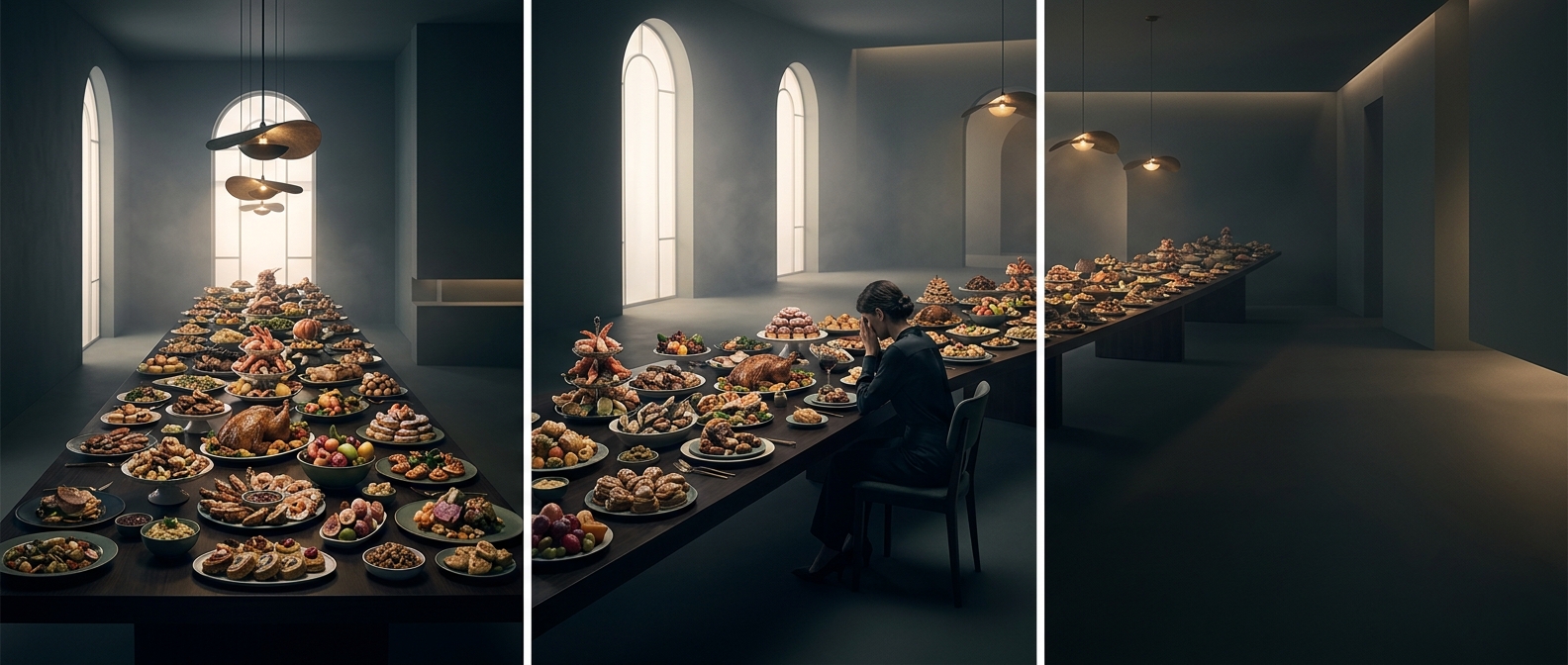
Ordering happens before eating changes anything. A hungry person is making a plan from inside the very state the meal is supposed to end: the body is signaling urgency, and food on a menu can make that signal feel even more compelling. In that moment, another dish may seem less like a treat than protection against not having enough.
The judgment can be skewed because people use how they feel now to predict how they will feel later. When hunger is intense, it is difficult to picture the comfort of being full with equal vividness. The result is a mismatch: the order reflects the appetite of the person waiting for food, not necessarily the appetite of the person who will be eating it.
The Meal Changes the Forecast
Once eating begins, the urgency falls. Food starts to satisfy hunger, and the imagined need for every extra plate weakens. The order, however, is already fixed. What felt prudent at the table can look excessive once the body has received the signal it was waiting for.
This helps explain why the same person may order very differently depending on whether they arrive hungry or have had a snack. It is not simply a failure to estimate portion sizes; the feeling used to make the estimate is changing while the meal is underway.
One practical response is to order in stages: choose a main meal first, then add another dish only if hunger remains. That small delay lets the decision draw on more than the urgency of an empty stomach.