A blockbuster made atmospheric science visible
Before Twister, meteorology could sound like a narrow specialty: weather forecasts, maps, and equations. The film turned the work of studying storms into a vivid adventure, putting storm chasers and their instruments in front of a mass audience. That excitement helped double enrollment in atmospheric science programs, drawing students toward a field they might not otherwise have considered.
The appeal was not just the spectacle of tornadoes. The story suggested that weather could be investigated—that people could gather evidence about a storm as it formed and use it to understand what was happening. For prospective students, that offered a compelling bridge between dramatic events outside and scientific questions that could be pursued in a classroom.
The science behind the chase
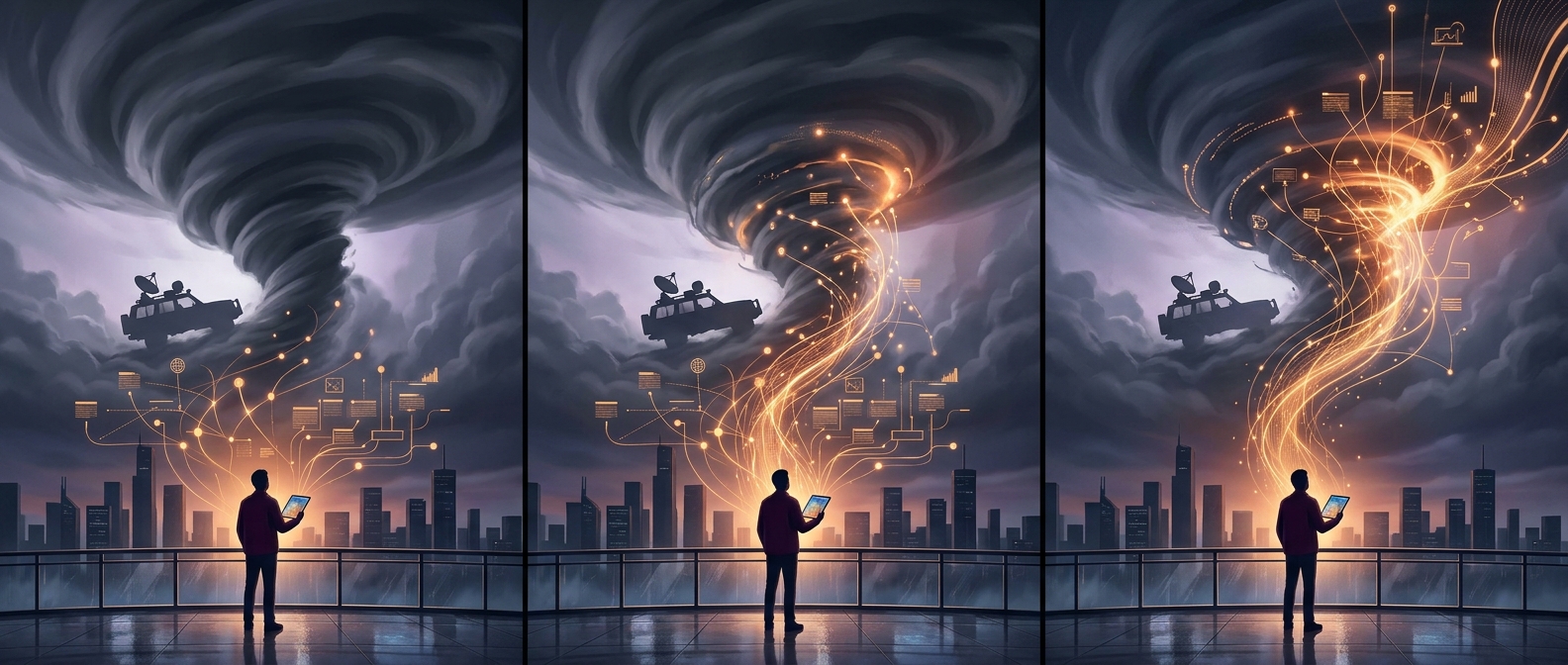
Real meteorology depends less on daring pursuit than on interpreting measurements. Students learn the physics of air, heat, moisture, and motion, then use tools such as radar to track how storms develop. Radar sends out radio waves and detects energy reflected back by precipitation, helping meteorologists map a storm’s structure and movement.
Much of that work happens at screens, where careful analysis matters more than being close to the action. Field observations can contribute useful data, but tornadoes are dangerous and unpredictable; chasing one is not the routine core of the profession. The flying-cow image made the movie memorable, while the real intellectual work is often quieter: reading patterns, testing explanations, and improving forecasts.
From moviegoer to student
A popular film cannot substitute for years of mathematics and science, but it can make a career imaginable. Twister gave atmospheric science a recognizable human face and a dramatic problem to solve. The lasting surprise is that a story about chasing storms could lead students toward work that often begins not in a speeding vehicle, but in front of a radar display.