A fictional ritual became a real-world template
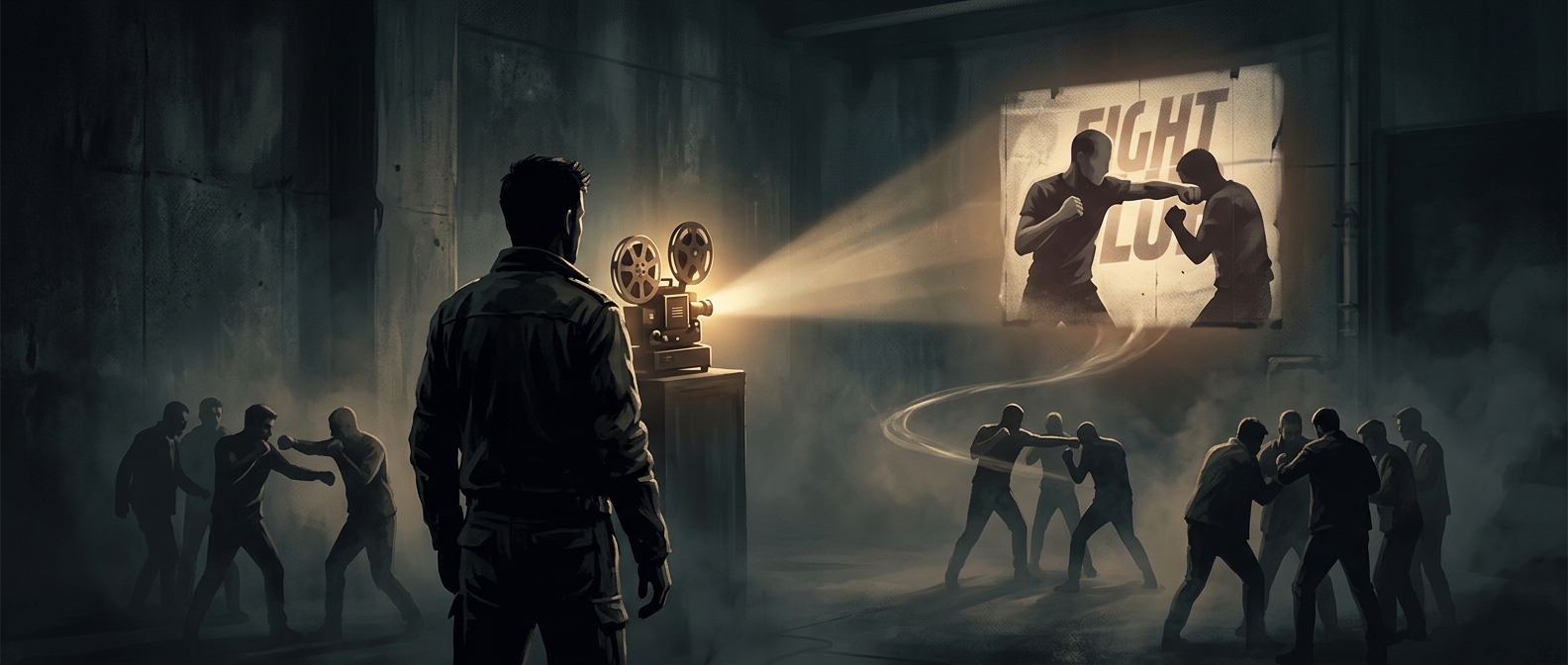
Fight Club gives its characters a simple way to turn frustration into ceremony: meet in secret, fight with bare hands, and treat the bruises as proof that the experience was real. The film’s appeal was not just the violence. Its basement setting, coded rules, and repeated routines made the gatherings look like something viewers could recreate without a gym, a referee, or much equipment.
Some viewers did just that, forming informal fight clubs outside the film. They borrowed the idea of a private group organized around unsanctioned bouts, though real clubs varied and were not necessarily exact copies of the movie’s fictional organization. A film can supply a name and a recognizable script; people supply the local rules and decide how far to take them.
The satire was easy to detach from its warning
The story presents fighting as an answer to numbing routines and consumer culture, but it also shows that the answer can become another system of control. What begins as a personal rebellion grows into an organization whose members follow orders and surrender their independence. That tension is central to the satire: the characters seek freedom through violence, then find themselves trapped by a new set of rules.
Outside the theater, the striking ritual was easier to imitate than the film’s criticism of it. A fictional scene could be replayed in real life, but the consequences could not be edited out. Bare-knuckle fighting can cause serious injuries, and without trained supervision or medical support, a supposedly controlled bout may not stay controlled. The movie’s premise therefore crossed an unusual line: it did not merely make an underground practice look dramatic; it helped give some viewers a ready-made identity and format for trying it.