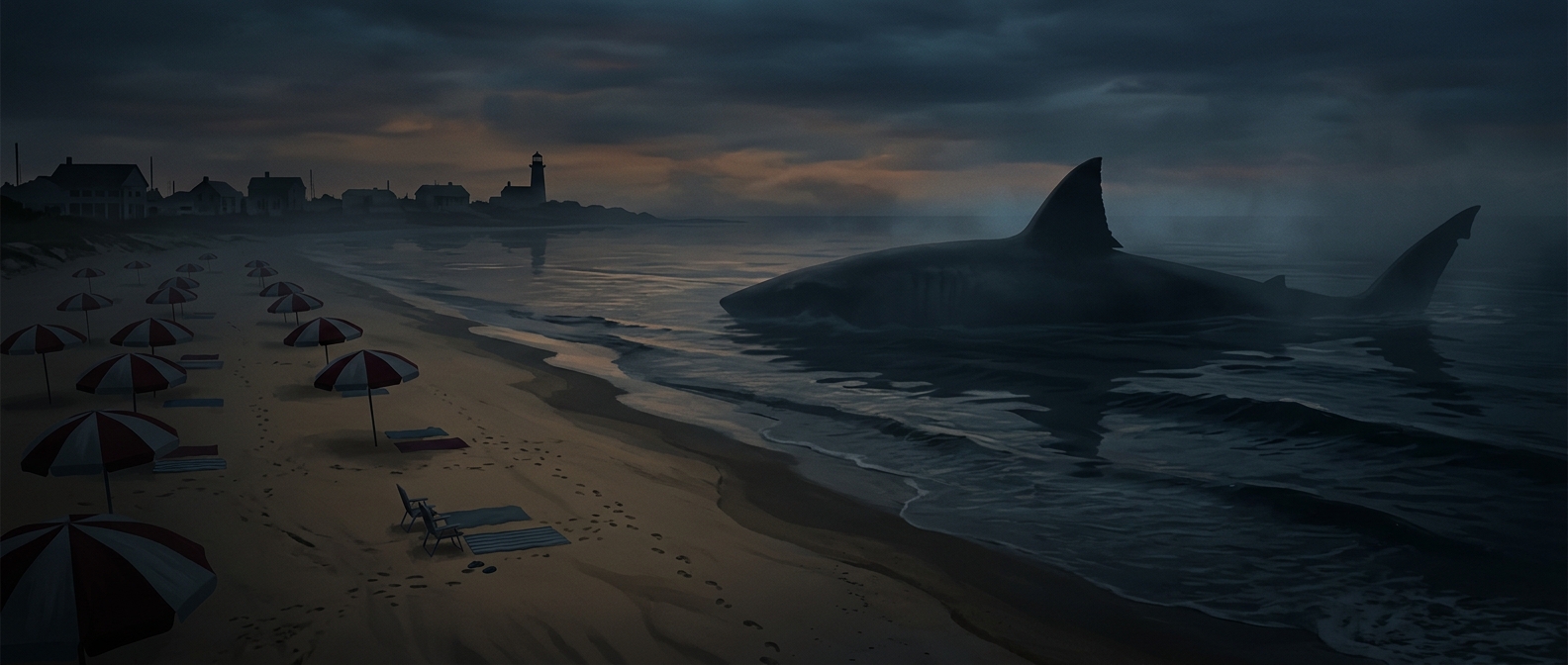
When the ocean became the threat
Before Jaws, the beach was widely sold as a place to relax. Spielberg’s film changed the emotional meaning of that familiar setting: ordinary swimmers could be in danger without seeing what was beneath them. The opening attack made the risk feel sudden and intimate, turning an empty stretch of water into a suspenseful scene.
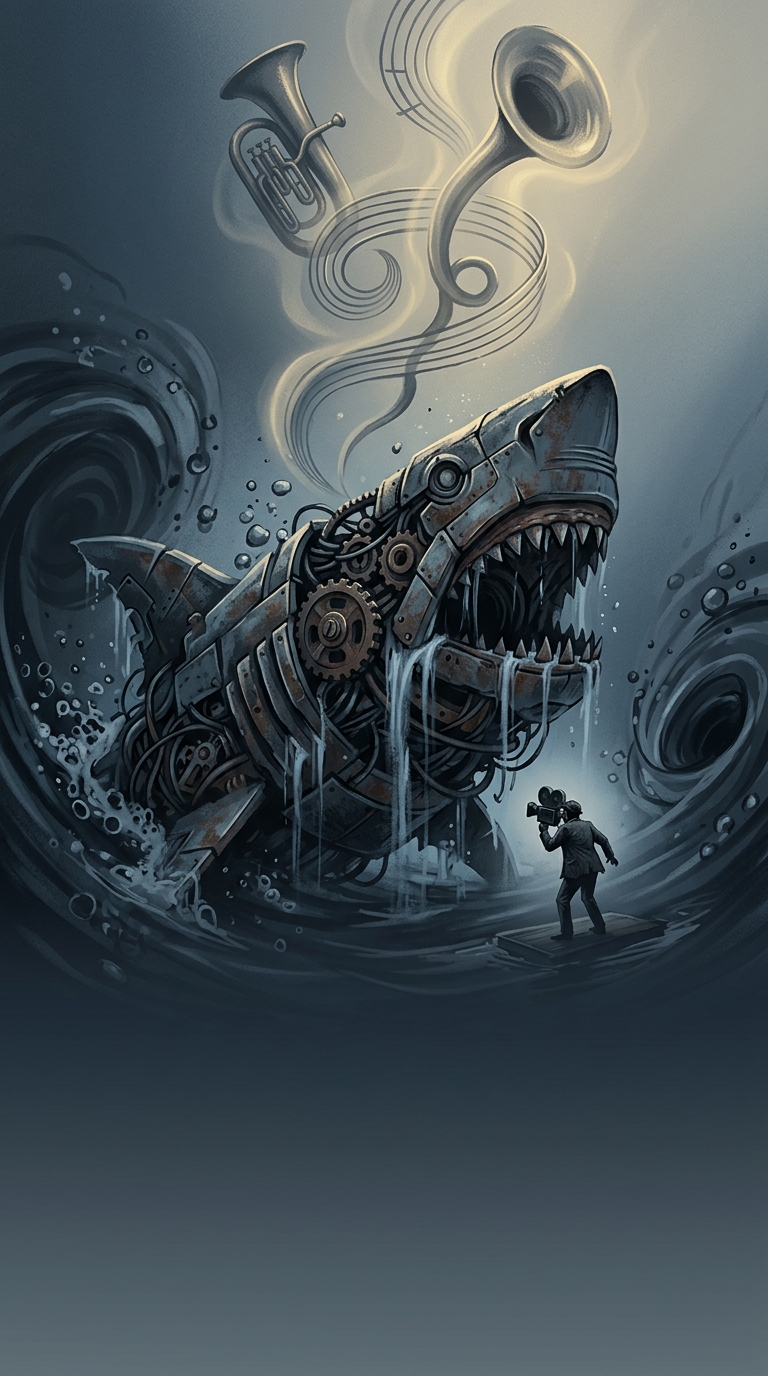
The film’s craft helped make that fear stick. For much of the story, the shark remains out of sight. Its recurring musical warning lets viewers anticipate danger before they can see it, so even calm water can seem charged with threat. The audience is trained to scan the surface—and to imagine what it cannot see.
From movie suspense to beachside caution
That reaction did not stay inside theaters. As Jaws reached a huge audience in 1975, reports and attendance measures recorded a drop in beachgoing nationwide. The film gave people a vivid mental image to carry to the shoreline: a swimmer, open water, and a hidden predator. A fictional attack could make a real ocean feel newly uncertain, even though the movie did not change the actual risks of a particular beach.
This was not simply a matter of audiences confusing a film with a news report. Suspense works by making a possibility feel immediate. Once viewers had rehearsed the danger in their minds, choosing to stay on shore—or to swim closer to land—could feel like a sensible response.
A summer blockbuster with an unusual afterlife
The effect showed how entertainment could shape behavior beyond the screen. Jaws helped establish the modern summer blockbuster, but its influence was not limited to moviegoing: it altered how some people experienced a real landscape. After the film, a stretch of apparently empty water could carry the tension of the shark’s unseen presence.