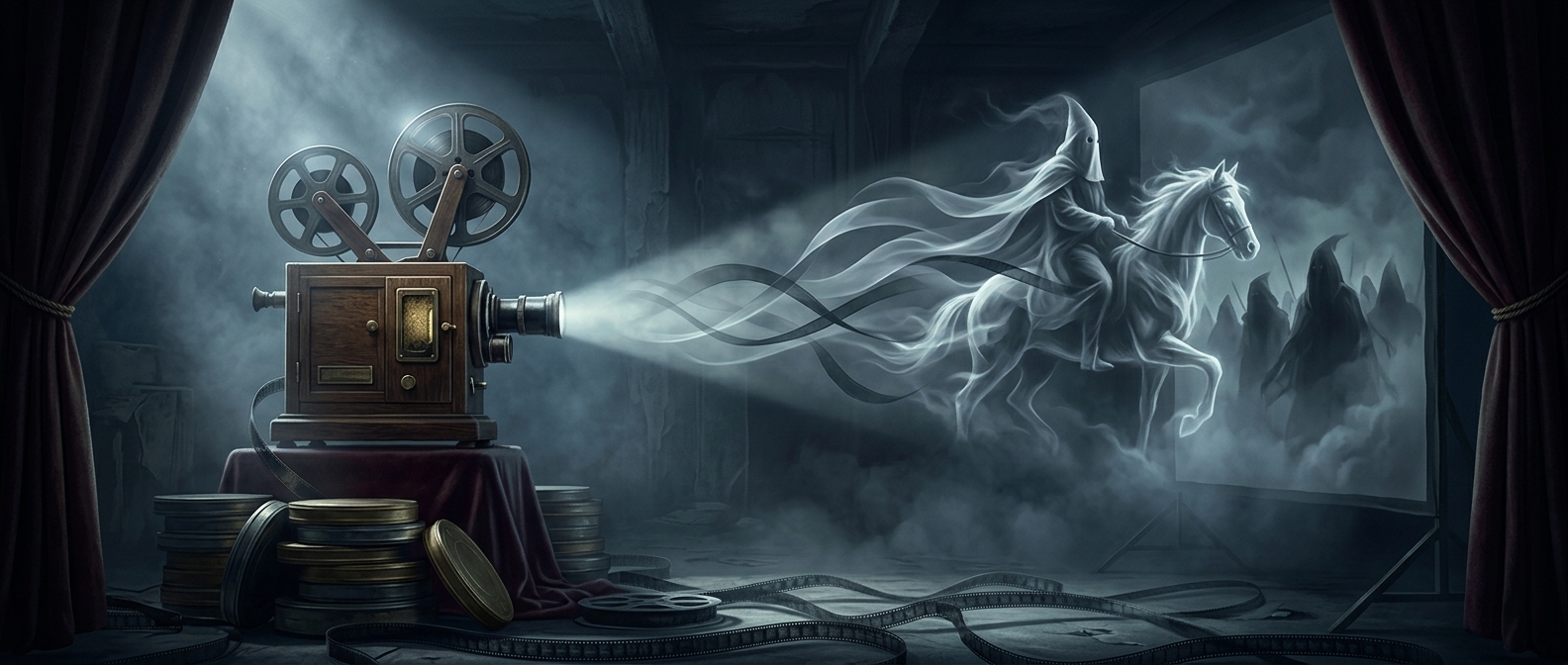
How a silent film turned the Klan into a national spectacle
D. W. Griffith’s The Birth of a Nation presented the Ku Klux Klan as a heroic force restoring order in the post–Civil War South. That portrayal reversed the group’s actual role: the original Klan was a white-supremacist organization that used threats and violence to suppress Black political participation and intimidate white allies. The film’s dramatic story made that violence look like rescue.
The screen supplied a myth—and a meeting place
The movie’s scale and popularity gave its version of history an audience far beyond the South. Its imagery, costumes, and staged rides made the Klan visually compelling, while its narrative cast Black freedom and Reconstruction as dangers that white heroes had to overcome. This was not just a matter of sympathetic dialogue: the film gave the organization a polished public identity at a moment when it had largely faded after federal efforts against it in the 1870s.
The film also helped create conditions for direct recruitment. In 1915, organizers used a screening in Atlanta as a setting for the revived Klan’s founding, and the movie’s popularity helped spread interest elsewhere. The new organization adopted the hooded costumes and theatrical rituals audiences had just seen on screen. A mass-market movie had helped turn a racist fantasy into a ready-made brand.
A story with consequences beyond the theater
The revival expanded the Klan’s reach in the 1920s, when it targeted Black Americans as well as Catholics, Jews, immigrants, and others it considered threats to white Protestant dominance. The film did not single-handedly cause that growth, but it gave the group cultural visibility, a romanticized origin story, and imagery that could be carried from theaters into public life. Its influence shows how entertainment can shape political memory—and make an extremist movement appear respectable to people who might never have encountered it directly.