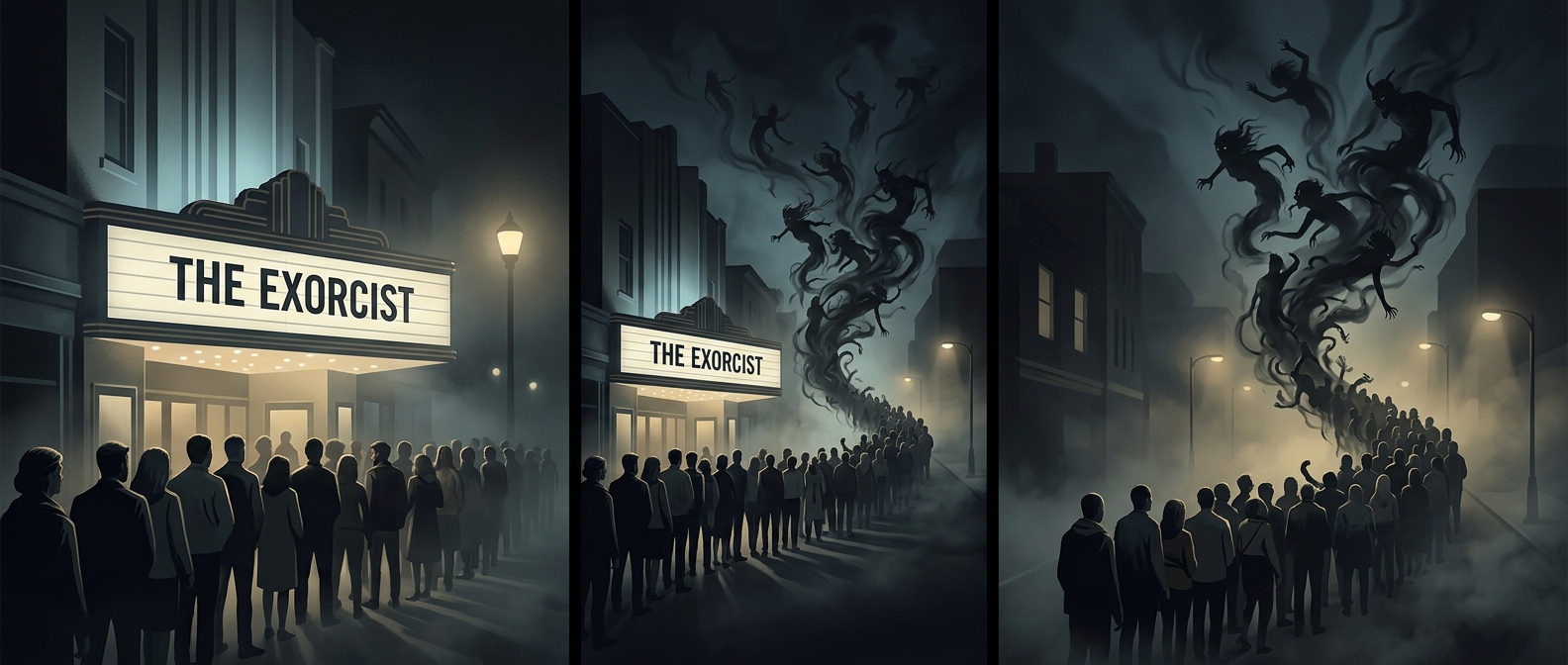
When a Horror Film Made Ambiguous Signs Feel Ominous
The Exorcist gave audiences a vivid template for possession: a young person behaving in frightening, unfamiliar ways while adults struggle to explain what they see. That template could travel beyond the theater. In the 1970s, parishes received requests for exorcisms from people who feared that unsettling behavior or strange sounds at home might have a supernatural cause.
How Fear Reframed Ordinary Clues
A creaking house is usually just a creaking house. A teenager’s mood, movements, or defiance may have familiar explanations, too. But once a story teaches people to connect such details with possession, the details can seem to form a pattern. Fear encourages people to notice evidence that fits the alarming explanation and to treat ordinary explanations as less convincing.
The film did not need to make every viewer believe possession was real to influence what they worried about. Its imagery made an abstract religious idea immediate and memorable, giving people a dramatic comparison for experiences they might otherwise have shrugged off—or discussed in different terms.
Why People Turned to Parishes
For families who interpreted troubling events through a religious framework, a parish could be a natural place to seek help. The requests reflected more than a movie’s scare factor: they showed how entertainment can shape the questions people bring to trusted local institutions. Once a story supplies a frightening explanation, even a familiar creak in the hallway can start to sound like a warning.